Mehbooba Mufti Iran Statement Eid 2026 | Jamia Masjid Closure Kashmir Controversy
By: Javid Amin | 21 March 2026
Jamia Masjid Closure, Hazratbal Prayers Debate & Political Messaging Shape Post-Eid Discourse
Eid 2026 in Kashmir: From Religious Observance to Political Flashpoint
Eid-ul-Fitr 2026 in Jammu and Kashmir was marked not only by prayers and celebrations but also by a deepening political discourse, as leading voices used the occasion to articulate concerns over religious restrictions and global solidarity.
At the center of this evolving narrative stood Mehbooba Mufti, former Chief Minister and president of the People’s Democratic Party, whose remarks linking Kashmir to Iran and Palestine added a new international dimension to the Eid debate.
Jamia Masjid Closure Overshadows Eid Prayers
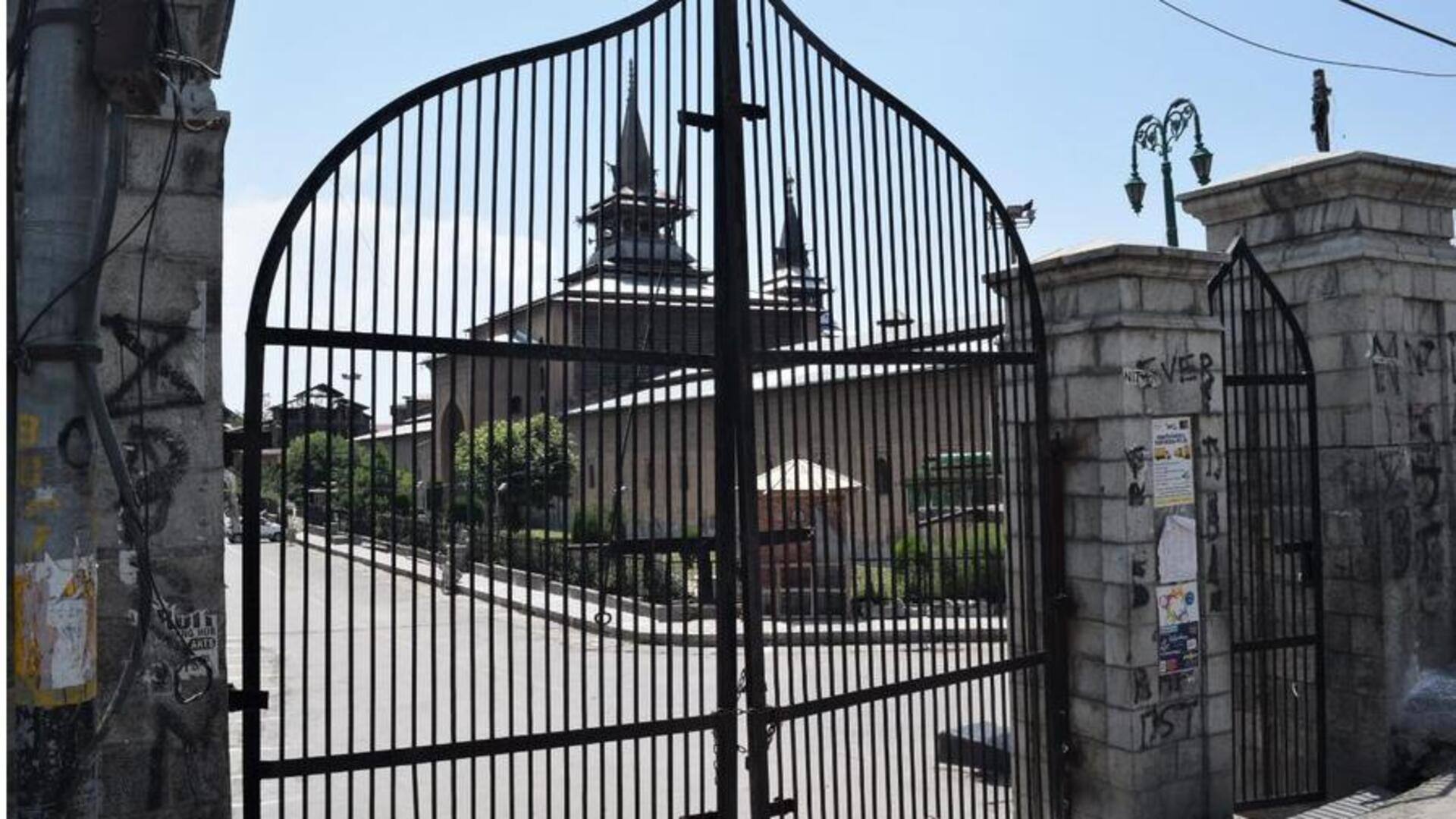
Eid prayers across the Valley were conducted under tight security arrangements, but the continued closure of the Jamia Masjid Srinagar in Srinagar became the defining issue.
Ground Situation:
- Worshippers were barred from offering Eid prayers at the historic mosque
- Security forces were deployed across the old city
- Authorities cited law-and-order concerns as justification
For many residents, the absence of Eid prayers at Jamia Masjid was not merely logistical—it carried deep symbolic weight, especially after similar restrictions during Ramzan.
Mehbooba Mufti’s Statement: “Stand with Iran”
Reacting to the developments, Mehbooba Mufti made a statement that quickly gained attention:
“We should stand with the people of Iran.”
Her remarks were not limited to local concerns. Instead, she:
- Criticized the absence of special prayers for Iran and Palestine
- Linked Kashmir’s situation to broader global Muslim issues
- Positioned Eid as a moment for international solidarity
Hazratbal Shrine Controversy: A New Layer
The debate extended to the revered Hazratbal Shrine, another major religious center in Srinagar.
Key Issue Raised:
- No special supplications for Iran and Palestine were reportedly included during Eid prayers
- Mufti described this omission as a missed expression of solidarity
This critique expanded the conversation:
👉 From local mosque restrictions
👉 To what is said—and not said—during religious gatherings
Echoes from Other Leaders
Omar Abdullah, a senior leader of the Jammu and Kashmir National Conference, also weighed in.
- He described the Jamia Masjid closure as “unfortunate and painful”
- His remarks aligned with broader opposition criticism
Together, statements from Mufti and Abdullah reflected a rare convergence in political messaging during Eid.
Administration’s Position: Security Over Sentiment
Authorities maintained that restrictions were:
- Preventive in nature
- Necessary to maintain public order
- Based on assessments of potential unrest
This reflects a consistent governance approach in Kashmir, where:
- Large religious gatherings are often treated as sensitive
- Decisions are shaped by security calculus rather than symbolic considerations
Local Sentiment: Faith Meets Frustration
Among the public, Eid 2026 triggered mixed emotions.
Observed Reactions:
- Disappointment over Jamia Masjid closure
- Emotional disconnect during a major festival
- Growing perception of restrictions on religious practice
For many, the issue was not just about one mosque—but about:
👉 continuity of tradition
👉 space for collective worship
Global Dimension: Kashmir, Iran & Palestine
By invoking Iran and Palestine, Mehbooba Mufti reframed the discourse.
What this means:
- Internationalization of Local Issues
Kashmir’s internal developments are linked to global Muslim concerns - Symbolic Solidarity Politics
Religious events become platforms for geopolitical messaging - Narrative Expansion
The debate shifts from:- “Can people pray?”
- to “What does Kashmir stand for globally?”
Editorial Analysis: Eid as a Political Platform
Eid in Kashmir has historically carried layers beyond religion.
In 2026, three narratives converged:
1. Religious
Restrictions on mosques and sermons
2. Political
Opposition leaders framing actions as curtailment of freedoms
3. Global
References to Iran and Palestine adding international resonance
This convergence transformed Eid into:
👉 A symbolic stage for political messaging
👉 A reflection of Kashmir’s unresolved tensions
Why Jamia Masjid Remains the Flashpoint
The Jamia Masjid Srinagar continues to dominate discourse because it represents:
- Religious authority
- Historical continuity
- Political expression
Any restriction here is perceived as:
👉 Not just administrative
👉 But deeply symbolic
Broader Implications
1. Religious Freedom Debate
Raises questions about limits on congregational worship
2. Political Strategy
Opposition leveraging festivals for messaging
3. Governance Model
Security-first approach vs public sentiment
4. Global Perception
Statements linking Kashmir to Iran and Palestine attract wider attention
Conclusion: A Festival That Became a Narrative Battleground
Eid 2026 in Kashmir will be remembered not just for prayers—but for the conversations it triggered.
- The closure of Jamia Masjid Srinagar
- The remarks by Mehbooba Mufti
- The reactions from leaders like Omar Abdullah
Together, they illustrate how:
👉 Faith, politics, and global identity intersect in Kashmir
What began as a local issue of Eid prayers has now expanded into:
- a debate on religious rights
- a reflection of political tensions
- and a statement about Kashmir’s place in the wider Muslim world