CRPF Drops Eco-Sensitive Base Plan, Keeps Temporary Security Grid in Place
By: Javid Amin|18 February 2026
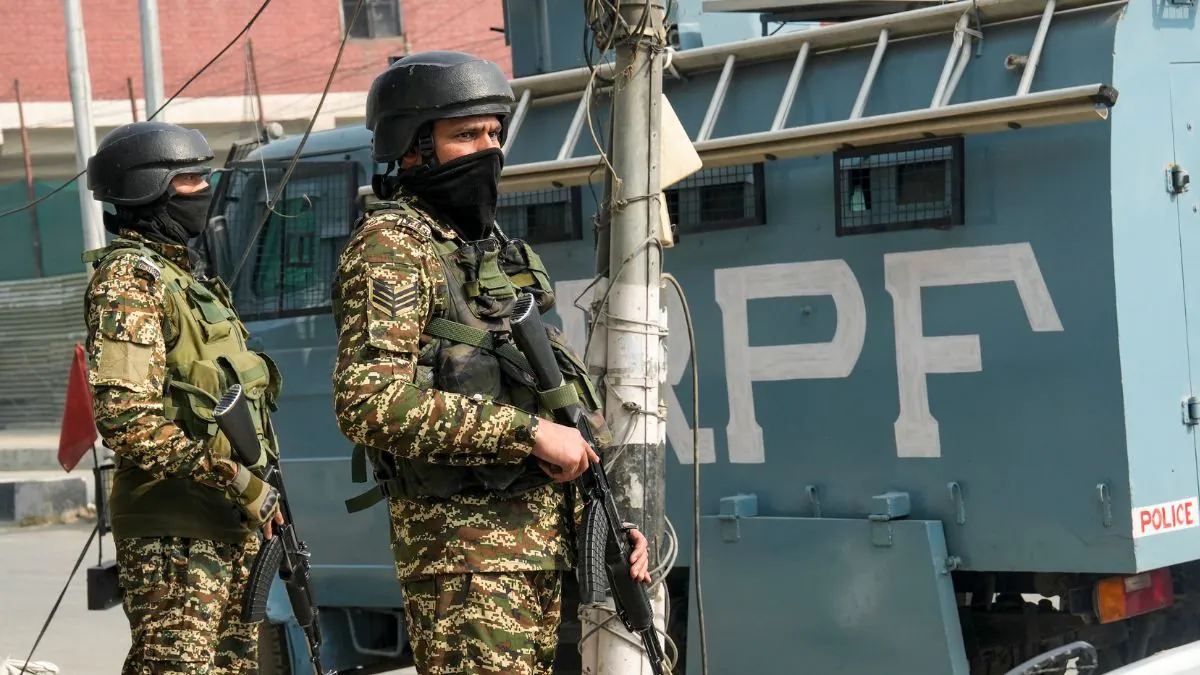
In a move being widely described by locals as “good news for all of Kashmir,” the Central Reserve Police Force has scrapped its proposal to construct a permanent base in an ecologically sensitive zone of Jammu & Kashmir, even as it confirmed that 43 temporary operating bases remain active across the Union Territory.
Officials said the decision reflects an attempt to reconcile two competing priorities: long-term security preparedness and environmental protection in fragile mountain ecosystems.
What Has Changed — and What Has Not
Authorities clarified that the cancelled project pertains only to a permanent structure planned in a protected ecological belt. Security deployment itself has not been reduced.
Instead, the CRPF continues to operate 43 temporary operating bases (TOBs) established after the Pahalgam attack, which triggered a recalibration of on-ground response infrastructure. These installations are designed for mobility and rapid deployment rather than permanent occupation.
Security officials describe the temporary model as flexible, allowing forces to respond to threats without committing to irreversible land use in environmentally sensitive areas.
The distinction matters: infrastructure permanence carries ecological consequences that temporary setups do not.
Why the Eco-Sensitive Zone Debate Matters
Jammu & Kashmir’s terrain is not only strategically complex but environmentally delicate. High-altitude forests, glacial water systems, and biodiversity corridors form part of a fragile ecological network that environmental groups say cannot absorb heavy construction.
Local conservation voices had raised concerns that permanent fortifications could fragment habitats, increase soil instability, and accelerate deforestation.
By shelving the base, authorities signal recognition that environmental degradation carries long-term security implications of its own — including landslides, water stress, and climate vulnerability.
Security planning in mountainous regions increasingly includes ecological risk assessment.
Security After the Pahalgam Shock
The Pahalgam attack marked a turning point in deployment philosophy. Rather than concentrating forces in large permanent compounds, agencies expanded dispersed operational nodes to reduce response time.
Temporary operating bases serve several purposes:
-
faster troop mobility
-
localized intelligence gathering
-
rapid reinforcement capability
-
reduced logistical vulnerability
-
minimal long-term land footprint
Security analysts note that decentralization improves tactical agility without locking the state into environmentally costly infrastructure.
The approach represents a shift from fortress-style installations toward adaptive grid security.
Local Reaction: Relief with Caution
Community leaders and environmental advocates have welcomed the decision, interpreting it as evidence that ecological concerns are entering mainstream policy calculations.
For many residents, the issue was never opposition to security presence itself, but to irreversible construction in protected zones.
The shelving of the project is seen as a rare alignment between civil society pressure and administrative action.
At the same time, some locals stress that temporary bases must also be monitored to prevent gradual environmental creep — the phenomenon where provisional installations slowly become semi-permanent.
Trust depends on follow-through.
Balancing Ecology and Security
The episode highlights a structural challenge in Kashmir: security infrastructure often overlaps with environmentally sensitive geography.
Mountain conflict zones worldwide face similar tensions. Roads, camps, and fortifications provide strategic advantage but can destabilize ecosystems that communities depend on for water, agriculture, and tourism.
Policy experts increasingly argue that environmental stewardship is not separate from national security — it is part of it.
A degraded landscape weakens long-term resilience.
The CRPF’s decision suggests a growing institutional awareness of that linkage.
The Temporary Model Going Forward
Officials indicate that the 43 temporary bases will remain under periodic review. Their footprint, duration, and operational necessity are expected to be reassessed based on evolving threat perceptions.
The flexible structure allows redeployment without the political and environmental costs associated with permanent installations.
Security planners describe this as a “reversible infrastructure” philosophy: build only what can be removed.
In conflict-sensitive ecologies, reversibility is strategic insurance.
A Signal Beyond One Project
While the decision concerns a single proposed base, its symbolic weight is larger. It signals that environmental sensitivity is no longer peripheral in security decision-making in Jammu & Kashmir.
That precedent could influence future infrastructure planning — from roads to communication facilities.
For a region where natural beauty underpins tourism and identity, ecological preservation carries economic as well as cultural stakes.
Security that erodes the environment risks undermining the very stability it seeks to protect.
Conclusion
The cancellation of the eco-sensitive base is not a rollback of security policy. It is a recalibration of method.
By maintaining temporary operational readiness while avoiding permanent ecological disruption, authorities are testing a hybrid approach: strong presence, lighter footprint.
For residents, the message is reassurance that security expansion does not have to mean environmental sacrifice.
In a region defined equally by strategic tension and natural fragility, balance is not optional.
It is the only sustainable path forward.