33 Kashmiri Students Suspended in Rajasthan Over Protest: Why a Regulatory Failure Has Turned Into a Crisis Demanding Omar Abdullah’s Intervention
By: Javid Amin | 12 February 2026
Suspensions at Mewar University raise serious questions about regulatory compliance, student rights, and the vulnerability of Kashmiri students studying outside the Union Territory
A Protest That Ended in Suspension—and Uncertainty
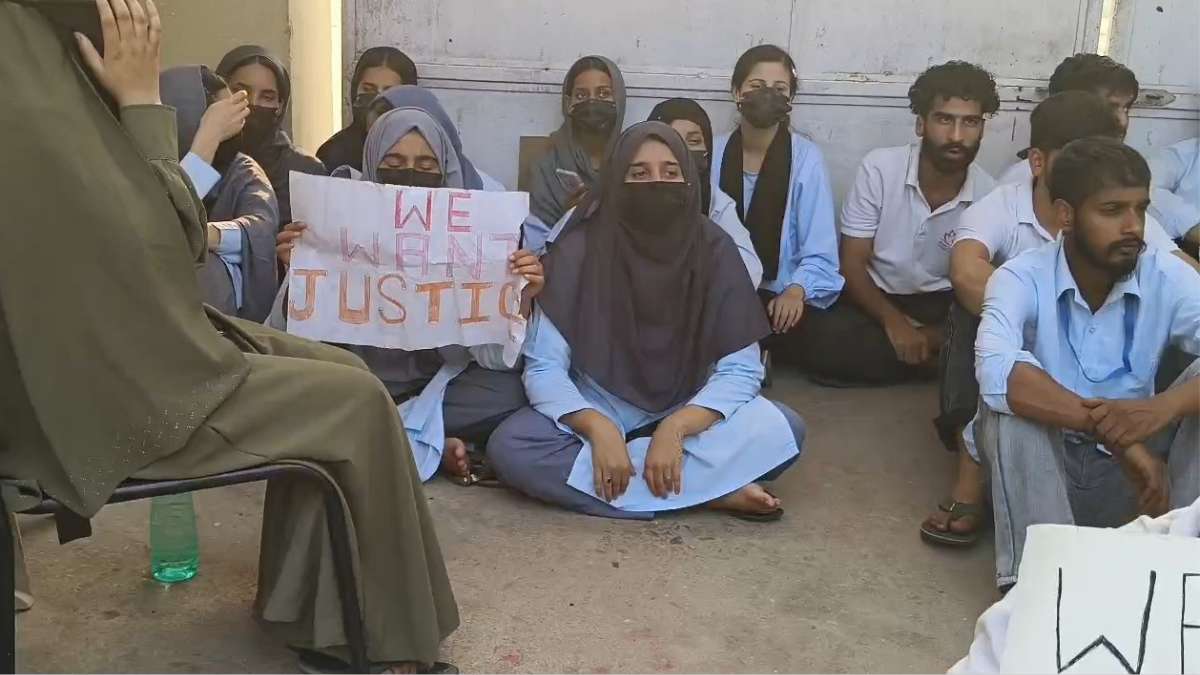
What began as a peaceful protest over academic legitimacy has escalated into a full-blown crisis for Kashmiri students studying nursing in Rajasthan.
At least 33 Kashmiri students enrolled in the B.Sc. Nursing programme at Mewar University in Chittorgarh have been suspended after raising concerns about the university’s alleged failure to secure mandatory approvals from regulatory authorities.
The students say they protested only after months of assurances from the institution failed to translate into statutory recognition—leaving their degrees, careers, and years of academic effort hanging in uncertainty.
Now, the issue has crossed institutional boundaries.
The Jammu and Kashmir Students Association (JKSA) has formally sought the intervention of Chief Minister Omar Abdullah, calling the situation a regulatory failure with life-altering consequences for Kashmiri students studying outside the Union Territory.
What Triggered the Protest? The Approval That Never Came
At the heart of the crisis lies a critical regulatory requirement.
For a B.Sc. Nursing programme to be valid in India, it must receive statutory recognition from:
-
The Rajasthan Nursing Council (RNC)
-
The Indian Nursing Council (INC)
According to the protesting students:
-
Mewar University admitted them into the nursing programme
-
The institution repeatedly assured them that approvals were either in place or imminent
-
Despite these assurances, mandatory recognition has not been secured
Without RNC and INC approval:
-
Degrees issued under the programme risk being invalid
-
Graduates may be barred from registration as nurses
-
Employment opportunities in hospitals and public health institutions collapse
In practical terms, years of education could become professionally worthless.
From Academic Anxiety to Protest
Faced with mounting uncertainty, the students say they organised a peaceful demonstration to demand clarity and accountability.
Their demands were straightforward:
-
Immediate disclosure of the programme’s approval status
-
A timeline for regulatory compliance
-
Written assurance protecting students’ academic futures
Instead of resolution, the response was punitive.
33 Students Suspended: Disciplinary Action or Silencing?
Following the protest, 33 Kashmiri students were suspended by the university.
For the students, the suspensions represent:
-
Punishment for raising legitimate concerns
-
An attempt to suppress dissent
-
An escalation of an academic issue into a disciplinary crisis
The suspensions have compounded their vulnerability—leaving them:
-
Academically stranded
-
Financially burdened
-
Far from home, with limited institutional support
What makes the situation more alarming is the scale of the issue.
More Than 50 Kashmiri Students at Risk
According to JKSA:
-
Over 50 Kashmiri students are enrolled in the same unapproved nursing programme
-
All of them face uncertainty over the validity of their degrees
-
Even those not suspended are at risk of long-term academic damage
This transforms the issue from an isolated protest into a systemic failure affecting an entire cohort.
JKSA Steps In: ‘This Is Not a Disciplinary Issue’
The Jammu and Kashmir Students Association has taken the lead in highlighting the issue nationally.
JKSA’s Core Argument
JKSA National Convenor Nasir Khuehami described the episode as:
“A regulatory failure that has now become a crisis for Kashmiri students.”
According to JKSA:
-
The core problem is lack of statutory approvals
-
Student suspensions are a secondary consequence
-
Responsibility lies with the institution’s compliance obligations
-
Students should not be penalised for administrative lapses
The association argues that what should have been resolved through regulatory mechanisms has instead turned into a situation threatening students’ careers and mental well-being.
Why Kashmiri Students Are Particularly Vulnerable
Kashmiri students studying outside Jammu and Kashmir often face unique challenges:
-
Limited local support networks
-
Greater dependence on institutional assurances
-
Financial and emotional strain of studying far from home
-
Difficulty navigating regulatory systems in other states
When academic crises arise, these students are often more exposed to risk than their local counterparts.
JKSA has repeatedly flagged this structural vulnerability in past student-related cases.
Why CM Omar Abdullah’s Intervention Is Being Sought
JKSA has appealed directly to Chief Minister Omar Abdullah, urging him to:
-
Take up the matter with Rajasthan authorities
-
Engage with educational regulators
-
Ensure protection of Kashmiri students’ academic rights
-
Prevent further punitive action against protesting students
The demand reflects a broader expectation that the J&K government should act as a guardian for students studying outside the Union Territory, especially in cases involving regulatory negligence.
Beyond One University: A Larger Question on Higher Education Oversight
This episode raises uncomfortable questions about:
-
Oversight of private universities
-
Transparency in course approvals
-
Accountability mechanisms when approvals lapse
-
Student protection in inter-state education
When institutions admit students without secured approvals, the consequences are rarely borne by administrators—they fall squarely on students.
Regulatory Compliance vs Student Discipline
A key concern flagged by student bodies is the sequence of responsibility.
In principle:
-
Regulatory compliance should precede admissions
-
Students rely on institutional claims of legitimacy
-
Protests arise when transparency fails
In this case, the disciplinary response appears to have overshadowed the original regulatory issue—deepening mistrust between students and administration.
What Students Risk Losing
If the issue remains unresolved, affected students risk:
-
Invalid nursing degrees
-
Ineligibility for professional registration
-
Loss of years of education
-
Financial losses with no compensation
-
Psychological distress and uncertainty
For families back in Kashmir, the stakes are equally high—often involving savings, loans, and aspirations tied to professional education.
The Silence That Worries Students
So far, students allege:
-
No clear written assurance from the university
-
No public confirmation of approvals
-
No roadmap for resolution
In such circumstances, uncertainty becomes the most damaging outcome.
Why This Case Matters Nationally
Although centred in Rajasthan, the issue resonates nationally because:
-
Nursing is a regulated profession
-
INC and state nursing council approvals are non-negotiable
-
Similar lapses could affect students elsewhere
-
Regulatory enforcement consistency is under scrutiny
The case underscores the need for stronger safeguards against premature admissions in professional courses.
What Resolution Could Look Like
Student bodies are demanding:
-
Immediate clarification on approval status
-
Restoration of suspended students
-
Assurance that degrees will be recognised
-
Regulatory intervention if approvals are absent
-
Accountability for institutional lapses
Political intervention, they argue, is now essential.
A Crisis of Trust, Not Protest
At its core, this is not merely a protest story.
It is a crisis of trust:
-
Trust between students and institutions
-
Trust in regulatory systems
-
Trust that years of study will lead to valid careers
When that trust breaks, protests become inevitable.
Conclusion: Education Should Not Come With This Risk
The suspension of 33 Kashmiri students at Mewar University has exposed a deeply troubling reality—where regulatory gaps can derail lives, and students bear the cost of institutional failure.
By seeking Omar Abdullah’s intervention, JKSA is not asking for favours—it is demanding accountability, protection, and justice.
Until regulatory compliance is ensured and students’ futures are safeguarded, this issue will remain a stark reminder that education without legitimacy is not opportunity—it is risk.