3–4 Western Disturbances to Hit Jammu & Kashmir After Chillai Kalan: Snowfall, Travel Disruptions, Climate Signals Explained
By: Javid Amin | 30 January 2026
A Restless Sky Over a Restless Land
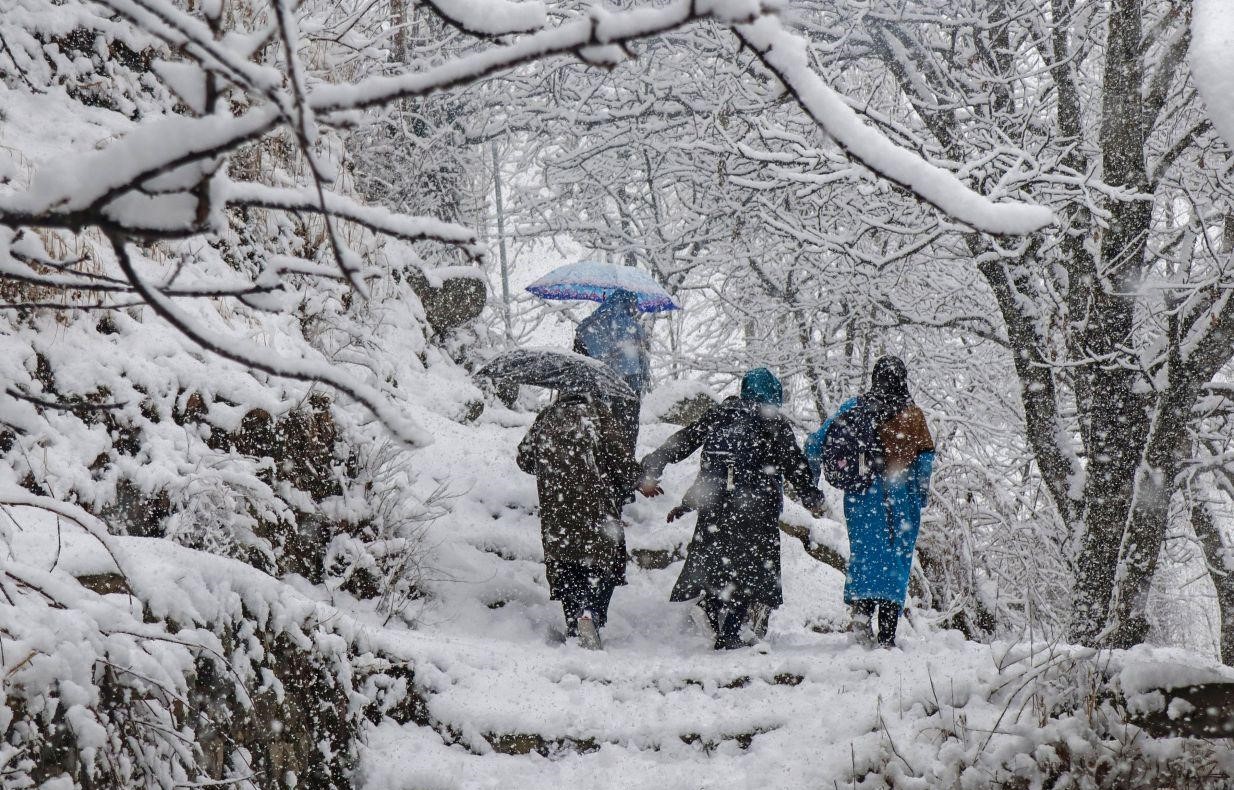
As Kashmir breathes a cautious sigh of relief with the end of Chillai Kalan, the harshest 40-day phase of winter, the region finds little respite from turbulent skies. The India Meteorological Department (IMD/MeT) has forecast three to four Western Disturbances (WDs) set to sweep across Jammu & Kashmir over the next ten days, promising a spell of intermittent rain and snowfall that could redefine the late winter narrative of 2026.
This is not merely a routine weather update. In a region where snow dictates mobility, livelihoods, tourism, power supply, and even political decision-making, the arrival of consecutive Western Disturbances carries implications far beyond meteorology. From avalanche-prone slopes of the Pir Panjal to the fragile lifeline of the Jammu–Srinagar National Highway, from apple orchards awaiting moisture to climate scientists tracking erratic patterns, these systems demand closer scrutiny.
This long-form explainer unpacks what the forecast really means—ground realities, historical patterns, sector-wise impacts, and the broader climate context—while keeping the narrative accessible, neutral, and rooted in verified meteorological understanding.
Understanding Western Disturbances: Kashmir’s Winter Architects
What Are Western Disturbances?
Western Disturbances are extra-tropical storm systems originating over the Mediterranean region, traveling eastward through West Asia, Iran, Afghanistan, and Pakistan before impacting the northwestern parts of the Indian subcontinent.
For Jammu & Kashmir, Ladakh, Himachal Pradesh, and Uttarakhand, these systems are the primary drivers of winter precipitation, delivering rain to plains and snowfall to higher elevations.
Why They Matter So Much to Kashmir
Unlike the monsoon-dependent plains of India, Kashmir’s hydrological cycle relies heavily on winter snowfall. Western Disturbances:
- Recharge glaciers and snowfields
- Sustain rivers like the Jhelum
- Support agriculture and horticulture
- Regulate long-term water security
A weak WD season can spell drought; an intense or erratic one can trigger disasters.
The Current Forecast: What MeT Is Predicting
Timeline and Frequency
According to the Meteorological Department’s regional analysis:
- 3–4 Western Disturbances are expected between January 31 and February 10, 2026
- These systems will arrive in quick succession, leaving limited recovery time between spells
- Brief dry intervals may occur, but the overall pattern remains unsettled
Peak Activity Windows
Meteorologists identify three key phases of heightened activity:
- February 1–2: Initial system bringing widespread light to moderate snowfall
- February 5: Stronger system with heavier accumulation in higher reaches
- February 8–9: Another system likely to reinforce snow cover
Such clustering increases cumulative impact even if individual systems are moderate.
Regional Impact Breakdown: Valley, Mountains, and Plains
Kashmir Valley
Districts including Srinagar, Baramulla, Kupwara, Shopian, Anantnag, and Budgam are expected to see:
- Light to moderate snowfall in initial phases
- Rain-snow mix in lower elevations
- Cold, overcast conditions dominating daytime temperatures
While night temperatures have edged upward post-Chillai Kalan, fresh snowfall could temporarily reverse the warming trend.
Higher Reaches and Mountain Passes
Areas such as:
- Gulmarg
- Pahalgam
- Sonmarg
- Gurez Valley
- Pir Panjal range
- Zojila Pass
are likely to receive moderate to heavy snowfall, increasing:
- Avalanche probability
- Road closure frequency
- Isolation of remote habitations
Jammu Region
The plains of Jammu, Udhampur, Kathua, Samba, and Reasi are forecast to receive:
- Light to moderate rainfall
- Snowfall limited to higher hill areas like Patnitop and Bhaderwah
Rainfall here is crucial for groundwater recharge but raises landslide risks along highways.
The End of Chillai Kalan: Relief, But Not a Reset
What Chillai Kalan Represents
Chillai Kalan is a culturally embedded term marking the coldest 40 days of winter, from December 21 to January 31.
Characteristics include:
- Sub-zero night temperatures
- Frozen water bodies
- Highest snowfall probability
- Peak energy demand
Its end traditionally signals gradual warming, but not the end of winter.
Chillai Khurd and Chillai Bachha
Following Chillai Kalan:
- Chillai Khurd (20 days): Cold but less severe
- Chillai Bachha (10 days): Transitional phase toward spring
The current WD forecast means Chillai Khurd will begin under active winter conditions, delaying seasonal transition.
Travel and Infrastructure: A System Under Stress
Jammu–Srinagar National Highway (NH-44)
The NH-44 is Kashmir’s only all-weather road link to the rest of India. Consecutive WDs pose serious challenges:
- Snow accumulation near Banihal and Qazigund
- Landslides in Ramban and Udhampur stretches
- Traffic pile-ups lasting days
Authorities typically enforce convoy-based movement, but unpredictability strains logistics and emergency services.
Air Connectivity
Srinagar Airport operations are highly sensitive to:
- Visibility below minimum thresholds
- Runway snow clearance delays
Past winters show that even moderate snowfall can trigger mass cancellations, affecting tourists, patients, and supply chains.
Avalanche Risk: The Silent Winter Threat
Why Risk Is Elevated This Season
Avalanche risk increases when:
- Fresh snow layers accumulate rapidly
- Temperature fluctuations weaken bonding
- Wind redistributes snow onto leeward slopes
Back-to-back WDs create precisely these conditions.
Vulnerable Zones
- Gurez sector n- Sonmarg-Zojila axis
- Higher slopes of Kupwara and Bandipora
Security forces, road workers, and nomadic populations face the highest exposure.
Tourism: Between Opportunity and Uncertainty
Winter Tourism Hotspots
- Gulmarg skiing slopes
- Pahalgam snow trails
- Srinagar houseboats under snow
Fresh snowfall enhances Kashmir’s visual appeal, often triggering last-minute tourist inflows.
The Flip Side
- Cancellations due to highway closures
- Flight disruptions
- Safety concerns for amateur snow tourists
Tour operators describe winter tourism as a high-risk, high-reward season increasingly dependent on short weather windows.
Agriculture and Horticulture: Snow as a Silent Asset
Benefits of Winter Snowfall
For Kashmir’s agrarian economy, snow is not a nuisance—it is capital.
- Acts as slow-release irrigation
- Protects soil from erosion
- Ensures adequate chilling hours for apple trees
Risks of Excess or Erratic Snow
- Branch breakage in orchards
- Delayed pruning schedules
- Damage to polyhouses and winter vegetables
Farmers now monitor WD forecasts as closely as markets.
Power Supply and Urban Life
Power Infrastructure Under Pressure
Snow-laden transmission lines often lead to:
- Localized outages
- Transformer failures
- Delays in restoration due to access issues
Hydropower generation may benefit in the long term, but short-term disruptions are common.
Daily Life in the Valley
- School closures
- Reduced market activity
- Increased fuel consumption
Winter resilience has improved, but urban systems remain vulnerable.
Climate Change Context: Are Western Disturbances Changing?
Scientific Observations
Climatologists note:
- Increased variability in WD frequency
- Shorter but more intense snowfall events
- Rising winter night temperatures despite heavy snow
This paradox—warming trends alongside extreme snow—is a hallmark of climate disruption.
Himalayan Sensitivity
The Himalayas warm faster than the global average. Small atmospheric shifts translate into large ground impacts.
Western Disturbances are becoming less predictable, complicating disaster preparedness.
Governance and Preparedness: Walking a Fine Line
Administrative Measures
Authorities typically activate:
- District-level control rooms
- Snow clearance machinery
- Avalanche mitigation teams
Yet, rapid-fire weather systems test coordination capacity.
The Need for Long-Term Planning
Experts argue for:
- Better slope stabilization
- Weather-resilient infrastructure
- Community-based early warning systems
Reactive management is no longer enough.
Conclusion: Winter Is Evolving, So Must Kashmir’s Response
The forecast of three to four Western Disturbances following the end of Chillai Kalan underscores a larger truth: Kashmir’s winters are no longer linear or predictable.
While snow remains the Valley’s lifeline—nourishing rivers, orchards, and culture—it also poses growing risks in an era of climate uncertainty. The coming ten days will test infrastructure, administration, and public resilience, but they also offer lessons for long-term adaptation.
As Chillai Khurd unfolds under unsettled skies, one thing is clear: in Jammu & Kashmir, weather is never just weather—it is economy, ecology, and everyday survival intertwined.