Mehbooba Mufti Criticises NSA Ajit Doval’s ‘Revenge for History’ Remark, Warns of Communal Polarisation
By: Javid Amin | 11 January 2026
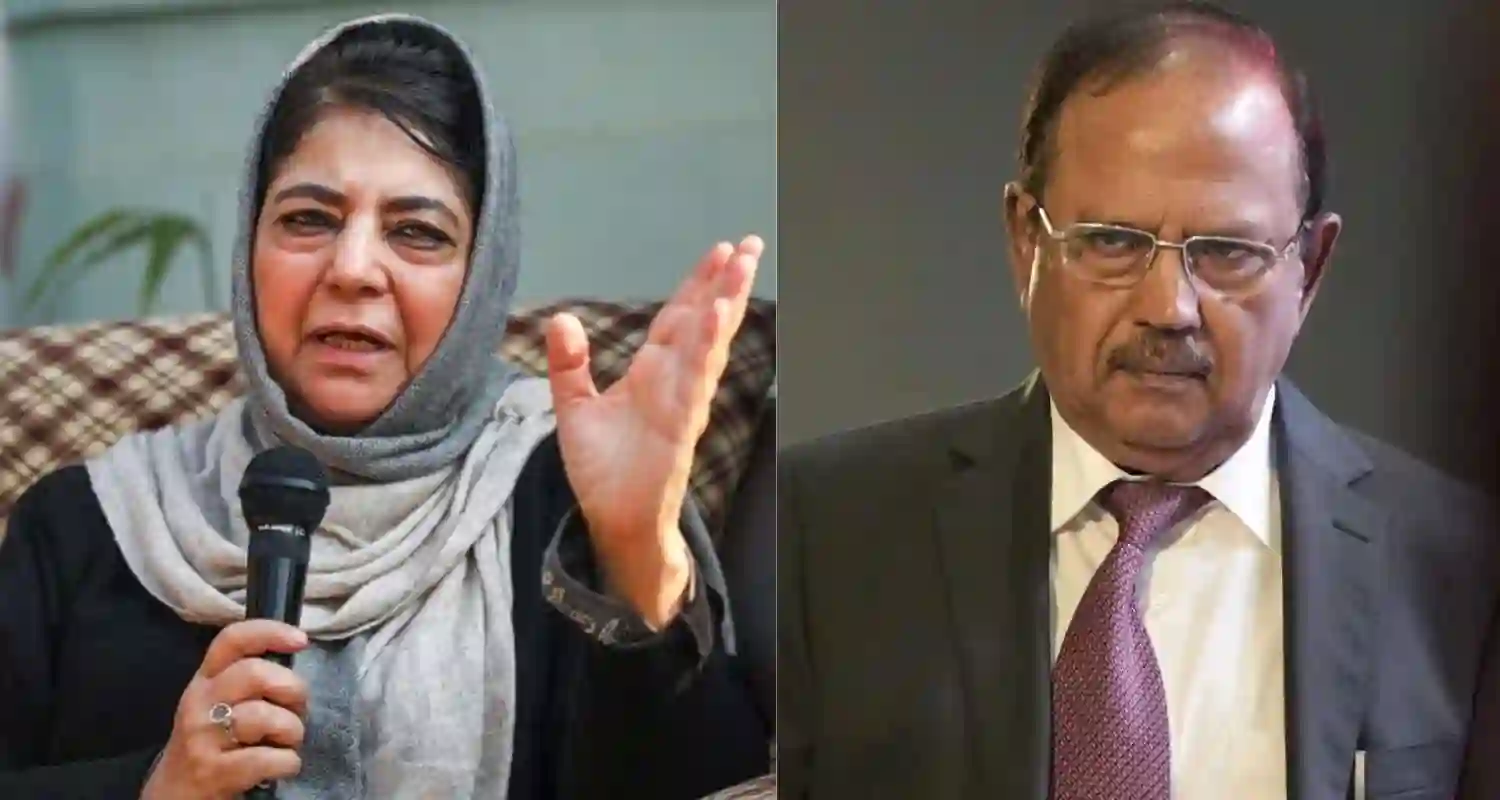
Former Jammu and Kashmir Chief Minister and Peoples Democratic Party (PDP) president Mehbooba Mufti on Friday strongly criticised National Security Adviser Ajit Doval over his recent reference to “revenge for history,” warning that such rhetoric from a senior constitutional functionary could have dangerous consequences for India’s social cohesion.
Mufti described the remark as a “dog whistle” that normalises communal hatred and risks inciting vulnerable sections of society against minorities.
What Ajit Doval Said
The controversy stems from a speech delivered by Ajit Doval at the Viksit Bharat Young Leaders Dialogue in Delhi, where he referred to the idea of “revenge for centuries-old events” while addressing historical grievances and national resurgence.
While Doval did not explicitly name any community, the phrasing quickly drew criticism from opposition leaders who interpreted it as echoing majoritarian narratives increasingly visible in political discourse.
Mehbooba Mufti’s Response
Reacting sharply, Mehbooba Mufti said it was “deeply unfortunate” that someone entrusted with national security would employ language that, in her view, mirrors communal ideology.
According to Mufti:
-
The phrase “revenge for history” acts as coded language that legitimises anger against minorities.
-
Such rhetoric risks radicalising poor and uneducated youth, who may already feel socially and economically alienated.
-
Senior officials must act as guardians of unity, not amplifiers of division.
She warned that normalising historical revenge narratives could push society towards collective punishment rather than reconciliation.
Why the Remark Has Triggered Alarm
Critics argue that invoking historical revenge—especially by high-ranking officials—carries unique risks in a country marked by religious diversity and historical trauma.
Mufti and other opposition voices see three major dangers:
-
Moral legitimisation of violence, even if indirectly
-
Deepening communal polarisation, particularly online and among youth
-
Erosion of institutional neutrality, especially in security establishments
Government and BJP Position
As of now, the government has not issued a formal clarification on Doval’s remarks.
BJP leaders and supporters, however, have defended the NSA by arguing that:
-
The speech was misinterpreted and taken out of context
-
Doval was speaking about civilisational resilience, not communal revenge
-
National pride should not be conflated with hate rhetoric
They accuse opposition leaders of politicising national security discourse for partisan gain.
Broader Political Context
The exchange comes amid heightened political tensions in Jammu & Kashmir, where issues of identity, history, and governance remain deeply sensitive.
For Mehbooba Mufti, the remark fits into a broader pattern she has consistently criticised—what she calls the mainstreaming of exclusionary language in public life.
For the ruling establishment, criticism of the NSA is seen as crossing a line into questioning national institutions.
Contextual Comparison
| Aspect | Ajit Doval’s Position | Mehbooba Mufti’s Critique |
|---|---|---|
| Institutional role | National Security Adviser | Senior opposition leader, former CM |
| Nature of remark | Historical reference | Communal dog whistle |
| Intended message | National resurgence | Normalisation of hate |
| Impact on youth | Inspirational | Potentially incendiary |
| Political effect | Strengthens nationalist narrative | Raises alarms on minority safety |
Why It Matters
The controversy underscores a larger debate in Indian politics:
Where does national pride end and communal rhetoric begin?
When language invoking historical revenge enters official discourse, critics warn it risks blurring that line—especially in regions like Jammu & Kashmir, where identity politics have already left deep scars.
Conclusion
Mehbooba Mufti’s criticism of Ajit Doval is not merely a personal attack but a broader warning about the power of words spoken from positions of authority.
In a society as plural as India’s, she argues, security cannot be separated from social harmony. Whether the remark was intentional or misread, the episode has reopened questions about responsibility, rhetoric, and the boundaries of political expression at the highest levels of governance.