Kashmir New Year 2026: Celebration or Cultural Erosion? | Tourism vs. Tradition
By: Javid Amin | 01 January 2025
A Valley Illuminated, A Question Unanswered
As the final seconds of 2025 bled into the dawn of 2026, the Himalayan skies above Kashmir did not just witness the gentle fall of winter snow. They were set ablaze—streaked with the incandescent trails of fireworks launched from the historic Lal Chowk in Srinagar, reflected in the pristine snowy bowls of Gulmarg, and shimmering over the icy silence of Dal Lake. The air, crisp and cold, thrummed not with the usual quiet of a winter’s night, but with bass-heavy music, cheers, and the cacophony of celebration. Hotels were operating at 100% capacity, streets were packed with revelers, and social media feeds overflowed with images of a “vibrant, new Kashmir.”
Yet, as the last firework ash settled on the fresh snow and the morning of January 1st brought a throbbing quiet—both from hangovers and introspection—a more complex, unsettling narrative began to emerge from the valley. This was not merely a story of tourism success or youthful jubilation. It was, and is, a vivid tableau of a society standing at a profound crossroads. The glittering surface of the New Year celebrations concealed deep undercurrents of cultural anxiety, generational conflict, and a fundamental question: In its eager embrace of globalized modernity, is Kashmir trading the soul of its centuries-old heritage for a fleeting, borrowed euphoria?
This mega-feature, built on ground reports from key epicenters of celebration, interviews with locals, elders, youth, business owners, and social observers, cross-verified with official data and community narratives, delves beneath the headline-grabbing festivities. We explore the palpable tension between economic aspiration and cultural preservation, between personal freedom and collective identity. The celebrations of 2026 have acted as a powerful lens, focusing a long-simmering debate into sharp, urgent clarity.
The Spectacle – Mapping the 2026 New Year’s Eve Geography
To understand the scale, one must first map the geography of the celebration. This was not a isolated party but a valley-wide phenomenon.
1. Lal Chowk, Srinagar: The Beating Heart Transformed
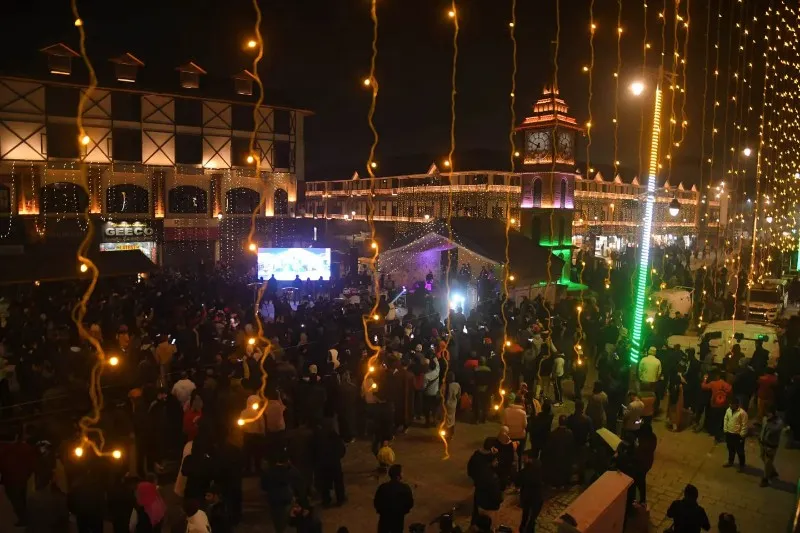
Lal Chowk, the traditional political and commercial nerve center of Srinagar, underwent a metamorphosis. The clock tower, witness to decades of history, was draped in dazzling light installations. A designated celebration zone saw thousands gather. “It felt surreal,” recounts Aamir Hussain, a 28-year-old software engineer from Srinagar. “Five years ago, this square after dark was a place of tension and silence. This year, it was a sea of people in trendy jackets, dancing. The energy was electric, but also… foreign.”
Municipal authorities, in collaboration with event management groups, had erected stages for DJs and cultural performances. Food stalls sold local kehwa alongside fast food. The police presence was significant but geared towards crowd management, a fact hailed by the tourism department as a sign of “normalcy and successful law and order.”
2. Gulmarg and Pahalgam: From Idyllic Retreats to Party Destinations
In the world-famous meadows of Gulmarg, luxury hotels hosted “Snow & Sparkle” gala dinners with tickets costing upwards of ₹15,000 per person. Open-air enclosures with heaters and sound systems created bubble-like party zones amidst the sub-zero temperatures. Similar scenes unfolded in Pahalgam along the Lidder River. “We were sold out by December 20th,” confirms Ramesh Kumar, manager of a premium resort in Gulmarg. “It was all young professionals, influencer groups, and affluent families from outside J&K seeking a ‘destination New Year.’”
3. The Domestic Tourism Surge: A Double-Edged Sword
Official estimates pegged tourist arrivals for the December 28 – January 2 period at nearly 40% higher than the previous year. Flights to Srinagar were full, and the famous Gulmarg gondola saw unprecedented queues. This influx brought undeniable economic windfall. Houseboat owners, shikara walas, taxi drivers, and artisans saw a sharp spike in business.
“For us, it’s simple. More tourists mean our kitchens run full, our children’s fees are paid,” says Abdul Majeed, a houseboat owner on Dal Lake.
However, the character of this tourism has shifted. The demand was less for quiet cultural immersion and more for festive, experiential consumption. This shift directly influences what is presented and, consequently, what gets eroded.
The Shadow Beneath the Glitter – Ground Reports on the “Unseen” Celebration
Beyond the official pictures of smiling crowds and lit-up venues, our ground reporting from multiple sources—including conversations with local residents, vendors operating near party zones, and social workers—reveals a consistent, troubling pattern of behavioral excess that forms the core of the cultural concern.
1. The Alcohol and Drug Paradigm:
While alcohol consumption in private settings or licensed hotels is not new, the scale and public nature of its association with the New Year celebration marked a shift. Empty bottles of premium liquor brands were found littered in alleys near celebration zones in Srinagar and in parking areas of tourist spots. More worrying were consistent, off-the-record accounts from several sources about the open use of narcotics, particularly cocaine and MDMA, in private parties within hotels and rented cottages in Gulmarg and Pahalgam.
A young waiter at a high-end hotel in Pahalgam, who requested anonymity, shared: “I served at a private villa party. The request wasn’t for food or drink, but for more ice and tissues. The atmosphere was heavy with the smell of weed and something chemical. These were not local kids; they were wealthy visitors and a few local influencers mimicking them.”
2. “Vulgar Displays” and the Clash of Public Decorum:
The term “vulgar,” as used by many concerned elders and traditionalists, points to a clash over public space and behavior. Viral videos (later taken down) from some hotel parties showed public drunkenness and intimate behavior considered at odds with the Valley’s social norms of modesty (haya). For a society where public interaction has historically been governed by an unspoken code of reserve, this overt display feels like a violent transgression.
“I saw a group of young men and women, clearly intoxicated, shouting obscenities and dancing in a way that would never be acceptable here,” says Bashir Ahmed, a 65-year-old shopkeeper whose store overlooks a popular promenade. “My heart sank. This is not our culture. This is an import. We welcome guests, but must they bring their moral bankruptcy as luggage?”
3. The Abandonment of Reflection for Revelry:
Traditionally, the turn of the year in Kashmir was a quieter affair—a time for family gatherings (wazwan feasts), visiting relatives, and religious reflection for many. The new, dominant model of December 31st—the frantic countdown, the screaming into the void, the compulsive need for a “party”—represents a fundamental recalibration of time’s meaning. The emphasis has shifted from inner, familial contemplation to external, collective explosion.
The Fractured Social Fabric – Generations Adrift
The celebrations have acted as a stark revealer of the growing chasm between generations, a rift less about age and more about worldview.
The Lament of the Elders: A Worldview Under Siege
For the older generation, the spectacle is a painful symbol of cultural surrender. Their concern is not with celebration per se, but with the form it takes—a form they see as devoid of Kashmiri context.
“Our culture is not against joy,” explains Professor Talib Hussain, a retired historian from Srinagar. “We have Bhand Pather (traditional folk theater), we have Sufi music that elevates the soul, we have festivals like Navroz and Eid that are communal and joyous. But this… this is a canned, commercialized, hedonistic joy. It has no roots here. It’s a transplant that is killing the native crop.”
They see the abandonment of modesty, respect for elders, and community cohesion as the direct cost of this imported model of “fun.”
The Defense of the Youth: Aspiration, Expression, and Global Citizenship
The youth, particularly the urban, connected, and aspirational class, view this critique as an unfair shackling of their ambitions and identities.
“Why does ‘Kashmiri culture’ have to be frozen in a museum for the pleasure of outsiders and our grandparents?” challenges Zoya Mir, a 24-year-old fashion blogger from Srinagar. “We are young people in 2026. We are on Instagram, we watch global shows, we have careers in metros. Why must our way of celebrating be dictated by a past we didn’t choose? This is about us claiming our present.”
For them, the New Year party is a symbol of normalcy, of being part of the global mainstream, of asserting their right to define their own modernity. They reject the binary that frames their choices as inherently “immoral.”
The Silent Middle: Torn Between Profit and Principle
Caught in between are the business classes and many parents. The hotel owner is grateful for the revenue but uneasy about the activities within his walls. The parent is happy their child is “enjoying” and not embroiled in conflict, but worried about the values being absorbed. This silent middle is the key battleground for Kashmir’s social future.
Tourism Vs Tradition – The Faustian Bargain?
The government and tourism industry’s narrative is overwhelmingly positive: “Record-breaking tourist arrivals,” “Positive portrayal of Kashmir,” “Economic boost.” J&K Tourism Department’s data on hotel occupancy and flight bookings is irrefutable. The challenge, however, is the commodification of culture.
1. The “Brand Kashmir” Dilemma:
To attract the high-spending, experience-seeking tourist, is Kashmir being repackaged? Is the serene shikara ride on Dal Lake being sidelined in marketing for the “thrilling Gulmarg New Year Bash”? There’s a risk of promoting a generic mountain-party destination that could be anywhere from Switzerland to Manali, thereby erasing the very uniqueness that is its selling point.
2. The Alienation of the Local:
When public spaces and major events cater overwhelmingly to tourist sensibilities, locals can feel alienated in their own land. The pricing of events, the behavior in public, and the overall atmosphere can create a sense of cultural dispossession. “Gulmarg doesn’t feel like ours in that week,” says a local ski instructor. “It feels like a rented colony for a different culture.”
3. A Path for Sustainable Cultural Tourism:
The solution isn’t to shun tourism, but to curate it responsibly. The model can shift from selling Kashmir as a blank slate for hedonism to promoting it as a deep cultural experience:
-
Highlight Authentic Celebrations: Showcase Kashmiri folk music concerts, traditional craft fairs, and Sufi nights as core New Year attractions.
-
Community-Led Tourism: Encourage homestays and experiences where tourists participate in local life, not isolate themselves in party bubbles.
-
Clear Codes of Conduct: Respectful tourism campaigns that educate visitors on local norms can help bridge the behavior gap.
The Road Ahead – Synthesis, Not Surrender
Kashmir in 2026 does not have to choose between a sterile, fossilized past and a rootless, imported present. The crossroads presents an opportunity for a third path—one of conscious synthesis.
1. Reclaiming Agency in Celebration:
The youth, who are the drivers of change, can be encouraged to innovate, not imitate. What does a truly modern, yet inherently Kashmiri, New Year celebration look like? Could it involve a grand Wazwan feast under the stars, followed by contemporary music that samples traditional instruments? Can the countdown happen at the steps of a historic khanqah (Sufi shrine) with a message of peace?
2. The Role of Civil Society and Families:
The knee-jerk moral policing from elders is counterproductive. Instead, a proactive, engaging dialogue is needed. Families and community leaders can create attractive, alternative spaces for celebration that blend fun with cultural authenticity. Open conversations about substance abuse, framed as health and societal concerns rather than purely religious sin, are crucial.
3. Policy with Perspective:
The tourism department’s strategy must explicitly include cultural safeguarding as a Key Performance Indicator (KPI), not just arrival numbers. Supporting local artists, incentivizing events that showcase heritage, and regulating the type of events promoted on official platforms can steer the industry towards sustainability.
4. The Global in the Local:
Modernity does not have to mean Westernization. Kashmir can look to other cultures that have modernized while retaining a strong core—be it Japan, Scandinavia, or even parts of the Arab world—where technology and global trends coexist with distinct social customs and reverence for tradition.
Final Editorial Takeaway: The Valley’s Choice
The fireworks over Dal Lake on December 31, 2025, have faded. The real illumination must now begin—a sober, collective introspection about what Kashmir wishes to become.
The 2026 New Year celebrations were a symptom, not the disease. They revealed the acute stresses of globalization on a deeply traditional, identity-rich society. The path of least resistance—unchecked commercialized tourism and passive cultural absorption—leads to a slow, sure erosion, leaving behind a picturesque yet hollow shell, a people disconnected from their moral and cultural anchors.
The harder, yet necessary path, is one of conscious cultural negotiation. It requires the energy of the youth to be channeled into creating a new, authentic modernity. It demands the wisdom of the elders to guide, not just condemn. It asks the industry and state to be stewards, not just sellers.
Kashmir’s beauty has always been more than skin-deep; it resides in its soul—its poetry, its resilience, its spirituality, and its sense of community. The challenge of this new era is to ensure that in its quest to shine on the world’s stage, the Valley does not extinguish the very light that makes it unique. The choice, as the echoes of the last celebration die down, is stark: to be a trend-following destination or a culture-setting civilization. The crossroads is here. The direction taken will define Kashmir for generations to come.