Seizure of Outside-Registered Vehicles in J&K: When Enforcement Overrides Empathy
By: Javid Amin | 27 December 2025
A Crisis That Demands Compassionate Governance
Across the Union Territory of Jammu & Kashmir (J&K), enforcement drives targeting vehicles with outside registration numbers have escalated from routine checks to mass seizures — leaving thousands of vehicle owners bewildered, out of pocket, and stuck in administrative labyrinths with little clarity or support.
What started as a legitimate regulatory intent—ensuring that all motor vehicles comply with the Motor Vehicles Act, 1988 and related rules—has in recent weeks spun into a larger crisis of governance, livelihood disruption, and legal ambiguity that can no longer be ignored.
What Is Happening on the Ground?
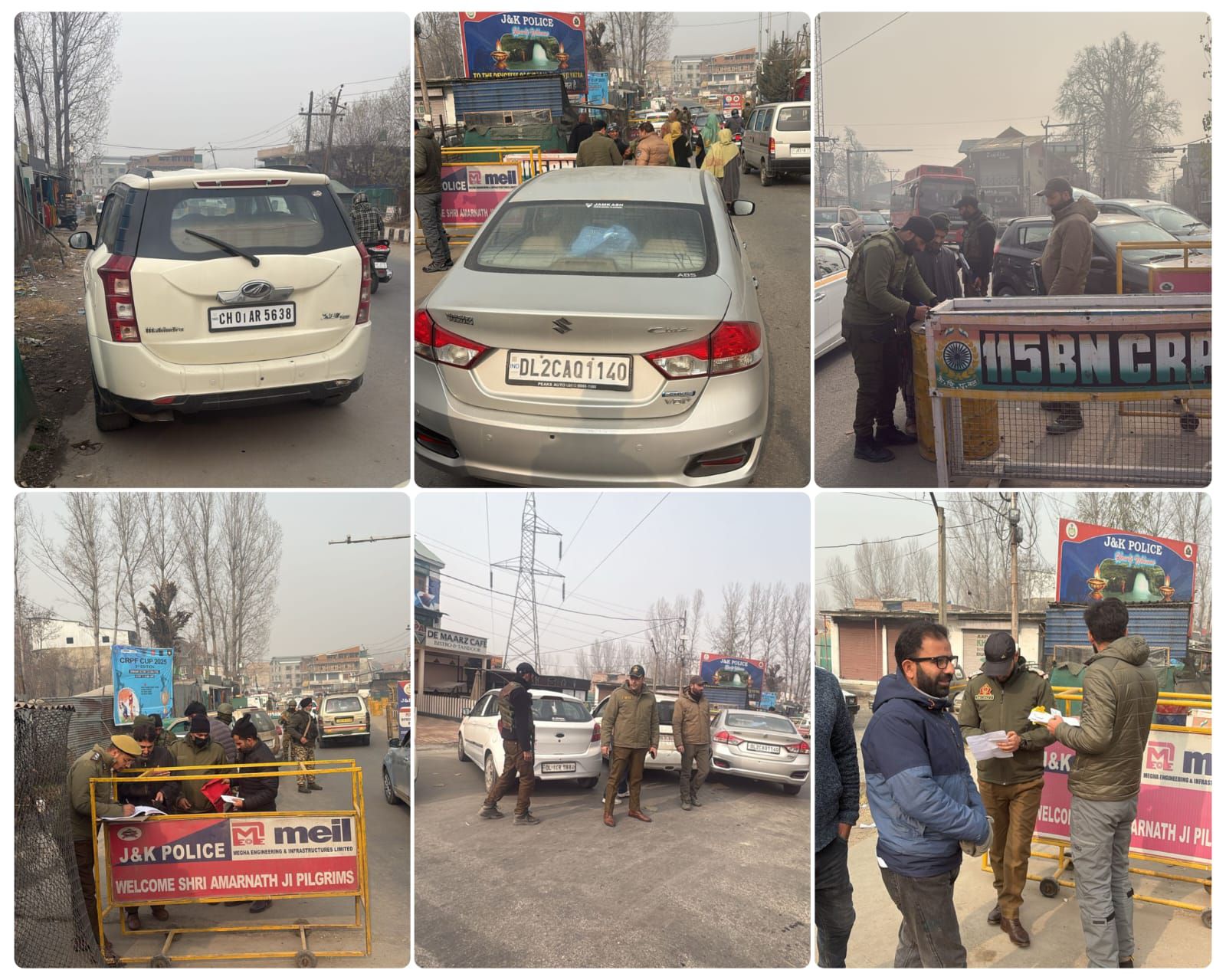
Multiple enforcement drives have been conducted across districts in the Kashmir Valley, leading to the seizure of vehicles bearing registration marks from other States or Union Territories. These actions are being taken on the grounds that non-J&K vehicles not re-registered locally after 12 months of plying are technically non-compliant with Sections 46 and 47 of the Motor Vehicles Act, which require re-registration after prolonged stay.
Recent directives from the Regional Transport Officer (RTO), Jammu make this explicit: owners of out-of-state vehicles must apply for a new J&K registration mark within a prescribed period (usually 15 days) or risk seizure, penalties, and legal proceedings.
Simultaneously, Traffic Police units in Pulwama, Shopian, Ganderbal, and other districts are actively checking documentation and detaining vehicles either without proper ownership transfer or carrying outside registration numbers with incomplete compliance.
For ordinary citizens — families, commuters, drivers, and small entrepreneurs — this translates into vehicles being taken away without clear prior notice, with release procedures that are opaque, demanding, and costly both in time and money.
Legal Clarity Exists — But It’s Being Overlooked
There is established legal precedent that directly contradicts some of the enforcement practices:
High Court Ruling on 9% Token/Lifetime Tax
In the Ishfaq Ahmad Tramboo vs. Transport Department case, the Jammu & Kashmir and Ladakh High Court ruled that:
-
Once a motor vehicle is registered in any State or UT on payment of the statutory fee, that registration is valid throughout India.
-
The Motor Vehicles Act does not require re-registration or a fresh tax simply because a vehicle enters another region.
-
Tax already paid at the point of original registration is not subject to a fresh 9% token or lifetime tax upon transfer or re-registration in J&K.
This means that the demand for additional token tax or lifetime charges on outside vehicles by the RTO or other authorities is unlawful and discriminatory.
High Court Quashed Circular Mandating Re-Registration
Separately, the High Court recently quashed an RTO circular that required out-of-state vehicles to obtain a new J&K registration mark. The court held that:
-
The Motor Vehicles Act allows the assignment of a new registration mark if a vehicle remains in another State or UT for over 12 months.
-
However, a blanket mandate for re-registration and additional tax without lawful basis cannot stand.
Ongoing Contempt Proceedings
In late November 2025, the High Court went further — directing the Transport Department to stop demanding the 9% token tax from out-of-state vehicle owners, noting that failure to adhere to the earlier judgment could amount to contempt of court.
Why the Discrepancy Between Law and Enforcement?
At the core of this crisis is a disconnect between legal provisions and policing priorities:
-
Security Concerns:
Law enforcement officials argue that vehicles without local re-registration or updated documentation pose traceability challenges and may be misused for unlawful activity. This concern intensified after past incidents where vehicles with outside plates were allegedly involved in militant actions. -
Implementation Gaps:
Notices and public advisories are often issued with short timelines and minimal facilitation support, leaving owners scrambling to complete procedures. The RTO’s current push — while legally framed as a compliance action — is being experienced by citizens as an enforcement first, facilitation last approach. -
Selective Enforcement:
Reports suggest that the crackdown is more intense in the Kashmir Valley, even though similar legal requirements apply uniformly across the entire Union Territory. This has given rise to perceptions of unequal application of rules, which undermines trust in governance.
Human and Economic Impact
The repercussions extend well beyond regulatory compliance:
Disrupted Livelihoods
A significant community involved in second-hand vehicle sales, transport services, and ancillary trades now finds its capital immobilized:
-
Vehicles worth crores of rupees remain seized, unsold, or idle;
-
Drivers and cab owners — especially those relying on tourism or seasonal transport — face sudden loss of income as peak mobility months arrive;
-
Small entrepreneurs with bank loans tied to vehicle inventory are now under immense financial strain and emotional stress.
Tourism Sector Hit at the Wrong Time
The timing of these actions — just as winter tourism ramps up — has been particularly damaging for taxi drivers and small fleet operators who depend on mobility to serve tourists and local commuters.
Public Confusion and Distrust
Owners who believed they had complied with required procedures, or who operated vehicles in good faith, now face unclear enforcement criteria, long administrative queues, and arbitrary demands perceived as unjust or punitive.
Governance That Listens and Facilitates — What It Should Look Like
If the aim is effective, humane governance that balances rule of law with compassion and clarity, several practical steps are essential:
1. Clear, Advance Communication
Authorities must issue:
-
Wide-reach public notices, explaining requirements, timelines, and clear steps to comply.
-
Use SMS, radio, newspapers, and public notices rather than only enforcement blitzes.
2. Reasonable Phase-In Periods
Instead of sudden crackdowns:
-
A transition window of at least 30–45 days should be provided to vehicle owners to complete re-registration or transfer formalities.
-
Enforcement should follow facilitation — not precede it.
3. District-Level Facilitation Camps
Deploy mobile RTO camps in all districts — including remote rural areas — so citizens do not have to travel long distances to government offices.
4. Transparent Online Systems
A simple online process for registration/transfer can reduce physical queues and make compliance measurable:
-
Upload documents digitally;
-
Book appointments;
-
Track application status online.
5. Legal Compliance With High Court Judgments
All enforcement must strictly comply with current judicial pronouncements:
-
No additional token or lifetime tax for re-registration;
-
Acknowledgment of the High Court’s requirement that the original registration is valid throughout India;
-
Any changes should be backed by clear legal authority.
6. Gradual Enforcement with Graded Penalties
Penalties — if any — should be proportionate, predictable, and legally grounded, with initial steps focused on reminders and facilitation, and only later, limited sanctions for non-responders.
Conclusion: Authority Must Serve With Humanity
There is no question that rules matter and that effective governance requires compliance with the law. Public safety and vehicle traceability are valid concerns for traffic authorities.
However, compassionate enforcement — grounded in legal clarity, advance facilitation, reasonable transition periods, and transparent communication — is the hallmark of governance that builds trust, not resentment.
When enforcement proceeds without clear public notice, without facilitation, and without compliance with judicial rulings, it does more harm than good — punishing citizens for procedural gaps rather than guiding them toward lawful compliance.
In the words that resonate beyond administrative offices: when authority lacks humanity, it loses its legitimacy — and that loss is what Kashmir’s citizens are experiencing today.