Court Grants Interim Relief in High-Profile Defamation Suit, Highlights Judicial Role in Digital Reputation Protection
By: Javid Amin | 16 December 2025
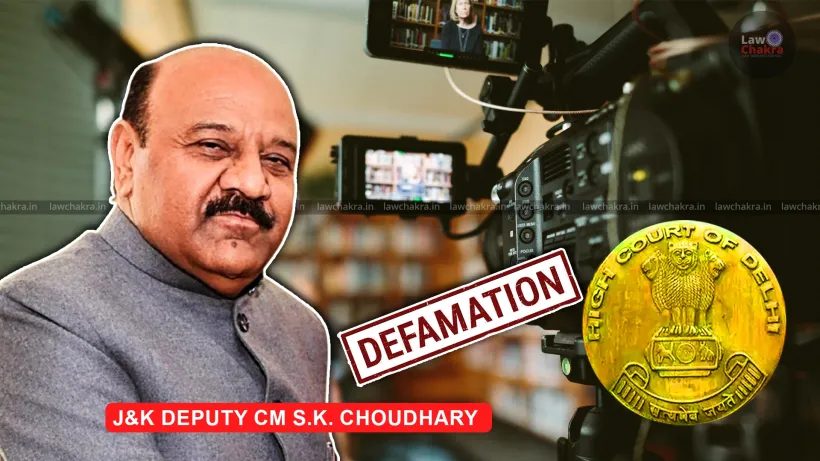
The Delhi High Court has issued a significant order directing the removal of objectionable and allegedly defamatory social media content targeting Surinder Kumar Choudhary, the Deputy Chief Minister of Jammu and Kashmir. The directive came while hearing a defamation suit filed by Choudhary, with Justice Amit Bansal granting him interim relief on the grounds that a prima facie case has been made out in his favour. LawBeat
This judicial intervention underscores the growing intersection between digital platforms, political reputation, and the rule of law in India’s evolving online media landscape.
Court Order: What Was Directed
On December 16, 2025, a single-judge bench of the Delhi High Court ordered the immediate removal of social media content that allegedly defames or portrays Choudhary in an inappropriate context. The order applies to popular platforms such as Facebook, YouTube, and potentially other intermediaries hosting the content. LawBeat
In issuing this direction, the Court highlighted that the nature of the content warranted urgent consideration at the interim stage, even as the broader defamation case proceeds. Lokmat Times
Nature of the Content at Issue
The contested material consists of viral videos circulating online, which, according to Choudhary’s petition, appear to show him in a telephonic conversation with a woman and include elements with sexual undertones. In several instances, the thumbnails of such videos featured Choudhary’s photograph, creating the impression that the voice in the audio belonged to him. Bar and Bench – Indian Legal news
Choudhary has categorically denied that the voice is his and contended that the material is fabricated, defamatory, and deliberately circulated to damage his personal and political reputation. Lokmat Times
Choudhary’s Position and Legal Plea
In the defamation suit filed in the Delhi High Court, Choudhary, a senior leader of the Jammu & Kashmir National Conference and Deputy Chief Minister of the Union Territory, sought both permanent and mandatory injunctions to stop further circulation of the defamatory content online. LawBeat
His legal team argued that the videos had been shared widely across social media platforms and were damaging his public image and political career. They asserted that Choudhary has served as an upright public representative, achieving his political position through merit and should not be subjected to false and harmful narratives. Live Law
Senior Advocate Rajiv Nayar, representing Choudhary, emphasized before the Court that it is “very easy to vilify anybody” in today’s digital environment, especially where misinformation can spread rapidly without adequate checks. Bar and Bench – Indian Legal news
Legal Process and Earlier Directions
The current order came after a preceding hearing on December 9, where the Delhi High Court had directed Choudhary to implead the individuals and entities responsible for uploading the content into the defamation proceedings. The Court also asked Meta Platforms (Facebook) and Google LLC (YouTube) to provide details of the accounts and uploaders involved. LawBeat
At that stage, the Court observed that Choudhary had not provided transcripts of the disputed content, which are critical for the Court’s own assessment of whether the content qualifies as defamatory under law. The Court clarified that without knowing exactly what was said or shown, it could not make final determinations about defamatory impact. Asian Mail
Judicial Reasoning: Prima Facie Case Established
In the December 16 hearing, Justice Amit Bansal noted that a prima facie case had been made in favour of Choudhary. This assessment implies that, at least at the preliminary stage, the evidence presented supports the claim that the content may indeed be unlawful or injurious to Choudhary’s reputation. Based on this, the Court directed the removal of the content pending further trial of the matter. LawBeat
The interim relief does not finally determine the legality of the content but is intended to mitigate ongoing harm while detailed legal arguments continue. Live Law
Digital Platforms in the Crosshairs
As part of earlier directives, the Delhi High Court required digital intermediaries—primarily Meta Platforms and Google LLC—to disclose uploader details including internet protocol (IP) addresses and account information. These details assist Choudhary’s legal team in identifying those responsible and pursuing appropriate legal action against them. Asian Mail
This procedural step reflects a broader trend in Indian courts asserting jurisdiction over digital content intermediaries, compelling cooperation to preserve individual reputations and protect against online defamation.
What Happens Next: Future Hearings
The matter has been listed for further hearings in April 2026, during which the substantive arguments and evidence concerning the defamatory nature of the content will be examined in depth. The interim order on removal does not conclude the case but protects Choudhary’s immediate interests while the legal process unfolds. Lokmat Times
Political and Social Implications
The case highlights the growing tension between political figures and the viral spread of content on social media platforms. Politicians, public representatives, and public personalities increasingly find themselves at the centre of online narratives—some legitimate, others fabricated.
This episode underscores the judiciary’s role in balancing freedom of expression with protection against reputation harm, especially in digital spaces where misinformation can proliferate swiftly. The order signals that courts can act as avenues for redress when online content crosses legal and ethical boundaries.
Comparative Snapshot: Key Case Details
| Aspect | Details |
|---|---|
| Court Ruling | Removal of objectionable content; interim relief granted |
| Targeted Leader | Surinder Kumar Choudhary, Deputy Chief Minister of J&K |
| Content Type | Viral videos with alleged sexual undertones and defamatory implications |
| Choudhary’s Claim | Denies voice is his; content is defamatory and malicious |
| Legal Next Steps | Permanent injunction sought; case listed for further hearing in April 2026 |
| Digital Platforms Involved | Meta (Facebook), Google (YouTube) |
Why This Matters
1. Digital Reputation and Public Office
For elected officials, reputation is integral to the exercise of public authority and public trust. The ease with which content—whether accurate or engineered—can spread poses unique legal and ethical challenges. This case shows the judicial system stepping in to protect reputations where content crosses into actionable defamation. LawBeat
2. Legal Precedents in Social Media Regulation
Judicial orders like this contribute to evolving content regulation jurisprudence in India. They reinforce that platforms hosting user content cannot always remain neutral intermediaries, especially when faced with credible legal claims of harm. Asian Mail
3. Political Communication and Misuse Risks
Political leaders and public figures are particularly vulnerable to misuse of online platforms. Ensuring a legal pathway to counter false narratives affirms institutional mechanisms for accountability in the digital age.
Conclusion
The Delhi High Court’s directive to remove allegedly defamatory and objectionable social media content against Jammu & Kashmir Deputy Chief Minister Surinder Kumar Choudhary marks a critical moment in the interplay between digital media, politics, and the law. While the matter will unfold further in upcoming hearings, the interim order signals that courts are prepared to protect reputations and enforce legal norms in the dynamic online environment.
This development also reflects a broader global trend where courts and regulators are called upon more frequently to interpret and enforce defamation, privacy, and content moderation norms within digital platforms.