Why Meritocracy Matters, How Controversies Spark Reform, and What It Means for Jammu & Kashmir’s Future
By: Javid Amin | 15 December 2025
A Clear Directive Amid Rising Institutional Tension
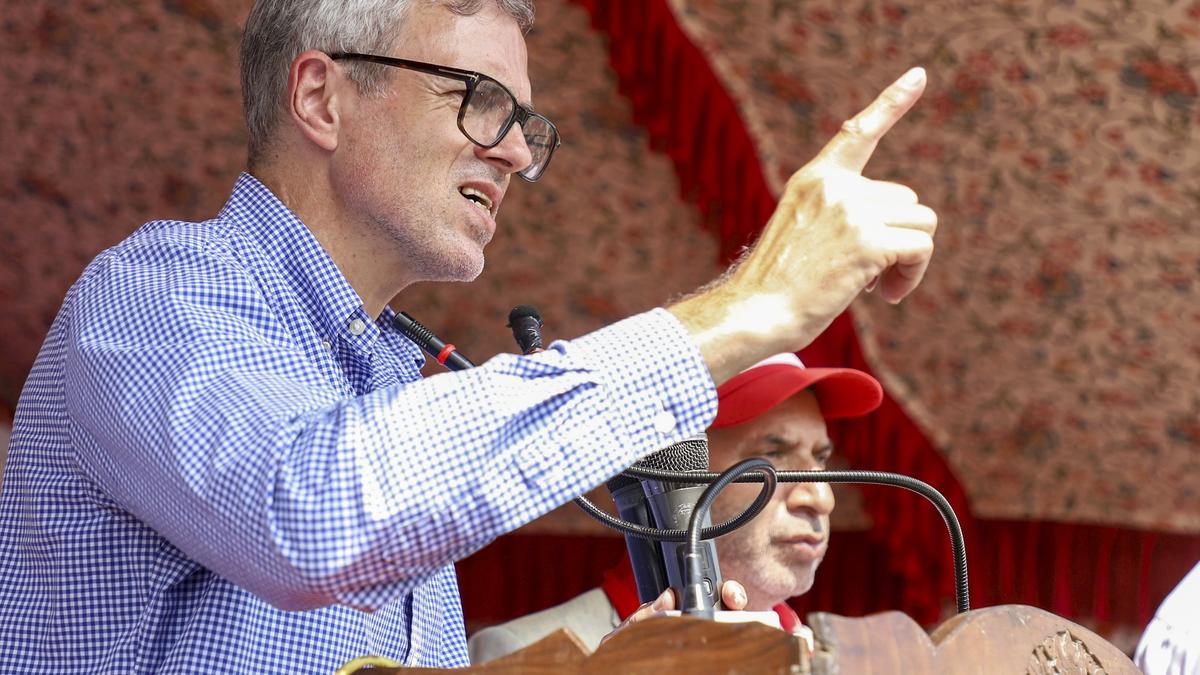
On December 15, 2025, Jammu & Kashmir Chief Minister Omar Abdullah issued a strong public statement urging that politics must be kept out of education and sports in the Union Territory. Speaking to reporters on the sidelines of an official function in Srinagar, he lamented the escalation of political rhetoric into sectors traditionally grounded in merit, fairness, and equal opportunity.
His comments came against the backdrop of a rapidly intensifying Santosh Trophy team selection controversy and ongoing debates about recent medical admissions policies. Abdullah’s assertion that education and sports must remain free from political interference is both a policy stance and a response to growing public concern about institutional credibility and youth confidence in merit-based systems. The Week
This article explores the context, reactions, implications, and the deeper significance of the Chief Minister’s statement, offering readers a nuanced, verified and human-centered account of the unfolding situation.
The Santosh Trophy Controversy — Catalyst for Debate
What Happened? The Root of the Dispute
The immediate trigger for recent controversy was the **selection of the Jammu & Kashmir football squad for the 79th Santosh Trophy, India’s premier inter-state football championship.
According to official reports, the **20-member squad announced for the tournament employed players exclusively from the **Kashmir Valley, with none from the **Jammu region. This discrepancy sparked immediate backlash from political leaders, local activists, and youth groups in Jammu, who alleged regional discrimination and urged corrective action. The Statesman+1
What compounded tensions was the volume of talent reportedly available from Jammu. Opposition voices claimed that out of 98 players who attended trials—including 74 from Jammu region and only 24 from Kashmir—none of the Jammu players were selected for the final lineup. Critics described this as a glaring departure from transparent, merit-based criteria and a breach of established norms. Take One
Government and Sports Council Response
The Jammu & Kashmir Sports Council assertively defended the selection process, emphasizing that the final picks were made solely on the basis of talent, performance, and fitness standards. They dismissed claims of bias as “misleading.” The Statesman
Meanwhile, Sports Minister Satish Sharma ordered a time-bound, impartial inquiry into the selection process. He stressed that any deviation from accepted merit-based practices would be addressed with appropriate punitive measures. The Statesman
This step was aimed in part at curbing political escalation of the dispute and reassuring stakeholders—especially young athletes—that fairness remains the guiding principle in team selection.
Protests and Political Responses Across the Region
In Jammu, protests erupted, with local organisations and politicians demanding accountability and immediate corrective measures. Some groups went so far as to call for the resignation of sports officials implicated in the controversy. asianewsnetwork.net
BJP leaders, including party spokesperson Rajni Sethi, condemned what they termed “discriminatory policy.” They argued that Jammu’s youth had been systematically sidelined in merit-based processes, reinforcing perceptions of bias in governance. Take One
Against this backdrop, Chief Minister Omar Abdullah intervened to de-escalate the political dimension of the controversy.
CM Omar Abdullah’s Message — Merit Over Politics
The Core Statement
Chief Minister Omar Abdullah was unequivocal:
“Why bring politics into everything? If any child is taken in the team on the basis of influence, then they have no justification to be part of the team.”
His appeal: Keep politics for politics, but not in sports and education. The Week
Abdullah noted that the Santosh Trophy squad was selected on performance and fitness, not political pressure or favours. Making such statements underscores his emphasis on meritocracy and fairness as non-negotiable values for Jammu and Kashmir’s governance. The Week
Contextual Remarks on Education
Abdullah’s remarks on education echoed similar concerns. He referenced ongoing debates about medical entrance selections and admissions processes, where political narratives had surfaced in recent months and created public distress.
Although not confined to this specific controversy, his broader point was consistent: Educational standards and selections must remain insulated from political sentiment and assumptions. The Week
Why This Matters — Institutional Trust and Youth Opportunities
1. Youth Empowerment Through Fair Systems
For the millions of young students and athletes in Jammu & Kashmir, education and sports are gateways to national and international opportunities. Whether aspiring to join a medical college or compete at a national sports level, they rely on transparent, merit-based pathways. Politicisation threatens that trust.
Abdullah’s message resonates because it prioritises hard work, performance, and fairness over influence, patronage, or identity politics. When merit wins, capable students and athletes feel confident that their efforts will be rewarded. This reinforces motivation, resilience, and trust in institutions.
2. Institutional Trust and Credibility
Politicised decision-making erodes confidence in institutions. When selection processes are viewed as influenced by political agendas, the credibility of governing bodies suffers. This has real consequences:
-
Reduced engagement from stakeholders (students, parents, coaches)
-
Increased public scepticism about fairness
-
Heightened political polarisation even in non-political domains
-
Potential decline in performance standards
Abdullah’s public stance seeks to restore credibility, neutrality, and fairness to institutions tasked with youth development.
3. Long-Term Social Stability
In Jammu & Kashmir, which has historically grappled with identity, opportunity gaps, and competing regional narratives, measures that promote inclusiveness and fairness have broader social impact. Sports and education provide platforms for youth to channel energy positively. When these are shown to be apolitical and merit-based, they reduce grievance, broaden collaboration, and strengthen cohesion.
Stakeholder Perspectives — Table and Analysis
| Stakeholder | Position | Implication |
|---|---|---|
| CM Omar Abdullah | Called for politics-free education and sports. | Reinforces meritocracy and fairness. |
| J&K Sports Council / Officials | Defended selection process as transparent and performance-based. | Seeks to maintain credibility and calm public concerns. |
| BJP Leaders / Opposition | Alleged discrimination, called for inquiries and resignations. | Raises political pressure on governance and institutional neutrality. |
| Students & Athletes | Desire merit-based opportunities and systems that reward hard work. | Their trust depends on depoliticised, transparent systems. |
Historical and Broader Controversies in the Region
While the Santosh Trophy row was the immediate trigger, it is part of a broader pattern of debates around politicisation of cultural, institutional, and educational practices in Jammu & Kashmir.
For example:
-
Debates around medical admissions policies, with some groups demanding different criteria or reservations for specific communities—issues which at times took on political overtones beyond academic standards. The Week
-
Controversial directives related to school activities and celebrations in previous months, prompting discussions about external influence on education. Kashmir Media Service
These contexts add depth to why Abdullah’s statement is not isolated, but rather reflects a growing concern extended across domains.
Criticisms, Challenges and Counterarguments
Political Critics’ View
Opposition leaders, particularly from the BJP, have argued that selection processes in sports and education sometimes reflect deeper regional biases—claiming that purely meritocratic systems may inadvertently favour certain communities over others based on access, resources, or institutional networks. Take One
Such critics contest that raising politics out of these discussions might actually serve to maintain subtle dominance structures.
Institutional Response to Criticism
Officials, including Sports Minister Satish Sharma, have responded with commitments to impartial investigation and review, signalling willingness to address lapses if found. The Statesman
This balance between rebutting politicisation while being open to transparent review reflects a rational governance approach.
Path Forward — Recommendations for Sustaining Meritocracy
To meaningfully insulate education and sports from political influence, several steps can be adopted:
1. Transparent Selection Protocols
Clear criteria, publicly accessible evaluation metrics, and third-party audits for selections in sports and education.
2. Independent Oversight Mechanisms
Creation of independent oversight boards comprising educators, coaches, and civil society representatives to ensure accountability.
3. Enhanced Communication Channels
Regular updates and open dialogue between institutions and stakeholders, reducing misinformation.
4. Youth Advocacy and Representation
Platforms where students and athletes can voice concerns without political pressure.
5. Capacity Building
Investing in grassroots infrastructure so opportunities for merit-based advancement are equitable.
Bottom-Line: A Watershed Moment for Institutional Integrity in Jammu & Kashmir
Chief Minister Omar Abdullah’s plea to keep politics out of education and sports resonates not just as a public statement, but as a policy imperative for governance and youth empowerment. In a region where institutional trust affects social cohesion and future prospects, reaffirming merit — over influence, identity politics or political vendettas — strengthens faith in systems that must serve all citizens equally.
Whether the Santosh Trophy controversy becomes a turning point or a routine political flashpoint depends on how institutions respond. The Chief Minister’s directive provides a foundation; it is now up to governance bodies, political actors, civil society and the youth themselves to build on it constructively.