Precautionary Curbs Continue Across Kashmir After Protests: Internet Restricted, Schools Closed Till March 7
By: Javid Amin | 04 March 2026
Authorities in Kashmir have extended precautionary restrictions across the Valley until Thursday amid heightened security concerns following widespread protests in several districts. The curbs include limitations on mobile internet speeds, suspension of certain phone services, and the closure of schools that were scheduled to reopen after the winter break.
Officials say the measures are intended to prevent unrest and maintain public order while the administration closely monitors the evolving situation on the ground.
The restrictions affect multiple parts of the Kashmir Valley, including the summer capital Srinagar, as well as several other districts where demonstrations were reported earlier this week.
Communication Restrictions Remain in Force
One of the most significant restrictions currently in place involves internet connectivity.
Authorities have limited mobile internet access across the Valley to 2G speeds, effectively restricting high-bandwidth services such as video streaming, large downloads, and high-quality social media uploads. Officials say the step is intended to curb the rapid spread of rumors and misinformation online during a sensitive security situation.
In addition to slower internet speeds, outgoing voice calls from prepaid mobile connections have been suspended in many areas. However, incoming calls and broadband connections for essential services remain operational.
Government officials have stated that these communication restrictions will remain in place until at least Thursday, after which the situation will be reassessed.
Such communication controls are often implemented in conflict-sensitive regions to reduce the risk of large gatherings or coordination of protests through social media platforms.
Schools to Remain Closed Till March 7
Education has also been affected by the ongoing restrictions.
Schools that were originally scheduled to reopen after the winter vacation on March 1 will now remain closed until March 7, according to local education authorities.
The decision impacts thousands of students across the Valley who were preparing to resume regular classes after the seasonal break.
Officials said the closure is purely precautionary and is intended to ensure the safety of students and school staff during the current period of uncertainty.
Private and government institutions alike have been instructed to suspend classroom activities until further notice.
However, some schools are exploring limited online learning options, though the reduced internet speeds make full digital classes difficult for many students.
Heavy Security Deployment Across Sensitive Areas
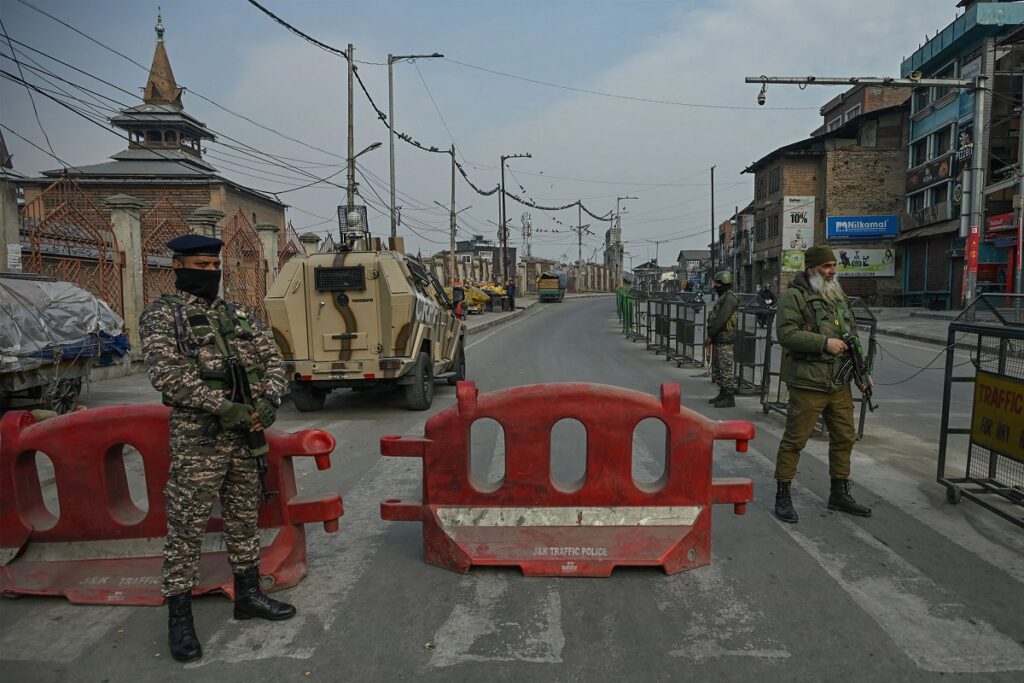
Security forces have been deployed in large numbers across several key locations in the Valley.
Sensitive areas such as Lal Chowk, downtown Srinagar, and other densely populated neighborhoods are currently under increased surveillance and patrol.
Additional checkpoints have been established along major roads, and security personnel are conducting frequent patrols to monitor the situation.
Authorities say the deployment is meant to deter violence and ensure that protests do not escalate into larger disturbances.
Local residents reported the presence of police vehicles and paramilitary units at several intersections in the city, particularly in older parts of Srinagar where demonstrations have historically taken place.
Protests Reported in Multiple Districts
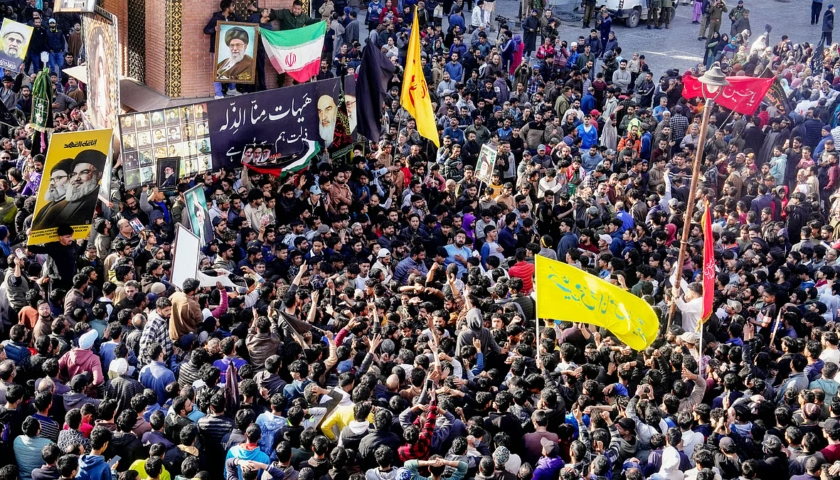
The precautionary measures follow demonstrations that erupted in several districts across the region.
Protests were reported in:
-
Srinagar
-
Budgam
-
Bandipora
-
Baramulla
In some areas, crowds gathered to express anger and frustration over developments linked to geopolitical tensions in the Middle East.
Security forces were deployed to disperse gatherings and prevent escalation. Officials said the situation remained largely under control, though authorities opted to impose temporary restrictions to avoid further unrest.
In neighboring Ladakh, security agencies also increased monitoring as a precaution.
Authorities Say Restrictions Are Preventive
Government officials emphasized that the curbs are preventive rather than punitive.
According to senior administration officials in Jammu and Kashmir, the restrictions are intended to maintain law and order during a period of heightened emotions and public demonstrations.
Authorities said the measures will be reviewed on a daily basis and may be lifted earlier if the situation stabilizes.
“Public safety remains our priority,” one official said. “These are temporary steps to prevent any deterioration of the law-and-order situation.”
The administration has also urged residents to remain calm and avoid spreading unverified information online.
Internet Curbs and Kashmir’s Recent History
Communication restrictions are not new to Kashmir.
Over the past decade, authorities have frequently used internet controls during periods of unrest, citing security concerns and the need to prevent misinformation from spreading rapidly through social media platforms.
Such measures have often been controversial, with civil liberties groups arguing that communication shutdowns affect education, healthcare access, and economic activity.
However, security agencies maintain that temporary restrictions help prevent the escalation of protests and reduce the risk of violence.
Impact on Daily Life
For ordinary residents, the restrictions have disrupted routine activities.
Many small businesses that rely on mobile payments and online services have reported slow transactions due to the 2G internet limit.
Students preparing for exams are also facing difficulties accessing educational resources and online study materials.
Transport services and markets remain open in most areas, though security checks have increased travel time for commuters.
Despite these challenges, daily life in many parts of the Valley continues cautiously as residents adjust to the restrictions.
Security Agencies Remain on High Alert
Security forces remain on heightened alert across the Valley, with intelligence agencies monitoring developments closely.
Authorities are particularly focused on preventing the spread of unrest from one district to another.
Officials say the next 48 hours will be crucial in determining whether the restrictions can be relaxed or whether additional measures may be needed.
Outlook: Possible Restoration of Services
For now, officials say the restrictions are temporary and subject to review.
If the security situation remains stable:
-
Schools could reopen after March 7
-
Internet services may gradually return to 4G or 5G speeds
-
Communication restrictions could be lifted
However, authorities have indicated that any relaxation will depend on ground assessments by security agencies.
The Bigger Picture
The current situation highlights the delicate balance authorities must maintain in sensitive regions like Kashmir.
While restrictions are designed to prevent unrest, they also affect everyday life, education, and economic activity.
For residents of the Valley, the hope is that calm prevails quickly so that normal life can resume without prolonged disruptions.
Until then, Kashmir remains under tight precautionary measures as officials work to ensure stability across the region.