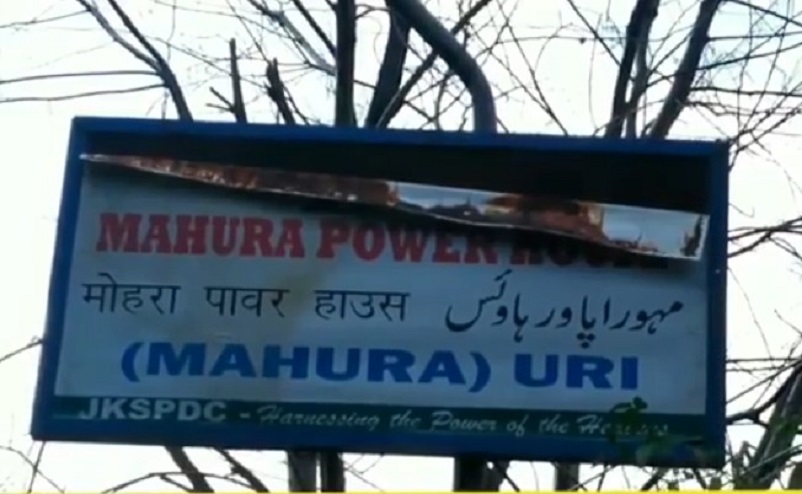
124-Year-Old Mohra Hydroelectric Power Project in Kashmir Set for Revival
By: Javid Amin | 07 March 2026
One of South Asia’s earliest hydroelectric power stations—the historic Mohra Hydroelectric Power Project—is set to return to life after remaining defunct for more than three decades.
The government of Jammu and Kashmir has announced plans to restore the century-old power plant under a Public-Private Partnership (PPP) model, aiming to combine heritage preservation with modern renewable energy development.
Located in the scenic Uri region of Baramulla district, the project was originally built in 1902 and once served as the backbone of electricity supply for the Kashmir Valley.
The revival effort signals a renewed push by authorities to expand renewable energy capacity while preserving historically significant infrastructure.
A Landmark in South Asian Hydropower History
The Mohra Hydroelectric Power Project holds a special place in the region’s engineering history.
Constructed during the rule of Pratap Singh, the power station represented one of the earliest attempts to harness river systems in the Himalayas for electricity generation.
At the time of its commissioning, the plant had a generation capacity of 10.5 megawatts, which was considered substantial for the early 20th century.
For decades, the facility supplied electricity to the capital city of Srinagar and surrounding areas, helping transform the region’s urban infrastructure.
Street lighting, government buildings, and early industries in Srinagar relied heavily on electricity produced at Mohra.
Engineering Marvel of Its Era
What made the Mohra project particularly remarkable was its innovative engineering design.
One of its most striking features was an 11-kilometre wooden flume, a specially constructed channel used to carry water from the river intake to the power station.
At the time, this flume system was considered a technological breakthrough, enabling engineers to efficiently direct water through mountainous terrain to drive hydroelectric turbines.
Historians and engineers have often described the structure as one of the most impressive hydropower engineering feats of its era in South Asia.
The plant’s architecture also reflected early industrial design principles, blending stone masonry with mechanical equipment imported from Europe.
Why the Project Became Defunct
Despite its early success, the Mohra power station gradually fell into decline.
Several factors contributed to its eventual shutdown:
Flood Damage
The region experienced repeated floods that damaged parts of the facility and weakened its supporting infrastructure.
Aging Equipment
Much of the plant’s machinery became outdated as newer and more efficient hydroelectric technologies emerged.
Lack of Modernization
Successive decades saw limited investment in upgrades or modernization.
By the early 1990s, the plant had become economically unviable and was eventually shut down.
Since then, the once-historic power station has remained abandoned, with only remnants of its infrastructure visible in the Uri landscape.
New Revival Plan Announced
After years of discussions, authorities have now taken steps to revive the historic plant.
The government of Jammu and Kashmir has approved a restoration plan based on a Public-Private Partnership (PPP) model, allowing private investors to participate in the redevelopment of the facility.
Key elements of the revival plan include:
• Reconstruction and modernization of power generation infrastructure
• Preservation of historically significant structures
• Integration with modern power distribution systems
The revival project aims to restore the plant’s generating capacity while maintaining its heritage value.
Role of IIT Roorkee
One of India’s leading engineering institutions, Indian Institute of Technology Roorkee, has been tasked with updating the Detailed Project Report (DPR).
The updated DPR will examine:
-
technical feasibility of restoration
-
environmental impact
-
modern turbine installation options
-
cost projections for the revival
Experts from IIT Roorkee are expected to assess how the century-old structure can be upgraded to meet current power generation standards.
Tendering Expected in 2026
Authorities say the tendering process for the project is expected to begin later in 2026.
Private developers will be invited to submit proposals for the construction and operational phases of the revived plant.
Once the bidding process is completed, the selected partner will work with government agencies to implement the restoration plan.
Officials hope the PPP model will accelerate the project’s completion while ensuring efficient management of resources.
Funding Challenges in the Past
Previous attempts to revive the project faced financial hurdles.
Earlier proposals sought funding under the Prime Minister’s Development Package (PMDP-2015) for Jammu and Kashmir.
However, the plan did not receive the required financial support.
According to earlier estimates prepared in 2022, the cost of restoring the facility was expected to be around ₹135 crore.
Rising construction costs and inflation may require updated financial projections in the new DPR.
Technical Challenges of Restoration
Reviving a hydroelectric project that is more than a century old presents significant technical challenges.
Engineers must address several issues:
Modernization of Infrastructure
The plant’s turbines, generators, and control systems will need complete replacement or major upgrades.
Structural Stability
Many parts of the original structure have deteriorated due to decades of neglect.
Integration With Modern Grid
The revived plant must be compatible with contemporary electricity distribution networks.
Balancing modernization with heritage preservation will require careful engineering planning.
Environmental Considerations
The Uri region is known for its fragile mountain ecosystem.
Environmental experts say the restoration project must carefully assess:
-
river flow management
-
ecological impact on aquatic life
-
land stability and erosion risks
Hydropower projects often face scrutiny due to concerns about their environmental impact.
Authorities are expected to conduct environmental assessments before final approval of the construction phase.
Local Community Expectations
Residents in the Uri region have welcomed the revival announcement.
Local communities expect the project to bring several benefits, including:
-
employment opportunities during construction
-
improved electricity supply
-
potential tourism development
Many residents also see the restoration as a chance to reclaim a significant part of Kashmir’s industrial heritage.
Tourism and Heritage Potential
Experts believe the restored power plant could become an important heritage attraction.
Historic hydroelectric stations around the world often draw visitors interested in industrial history and engineering heritage.
If properly preserved, the Mohra Hydroelectric Power Project could become part of a broader heritage tourism circuit in Kashmir.
Visitors could explore the plant’s early 20th-century design while learning about the region’s technological history.
Boost for Renewable Energy
Hydropower remains a critical component of renewable energy development in Jammu and Kashmir.
The region’s mountainous terrain and river systems make it ideal for hydroelectric projects.
Reviving the Mohra plant would:
-
add renewable electricity to the regional grid
-
reduce dependence on fossil fuel-based power imports
-
strengthen local energy infrastructure
Even though the plant’s capacity is relatively small compared with modern projects, its revival would contribute to sustainable energy goals.
Symbol of Engineering Heritage
Beyond its economic and energy value, the project carries symbolic importance.
The Mohra power station represents a time when Kashmir embraced modern technology to transform infrastructure and urban life.
Restoring the plant would highlight the region’s historical contributions to engineering and energy development.
What Happens Next
Several steps remain before construction can begin.
These include:
-
Completion of the updated DPR by Indian Institute of Technology Roorkee
-
Government approval of the project’s technical and financial framework
-
Tendering and selection of private developers
-
Environmental clearances and feasibility studies
If the process moves smoothly, restoration work could begin soon after the bidding phase concludes.
Conclusion
The planned revival of the Mohra Hydroelectric Power Project marks an important step toward preserving one of South Asia’s oldest hydroelectric stations.
After more than three decades of inactivity, the historic plant may soon return as both a renewable energy source and a symbol of Kashmir’s engineering heritage.
If successfully implemented, the project could demonstrate how historic infrastructure can be adapted for modern needs—combining sustainability, heritage preservation, and regional development.