17 Kashmiri Nursing Students Released After Detention in Rajasthan Amid Course Recognition Row
By: Javid Amin | 11 March 2026
Protest at Mewar University over unrecognized B.Sc Nursing program ends with bail, but students’ academic future remains uncertain
Kashmiri Nursing Students Freed After Two Days in Custody
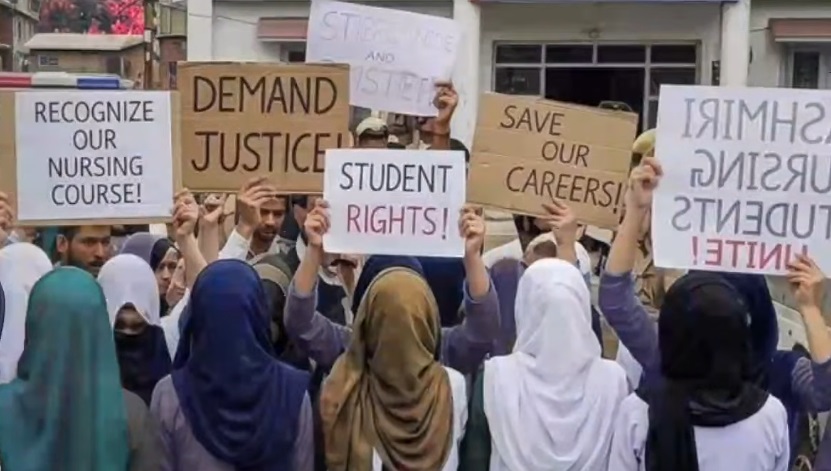
Seventeen nursing students from Kashmir detained in Rajasthan following protests over the recognition of their academic program have been released on bail, bringing temporary relief to the group after two days in custody.
The students, enrolled in a Bachelor of Science (B.Sc) Nursing program at Mewar University in Chittorgarh, were detained after demonstrations on campus escalated into clashes with police.
A local court granted bail on March 11, 2026, allowing the students to walk free after spending nearly two days in a sub-district jail.
While the legal issue surrounding their detention has been resolved for now, the core dispute—recognition of their nursing course—remains unresolved, leaving their academic future uncertain.
Why the Students Protested
The protest was triggered by allegations that the B.Sc Nursing program pursued by the students had not received formal recognition from the country’s key regulatory bodies.
These include:
-
Rajasthan Nursing Council (RNC)
-
Indian Nursing Council (INC)
Recognition from these bodies is essential for graduates to obtain professional registration and legally practice as nurses in India.
According to the protesting students, they enrolled in the course believing it had full regulatory approval.
However, they later discovered that the recognition process had not been completed.
The realization triggered anger and anxiety among the students, many of whom are now in the final year of their degree program.
Protest Escalates on Campus
Tensions escalated on the university campus when students began demonstrations demanding clarity from the administration.
The protest intensified when one student reportedly attempted self-immolation, an act that police intervened to stop.
Authorities quickly moved to control the situation.
Police detained the group after confrontations between protesters and security personnel intensified.
Officials said the detentions were made to prevent further escalation and maintain law and order on campus.
Bail Granted by Local Court
Following their arrest, the students were presented before a court in Chittorgarh.
On March 11, 2026, the court granted bail to all seventeen students.
The students were released after completing bail formalities and returning from the sub-district jail where they had been held.
While their release ended the immediate legal crisis, the larger academic dispute remains unresolved.
Students Say They Were Misled
Many of the students claim that the university did not adequately inform them about the pending status of their course recognition.
Some students say they had already invested several years of study and significant financial resources in the program.
For final-year students, the situation is particularly alarming.
Without recognition from regulatory bodies such as the Indian Nursing Council, they would not be eligible for professional registration.
This would effectively prevent them from working as nurses anywhere in India.
University’s Response
Officials from Mewar University have stated that the recognition process for the course is still underway.
According to the university administration, the matter is currently under legal consideration.
The institution has indicated that the recognition dispute is linked to ongoing proceedings before the Rajasthan High Court.
University officials have urged students to remain patient while the legal process unfolds.
However, students argue that delays in regulatory approvals should not jeopardize their careers.
Psychological Toll on Students
The attempted self-immolation during the protest underscores the intense emotional pressure students are facing.
For many students from Jammu and Kashmir, pursuing higher education outside the region involves significant financial sacrifices by families.
The fear of losing years of education and career prospects has caused considerable stress.
Student groups and counselors say that academic uncertainty can lead to severe psychological consequences, particularly when professional degrees are involved.
The Broader Problem of Course Recognition
The dispute highlights a recurring issue in India’s higher education sector—universities offering professional programs before securing full regulatory approvals.
In regulated professions such as nursing, medicine, and engineering, accreditation is essential.
Without recognition from relevant councils:
-
graduates cannot obtain professional licenses
-
degrees may not be accepted by employers
-
further studies may become difficult
Experts say stronger regulatory oversight is necessary to prevent such situations.
Possible Academic and Legal Options for the Students
Despite the uncertainty, several options remain open to the affected students.
1. Legal Remedies
Students may continue pursuing legal action in the Rajasthan High Court.
Courts have previously ordered retrospective recognition in cases where students were misled by institutions.
2. Transfers to Recognized Institutions
Students may attempt to transfer to recognized nursing colleges in other states.
However, such transfers can be difficult, particularly for those in their final year.
3. Bridge Courses
In some cases, regulatory bodies have allowed bridge programs that enable students to meet recognition requirements.
4. Government Intervention
Students may seek support from:
-
the Indian Nursing Council
-
the Ministry of Health and Family Welfare, India
-
authorities in Jammu and Kashmir
Such intervention could accelerate the recognition process or create special relief measures.
Growing Concerns Among Kashmiri Students Studying Outside the Region
The case has drawn attention within the Kashmiri student community across India.
Thousands of students from Jammu and Kashmir pursue higher education in other states every year.
Incidents involving course recognition disputes can create a trust deficit between students and educational institutions.
Student organizations have called for stricter monitoring of universities offering professional courses.
Policy Lessons from the Crisis
Education policy experts say the case exposes gaps in the regulatory system.
Some of the key lessons include:
Stronger Accreditation Oversight
Universities should not admit students to professional programs until recognition is formally granted.
Transparent Admission Processes
Institutions must clearly disclose the approval status of courses to prospective students.
Faster Regulatory Decisions
Delays in recognition processes can create serious uncertainty for students already enrolled.
What Happens Next
For the seventeen Kashmiri students, the immediate challenge of detention is over.
But their long-term future still depends on the outcome of regulatory and legal processes.
If the B.Sc Nursing program at Mewar University ultimately receives recognition, their academic careers may continue without interruption.
If not, they may face difficult choices about transferring, repeating courses, or pursuing legal remedies.
Conclusion
The release of seventeen Kashmiri nursing students detained after protests in Rajasthan marks the end of a tense legal episode but not the end of the controversy.
The core issue—the recognition of their nursing course by the Indian Nursing Council and Rajasthan Nursing Council—remains unresolved.
Until a clear decision emerges, the students’ academic and professional futures remain uncertain.
The case serves as a reminder of the critical importance of transparency and accountability in India’s higher education system.