Kashmir Vande Bharat Train Update 2026: Jammu–Srinagar Direct Rail Link Delayed, Launch Soon
By: Javid Amin | 25 March 2026
A Near-Ready Rail Dream Faces Delay, But Promises a Transformational Leap for Connectivity and Economy
A Long-Awaited Journey Still on Hold
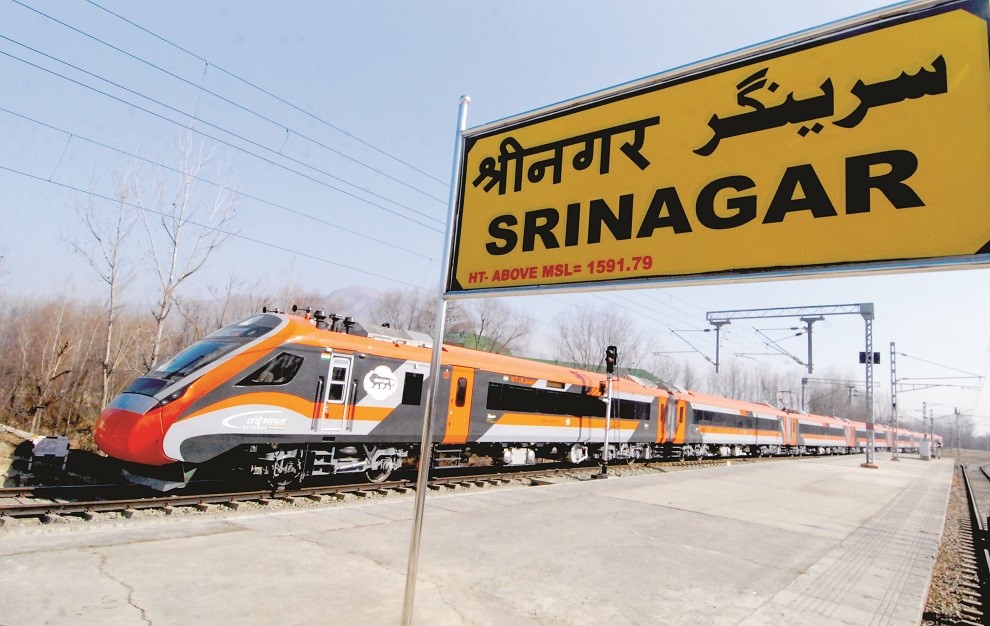
For decades, seamless rail connectivity between Jammu and the Kashmir Valley has symbolized both aspiration and strategic necessity. In 2026, that dream seemed closer than ever, with the proposed direct extension of the high-speed Vande Bharat Express set to connect Jammu and Srinagar.
Originally scheduled for launch on March 1, 2026, the service has now been deferred by Northern Railway due to “unavoidable reasons,” primarily linked to incomplete infrastructure upgrades at Jammu Tawi railway station.
While the delay has sparked disappointment, the project remains tantalizingly close to completion—poised to reshape mobility, tourism, and economic dynamics across Jammu & Kashmir.
Current Status: Almost Ready, Yet Not Quite There
The groundwork for the Jammu–Srinagar Vande Bharat corridor is largely complete. Tracks, tunnels, bridges, and signaling systems have been installed and tested across one of India’s most challenging railway terrains.
Key Developments:
- Planned launch date: March 1, 2026
- Status: Deferred indefinitely (temporary delay)
- Primary bottleneck: Final upgrades at Jammu Tawi station
- Operational segment: Trains already run between Shri Mata Vaishno Devi Katra and Srinagar
The partial operation between Katra and Srinagar demonstrates that the most technically complex portions of the route are already functional.
Capacity Expansion:
The upgraded service aims to deploy a 20-coach train set, a significant jump from the current 8-coach configuration:
- Current capacity: ~530 passengers
- Future capacity: 1,300+ passengers
This expansion signals confidence in rising passenger demand, especially from tourists and local commuters.
Route & Travel Time: Redefining Distance in Kashmir
Once operational, the Vande Bharat Express will redefine how people perceive distance between Jammu and Srinagar.
Travel Time:
- Estimated journey: ~4 hours 55 minutes
This is a major improvement compared to:
- Road travel: 8–10 hours (subject to weather and traffic)
Key Route Highlights:
- Seven strategic halts connecting towns and economic nodes
- High-altitude tunnels cutting through the Himalayas
- Seamless integration of Jammu with the Kashmir Valley
Engineering Marvel:
The train will traverse the iconic Chenab Rail Bridge—the world’s highest railway bridge.
Chenab Rail Bridge: The Crown Jewel of the Project
Standing tall over the Chenab River, this engineering masterpiece is more than just infrastructure—it is a symbol of India’s technological prowess.
Key Facts:
- Height: Taller than the Eiffel Tower
- Location: Reasi district
- Significance: Connects previously inaccessible mountainous regions
The bridge is designed to withstand:
- High wind speeds
- Seismic activity
- Extreme weather conditions
Its completion marks a turning point in the Udhampur–Srinagar–Baramulla Rail Link, one of the most ambitious rail projects in the country.
Strategic Importance: More Than Just a Train
The Jammu–Srinagar Vande Bharat link is not merely a transportation upgrade—it is a socio-economic catalyst.
Tourism Boom
Destinations like:
- Indira Gandhi Memorial Tulip Garden
- Gulmarg
- Pahalgam
…will become significantly more accessible.
Expected Impact:
- Increased tourist footfall
- Year-round travel instead of seasonal peaks
- Boost to hospitality, transport, and local handicrafts
Local Residents: A Lifeline Upgrade
For Kashmiris, especially students, traders, and families, this rail link offers:
- Reliable, all-weather connectivity
- Reduced travel fatigue
- Lower transportation costs
It also enhances access to:
- Educational institutions
- Healthcare facilities
- Employment opportunities
Business & Trade Acceleration
Improved passenger flow often translates into:
- Higher demand for goods and services
- Expansion of local markets
- Growth in small and medium enterprises (SMEs)
Faster movement of people enables:
- Better trade linkages between Jammu and Srinagar
- Increased investment potential
Governance & Integration
From an administrative standpoint, the project strengthens:
- National integration
- Infrastructure parity with other regions
- Strategic mobility in a sensitive border state
Challenges & Risks: The Roadblocks Ahead
Despite its promise, the project faces several challenges that require careful management.
Infrastructure Delays
The incomplete upgrades at Jammu Tawi station highlight:
- The complexity of modernizing legacy infrastructure
- Coordination challenges between multiple agencies
Weather Vulnerability
Kashmir’s terrain is notoriously unpredictable:
- Heavy snowfall
- Landslides
- Avalanche-prone zones
These factors could impact punctuality and operational efficiency.
Security Concerns
Given the region’s sensitivity:
- Robust surveillance systems are essential
- Coordination between railways and security agencies is critical
Ensuring passenger safety will remain a top priority.
Socio-Economic Impact: A Deep Dive
Economic Multiplier Effect
Infrastructure projects like this typically generate:
- Direct employment (construction, operations)
- Indirect employment (tourism, retail, logistics)
The multiplier effect could significantly uplift:
- Household incomes
- Regional GDP contribution
Rural Connectivity
Intermediate stops will:
- Bring remote areas into mainstream economic activity
- Enable rural artisans to access larger markets
Education & Mobility
Students traveling between Jammu and Srinagar will benefit from:
- Reduced commute times
- Safer travel options
- Greater access to institutions
Ground Reality Check: Why the Delay Matters
While delays in infrastructure projects are not uncommon, this particular postponement is significant because:
- Expectations were high due to prior announcements
- Most of the hard engineering work is already complete
- The remaining issues are administrative and infrastructural—not structural
This suggests the delay is temporary rather than systemic.
What Lies Ahead: Timeline & Expectations
Though no revised launch date has been officially confirmed, indicators suggest:
- Final station works are nearing completion
- Trial runs have already validated route readiness
Likely Scenario:
The service could be operational within the next few months, barring unforeseen setbacks.
Expert Perspective: A Turning Point for Kashmir
From a socio-economic lens, the Jammu–Srinagar Vande Bharat link represents:
- A shift from isolation to integration
- A move toward high-speed regional connectivity
- A foundation for future economic resilience
The delay, while frustrating, does not diminish the transformative potential of this project.
Key Takeaway
The direct Jammu–Srinagar Vande Bharat Express is a near-complete dream temporarily paused. Once operational, it will:
- Cut travel time drastically
- Boost tourism and trade
- Enhance quality of life for residents
- Strengthen national connectivity
In essence, it is not just a train—it is a lifeline in motion, waiting for its final green signal.
Final Word
Kashmir stands on the brink of a transportation revolution. The tracks are laid, the trains are ready, and the promise is real. All that remains is the completion of the final mile—both literally and administratively.
When that happens, the whistle of the Vande Bharat won’t just signal departure—it will mark the beginning of a new era for Jammu & Kashmir.