14 Injured in Kashmir Protests Over Khamenei Killing | Lal Chowk Barricaded, Restrictions Continue Across J&K
By: Javid Amin | 02 March 2026
14 Injured as Protests Rock Kashmir After Reports of Khamenei’s Killing
At least 14 people were injured in clashes between protesters and security forces across parts of Kashmir on Sunday following reports of the killing of Iran’s Supreme Leader Ali Khamenei.
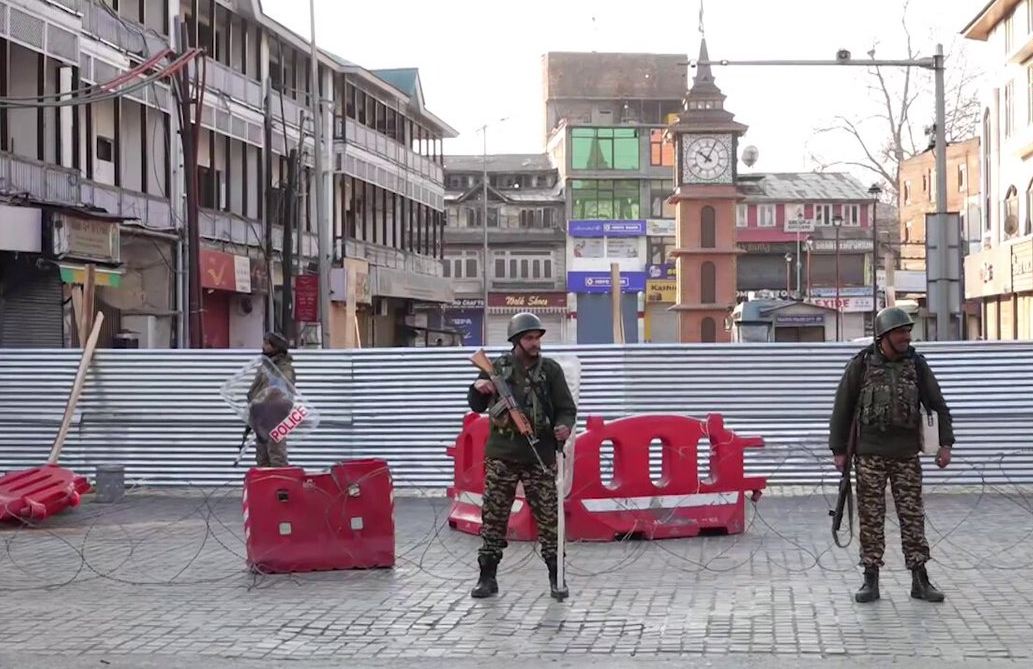
Demonstrations intensified in Srinagar, particularly around the iconic Ghanta Ghar at Lal Chowk, which was swiftly barricaded by authorities to prevent mass gatherings.
Restrictions on movement and public assembly have been extended across several districts of Jammu and Kashmir, with officials citing security concerns and intelligence inputs.
The situation remains tense but under close watch.
Current Developments: What Happened on the Ground
Protests Erupt in Srinagar
Ground reports indicate that groups of protesters assembled in various parts of Srinagar soon after news circulated regarding Khamenei’s reported killing.
Lal Chowk, long considered the symbolic heart of Srinagar, quickly became a focal point.
Security forces:
-
Erected barricades around Ghanta Ghar.
-
Restricted pedestrian movement.
-
Prevented congregational gatherings.
Despite these measures, protesters gathered in pockets, leading to confrontations.
14 Injured in Clashes
Officials confirmed that at least 14 individuals sustained injuries during clashes.
According to police sources:
-
Protesters allegedly pelted stones.
-
Security personnel responded with tear gas shells.
-
Baton charges were used to disperse crowds.
Most injuries were reported to be minor, though some required hospital treatment.
Hospitals in Srinagar confirmed receiving injured civilians, while police personnel also reported minor injuries during crowd-control operations.
Restrictions Extended Across Kashmir
Authorities announced that restrictions would continue through today in sensitive areas.
Measures in Place:
-
Section 144 restrictions in select districts.
-
Heavy deployment of CRPF and J&K Police.
-
Mobile internet speeds reportedly throttled.
-
Increased surveillance in downtown Srinagar.
-
Checkpoints set up at key intersections.
Officials stated that the measures are preventive and temporary.
Shutdown Observed in Several Districts
Shops, schools, and commercial establishments remained shut in multiple areas, particularly in:
-
Srinagar city
-
Budgam
-
Baramulla (partial)
-
Parts of Pulwama
The shutdown followed a strike call reportedly supported by religious groups reacting to the developments.
Educational institutions have been closed in affected areas, and some examinations postponed as a precaution.
Why Lal Chowk Became the Flashpoint
The barricading of Lal Chowk has become one of the most symbolic aspects of the unrest.
For decades, Lal Chowk has functioned as:
-
A protest site.
-
A rallying ground.
-
A space for political expression.
-
A venue for national ceremonies.
Following the abrogation of Article 370 in 2019, the area was redeveloped and increasingly used for state-led events, including Independence Day celebrations.
The closure during mourning protests has reignited debate over:
-
Freedom of assembly.
-
Selective use of public space.
-
Balancing security and expression.
Religious Sentiment Driving Protests
The reported killing of Ali Khamenei has deeply resonated among sections of Kashmir’s Shia Muslim population.
Khamenei, as Iran’s Supreme Leader, holds significant symbolic and religious influence among Shia communities worldwide.
In Kashmir:
-
Mourning processions were initially planned.
-
Black flags were reportedly displayed in some areas.
-
Religious gatherings turned political in tone.
Clerics and community leaders condemned the killing, describing it as an attack on Muslim identity and global Shia solidarity.
Security Concerns and Government Strategy
The administration fears escalation for several reasons:
-
Kashmir’s history of unrest linked to international Muslim issues.
-
The symbolic weight of Lal Chowk.
-
The possibility of protests spreading to rural districts.
-
The risk of cross-border narrative amplification.
Officials maintain that restrictions are necessary to prevent:
-
Escalation into violent unrest.
-
Large-scale shutdowns.
-
Damage to public property.
Police officials have urged citizens to maintain calm and avoid misinformation.
Political Reactions
Local political leaders responded cautiously.
Several leaders:
-
Condemned the killing.
-
Appealed for peace.
-
Urged authorities to allow peaceful mourning.
The tone has largely balanced religious solidarity with calls for restraint.
However, criticism has emerged over:
-
The sealing of Ghanta Ghar.
-
Internet throttling.
-
Closure of public spaces.
Opposition voices argue that peaceful mourning should not be equated with a law-and-order threat.
Kashmir and Global Muslim Politics
This unrest once again highlights how international events can trigger local political responses in Kashmir.
Historically, Lal Chowk has seen demonstrations during:
-
The Gulf War.
-
Palestine conflicts.
-
The Iraq War.
-
Syria and Lebanon crises.
Kashmir’s political identity often intersects with broader Middle Eastern developments, especially where religious solidarity is involved.
The current protests demonstrate how global developments continue to influence local sentiment.
Internet Restrictions: A Familiar Tool
Mobile internet speeds have reportedly been throttled in parts of Kashmir.
Authorities argue that:
-
Social media can rapidly mobilize crowds.
-
Rumors can inflame tensions.
-
Speed control is preventive.
Critics counter that:
-
It restricts communication.
-
It affects businesses.
-
It limits access to information.
Internet restrictions have historically been used during sensitive periods in Jammu and Kashmir.
Short-Term Outlook
Security officials expect:
-
Continued restrictions for at least 24–48 hours.
-
Tight monitoring of Friday prayers.
-
Limited gatherings permitted under supervision.
Sporadic clashes remain possible in volatile pockets.
Medium-Term Implications
The incident could:
-
Deepen perceptions of alienation among certain communities.
-
Reinforce narratives of political control.
-
Reignite debates over civil liberties in Kashmir.
Iran’s symbolic role among Shia populations adds another dimension, tying Kashmir’s local politics to wider Middle East developments.
Strategic Analysis: A Volatile Mix
The current unrest combines three powerful forces:
-
Religious Mourning
-
Political Grievance
-
Security Crackdown
When these converge in a historically sensitive region like Kashmir, volatility increases.
Authorities face a delicate balancing act:
-
Avoid escalation.
-
Maintain order.
-
Prevent long-term resentment.
The Core Tension
At the heart of the situation lies a fundamental question:
Can public mourning linked to global events be accommodated without triggering security instability?
For the state, preventing unrest is paramount.
For sections of the public, restricting symbolic spaces like Lal Chowk feels like silencing collective grief.
Ground Mood in Srinagar
Reports from downtown Srinagar suggest:
-
Heavy but controlled deployment.
-
Reduced civilian movement.
-
Tense but not chaotic streets.
-
Occasional slogan-shouting in interior lanes.
There is no indication yet of large-scale breakdown, but the atmosphere remains sensitive.
Official Appeal
Police and district authorities have urged residents to:
-
Maintain calm.
-
Avoid rumor circulation.
-
Refrain from unlawful assembly.
They reiterated that restrictions are temporary and subject to review.
Final Word: A Region on Alert
The protests following reports of Ali Khamenei’s killing have once again placed Kashmir at the intersection of global religious politics and local governance challenges.
With 14 injured, Lal Chowk barricaded, and restrictions extended, the administration is attempting to contain unrest before it escalates.
Whether this moment passes as a brief flare-up or evolves into prolonged tension will depend on:
-
Crowd dynamics.
-
Political messaging.
-
Administrative flexibility.
For now, Jammu and Kashmir remain under heightened security watch — tense, controlled, and waiting.