Kashmir Donations for Iran 2026: Gold, Cash Aid Amid West Asia War
By: Javid Amin | 22 March 2026
From mosque-led drives to a widow’s poignant sacrifice, Kashmir’s grassroots response reflects a powerful humanitarian impulse
A Valley Responds Beyond Borders
As the conflict in West Asia intensifies, with Iran facing mounting civilian and infrastructural strain, a remarkable humanitarian response has emerged thousands of kilometers away—in Jammu & Kashmir.
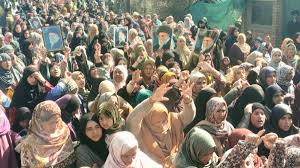
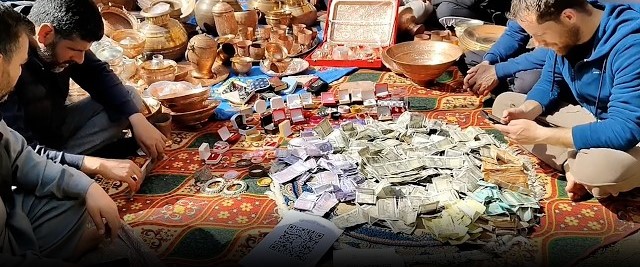
Across towns, villages, and urban neighborhoods, ordinary people have begun contributing gold, silver, cash, and household valuables to support those affected by war. What sets this movement apart is not just its scale, but its deep emotional resonance.
It is not driven by institutions or large NGOs alone—but by communities, mosques, and individuals, many of whom are giving away what little they have.
A Movement Rooted in Compassion
Mosque-Led Drives and Community Mobilization
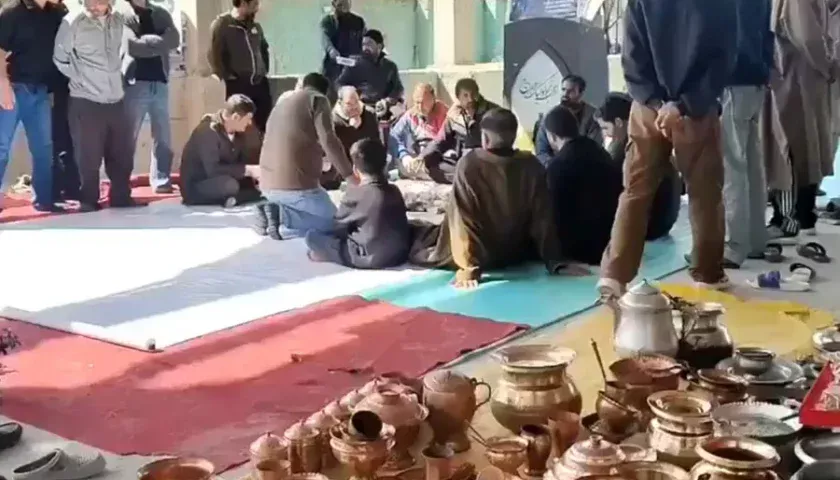
In several parts of the Valley, local mosques have become centers of humanitarian coordination.
- Donation boxes placed after prayers
- Public announcements encouraging contributions
- Volunteers organizing collection and distribution
These efforts are decentralized yet highly effective, reflecting a community-first model of crisis response.
Unlike formal aid systems, these drives operate on trust, faith, and shared purpose—values deeply embedded in Kashmiri society.
A Widow’s Gift: The Story That Moved Many
Among the many contributions, one story has captured widespread attention.
A widow, whose identity remains private, stepped forward to donate gold gifted by her late husband—a possession often regarded as both emotional memory and financial security.
Why This Moment Matters:
- Gold in Kashmiri households is not just wealth—it is legacy
- The donation symbolizes personal sacrifice over material attachment
- It humanizes the crisis, turning distant suffering into shared grief
This single act has come to represent the broader sentiment across Kashmir:
👉 When others suffer, we respond—not with words alone, but with what we hold dear.
Cultural Significance: When Gold Becomes a Message
In South Asian societies, especially in regions like Kashmir Valley, gold and silver are:
- Reserved for weddings and family milestones
- Seen as financial security during crises
- Passed down through generations
The decision to donate such assets reflects a shift from personal security to collective responsibility.
This is not casual charity—it is meaningful sacrifice.
Why Kashmir Feels Connected to Iran
Shared Emotional and Cultural Threads
The solidarity with Iran is not merely political—it is deeply emotional.
Key Factors:
- Religious and cultural affinities
- Historical awareness of conflict and hardship
- A strong tradition of supporting global humanitarian causes
For many Kashmiris, the suffering of civilians in Iran is not distant news—it is relatable reality.
Echoes of Local Experience
Kashmir’s own history of uncertainty and conflict has shaped a population that is:
- Empathetic to civilian suffering
- Responsive to humanitarian crises
- Quick to mobilize in times of distress
This context explains why the response has been swift, widespread, and deeply personal.
The Scale and Nature of Contributions
While exact figures remain fluid, reports indicate contributions in multiple forms:
Financial Aid
- Cash donations collected at mosques and community centers
- Contributions from small businesses and individuals
Precious Metals
- Gold jewelry
- Silver ornaments
Household Support
- Savings kept for emergencies
- Everyday valuables offered voluntarily
The diversity of contributions highlights a critical point:
This is not limited to the wealthy—it is a collective effort across economic classes.
Media Coverage and Narrative Framing
Different media outlets have highlighted distinct aspects of the story:
- National outlets emphasized symbolic acts like the widow’s donation
- Local Kashmiri media focused on scale and grassroots organization
- International coverage framed it as transnational humanitarian solidarity
This layered coverage reflects how a local act can carry global significance.
Broader Implications: Beyond Charity
1. Humanitarian Solidarity in a Fragmented World
At a time when global institutions struggle to respond decisively, grassroots actions like these:
- Fill humanitarian gaps
- Reinforce people-to-people connections
- Challenge narratives of apathy
2. Soft Power of Communities
Kashmir’s response demonstrates how communities can act as moral actors on the global stage.
Without formal authority, they:
- Influence perception
- Inspire similar actions elsewhere
- Create a narrative of empathy over division
3. Political and Emotional Resonance
The donations also carry subtle political undertones:
- Expression of solidarity with Iran
- Reflection of broader sentiments about global conflicts
- Intersection of humanitarian concern and identity
Challenges and Questions
While the movement is widely praised, it also raises important considerations:
Transparency
- How will funds and valuables be routed?
- Which organizations will ensure delivery?
Regulation
- Are there legal frameworks governing cross-border donations?
- Could restrictions impact the flow of aid?
Sustainability
- Can such grassroots efforts be maintained over time?
Addressing these questions will be crucial to ensuring that goodwill translates into effective impact.
Editorial Insight: Humanity Beyond Headlines
In an era dominated by geopolitical calculations and institutional silence, the response from Kashmir offers a contrasting narrative.
It shows that:
- Empathy does not require permission
- Solidarity does not depend on scale
- Humanity often acts fastest when institutions hesitate
Conclusion: A Gesture That Transcends Geography
The donations from Jammu & Kashmir to Iran are more than acts of charity—they are expressions of shared humanity.
From mosque-led drives to a widow’s deeply personal sacrifice, this movement captures something essential:
👉 In times of crisis, the strongest response often comes not from power centers—but from people.
As the West Asia conflict continues, these gestures stand as a reminder that even in a fractured world, compassion still finds a way to cross borders.