When Winter Didn’t Come: February 2026 Turns Into One of the Driest Months Ever Recorded in Jammu & Kashmir
By: Javid Amin | 08 March 2026
A historic dry spell signals a deeper climate warning for the Himalayas
Winter in the Himalayan region has always been associated with snow-covered mountains, periodic rain showers, and the slow replenishment of rivers that sustain millions of people across northern India. But in 2026, winter behaved very differently.
February 2026 has gone down as one of the driest months in the recorded meteorological history of Jammu and Kashmir. In an unprecedented development, Jammu city recorded zero rainfall throughout the entire month, while Srinagar — the region’s summer capital — logged just 5.3 mm of precipitation, the lowest February rainfall recorded since 1960.
Meteorological data available since 1901 suggests that February 2026 ranks among the driest Februaries in more than a century in the region.
The numbers themselves may appear small, but their implications are enormous. In the western Himalayas, winter precipitation is not merely a seasonal weather event — it is a crucial ecological and economic lifeline. Rain and snow during December to February recharge rivers, replenish glaciers, sustain groundwater, and ensure that agriculture survives the coming summer.
The absence of winter precipitation in 2026 has therefore raised urgent questions among climate scientists, farmers, hydrologists, and policymakers alike.
Is this simply a rare weather anomaly?
Or is it a sign that the Himalayan climate system is entering a new and uncertain phase?
This in-depth environmental feature examines the records, the science, the ground realities, and the looming risks for agriculture, water security, and ecological stability in one of the world’s most fragile mountain regions.
The Weather Records That Shocked the Region
Historic rainfall lows across multiple districts
The extraordinary dryness of February 2026 was not limited to a few isolated locations. Meteorological stations across the union territory reported record or near-record rainfall deficits.
The most striking observations include:
Jammu: A rare month without rain
The city of Jammu recorded 0 mm rainfall throughout February 2026, marking only the second such occurrence in more than a century of records dating back to 1925. The only previous instance occurred in 1945.
For a region that relies on winter rain to recharge groundwater and support crops, the absence of precipitation throughout an entire month is highly unusual.
Srinagar: Lowest February rainfall in 66 years
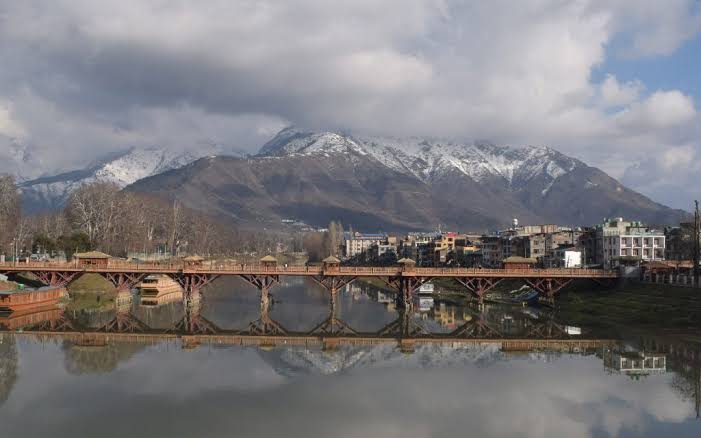
In Srinagar, meteorological stations recorded 5.3 mm of rainfall during February.
The last time precipitation dropped to similar levels was in 1960, when only 5.8 mm was recorded.
Given that rainfall data in the city dates back to 1901, the 2026 figure places the month among the lowest winter precipitation totals in more than a century.
Other districts also broke records
Across the Kashmir Valley and Jammu division, many stations logged their lowest or near-lowest February rainfall totals.
Examples include:
-
Kupwara: 17.7 mm — lowest since records began in 1977
-
Qazigund: 13 mm — lowest since 1963
-
Pahalgam: 23.4 mm — lowest since 1979
-
Banihal: 8.4 mm — lowest since 1962
-
Batote: 18.8 mm — lowest since 1978
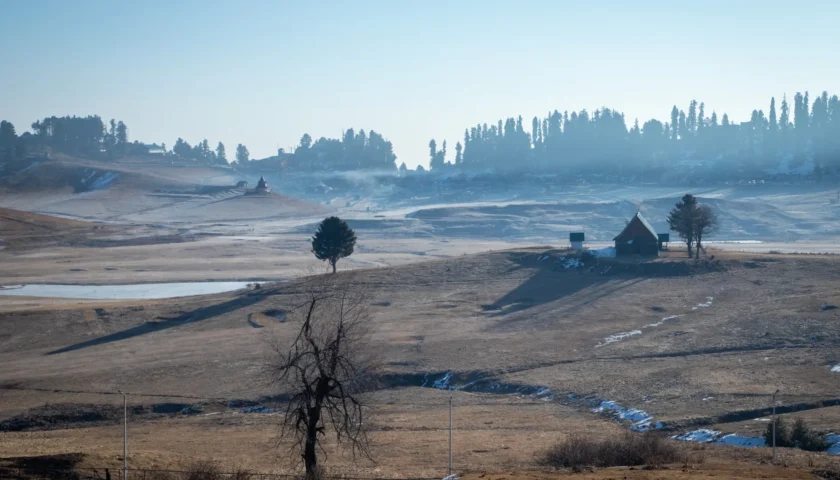
Even traditionally snow-rich mountain stations such as Gulmarg experienced unusually low precipitation.
Taken together, these figures paint a clear picture: February 2026 was not just dry — it was historically dry across the entire region.
The Larger Winter Deficit: A Collapsing Seasonal Pattern
The unusual dryness of February did not occur in isolation. It was part of a broader winter precipitation collapse across the region.
According to seasonal climate data, the winter period from December 2025 to February 2026 saw a 65% rainfall deficit across the territory.
The numbers illustrate the severity of the situation:
-
Actual precipitation: 100.6 mm
-
Normal seasonal average: 284.9 mm
February itself experienced the worst deficit.
-
Actual rainfall: 14.2 mm
-
Normal average: 130.4 mm
-
Deficit: nearly 90% below normal.
This sharp drop dragged the entire winter precipitation totals far below average, making 2026 one of the driest winters in recent memory.
Even more concerning, climate records show that this was the seventh consecutive winter with below-normal precipitation in Jammu and Kashmir.
Such sustained deficits suggest that the region may be witnessing a structural shift in its winter climate.
Why Winter Precipitation Matters in the Himalayas
To understand why the February dry spell is alarming, it is important to understand how the Himalayan hydrological system works.
Unlike monsoon-dependent regions in central or southern India, the western Himalayas rely heavily on winter precipitation.
The role of snow and winter rain
Snowfall and rain during winter perform several critical functions:
-
Snowpack Formation
Snow accumulated during winter slowly melts during spring and summer, feeding rivers such as the Jhelum and Chenab. -
Groundwater Recharge
Winter rain allows soil and aquifers to absorb moisture before the onset of summer heat. -
River Flow Regulation
Snowmelt acts as a natural reservoir that maintains steady river flows for months. -
Agricultural Support
Winter precipitation supplies soil moisture for crops planted during the rabi season.
Without these seasonal inputs, the region faces water shortages months later.
The February 2026 rainfall collapse therefore represents more than just an unusual weather statistic — it directly threatens the natural water cycle of the Himalayan ecosystem.
Agriculture on Edge: Farmers Face Rising Risks
Rabi crops depend heavily on winter precipitation
The agricultural sector is among the first to feel the impact of a dry winter.
Across Jammu and Kashmir, farmers rely on winter rainfall and snowfall to sustain rabi crops, including:
-
Wheat
-
Mustard
-
Barley
-
Pulses
These crops depend on soil moisture accumulated during winter.
When precipitation fails, crops face moisture stress, leading to lower yields and reduced farm incomes.
Early signs of crop stress
Farmers in parts of the Kashmir Valley have already reported signs of stress in wheat fields due to insufficient soil moisture.
Agricultural experts warn that prolonged dry conditions may result in:
-
Reduced grain formation
-
Stunted crop growth
-
Lower productivity
For small farmers with limited irrigation facilities, rainfall deficits can quickly translate into financial distress.
Rising Food Inflation Could Follow
The implications of declining agricultural productivity extend beyond rural communities.
Lower crop yields can trigger food price increases, particularly for staple commodities such as wheat and edible oils.
This is especially concerning at a time when global food supply chains remain vulnerable due to:
-
climate disruptions
-
geopolitical tensions
-
rising transportation costs
If regional production declines significantly, authorities may need to rely more heavily on imports from other states, potentially pushing prices higher.
Water Security: Rivers, Reservoirs and Hydropower at Risk
Snowpack acts as the region’s natural reservoir
One of the most serious consequences of a dry winter is the reduction in snowpack.
Snow stored in Himalayan mountains acts as a slow-release water reservoir that feeds rivers for months after winter ends.
When snowfall declines, the spring meltwater supply weakens.
Potential effects on rivers
Major rivers originating in the region may experience:
-
reduced spring flows
-
declining summer water levels
-
increased seasonal variability
These rivers are vital not only for Jammu and Kashmir but also for downstream regions across northern India and Pakistan.
Hydropower Generation Could Be Affected
Hydropower is the backbone of the region’s electricity supply.
Several major power projects depend on river flows from Himalayan catchments.
Lower snowmelt and rainfall can reduce reservoir levels, forcing power plants to generate less electricity.
Potential consequences include:
-
electricity shortages
-
higher energy costs
-
increased dependence on thermal power imports
Given the region’s heavy reliance on hydropower, even moderate reductions in river flow can strain energy infrastructure.
Tourism Without Snow: Winter Economy Takes a Hit
Snow tourism is a key economic driver
Winter tourism plays a crucial role in the local economy of Kashmir.
Destinations such as:
-
Gulmarg
-
Sonamarg
-
Pahalgam
are internationally known for skiing, snowboarding, and winter landscapes.
But snowfall shortages can disrupt this tourism ecosystem.
Impacts already being observed
A lack of snow affects:
-
ski tourism
-
winter festivals
-
hospitality industry revenue
-
seasonal employment
Hotels, tour operators, transport services, and local businesses all depend on consistent winter snowfall.
When snow fails to arrive, entire local economies feel the impact.
The Science Behind the Dry Spell
The role of western disturbances
Winter precipitation in northern India is largely controlled by atmospheric systems known as western disturbances.
These are moisture-bearing storms that originate in the Mediterranean region and travel eastward across the Middle East before reaching the Himalayas.
When they interact with the mountains, they produce:
-
snowfall at higher altitudes
-
rainfall in plains and valleys
What went wrong in 2026?
Meteorologists believe that weaker and less frequent western disturbances played a key role in the February dry spell.
Recent winters have shown:
-
fewer storm systems reaching the region
-
shorter precipitation events
-
longer dry intervals between storms
These changes disrupt the traditional winter precipitation cycle.
Climate Change and the Himalayan “Snow Drought”
Many climate scientists now warn that the region may be experiencing a “snow drought.”
A snow drought occurs when:
-
winter precipitation declines
-
rising temperatures convert snowfall into rain
-
snow cover melts earlier than usual
In the Himalayas, warming temperatures amplify the problem.
Even when precipitation occurs, it may fall as rain rather than snow — reducing snowpack formation.
This trend has serious implications for glacier stability, river flows, and long-term water availability.
A Pattern, Not a One-Off Event
Perhaps the most worrying aspect of the 2026 dry spell is that it does not appear to be an isolated event.
Climate records show that the region has experienced seven consecutive winters with below-normal precipitation since 2019–20.
This pattern indicates increasing variability in the region’s winter climate.
Meteorologists warn that such persistent deficits may signal:
-
shifting atmospheric circulation patterns
-
weakening western disturbances
-
broader climate change impacts in the Himalayas
If the trend continues, the region may have to adapt to more frequent dry winters in the future.
Ecological Consequences: Fragile Alpine Ecosystems at Risk
The Himalayan ecosystem is among the most fragile environments on Earth.
Snowfall and seasonal moisture regulate ecological cycles in high-altitude forests, alpine meadows, and wetlands.
Reduced winter precipitation can disrupt:
-
plant flowering cycles
-
wildlife migration patterns
-
soil moisture balance
Species adapted to cold, snowy environments may struggle to survive if winters become warmer and drier.
Forest Fire Risk May Increase
Dry winters often lead to higher forest fire risks during spring and summer.
When snow cover is thin and soil moisture is low, forests become more vulnerable to fires triggered by:
-
lightning
-
human activity
-
rising temperatures
Such fires can destroy habitats, release carbon into the atmosphere, and worsen climate impacts.
What the Forecast Says
According to the India Meteorological Department, dry conditions were expected to persist through early March.
Meteorologists predicted:
-
cloudy skies
-
isolated rainfall and snowfall after March 7
However, even if precipitation occurs, it may not be enough to offset the massive rainfall deficit recorded during February.
Coping Strategies: What Can Be Done?
Agricultural adaptation
Farmers may need to shift toward:
-
drought-resistant crop varieties
-
efficient irrigation methods
-
improved soil moisture conservation techniques
Agricultural extension services can help farmers adopt climate-resilient practices.
Water management reforms
Authorities may also need to strengthen water management systems by:
-
building additional water storage infrastructure
-
improving watershed conservation
-
modernizing irrigation networks
Rainwater harvesting and groundwater recharge programs could also help mitigate water shortages.
Policy support for farmers
Government intervention may be necessary to protect farmers from economic losses.
Potential measures include:
-
crop insurance support
-
financial relief packages
-
subsidized irrigation technologies
Such policies can help reduce vulnerability in rural communities.
The Bigger Message: A Climate Warning from the Himalayas
The February 2026 dry spell in Jammu and Kashmir is more than a statistical anomaly.
It represents a clear signal that the Himalayan climate system may be undergoing significant changes.
With rainfall deficits approaching 90% during the month and a broader trend of declining winter precipitation, the region faces a future marked by increasing uncertainty.
Agriculture, water security, tourism, hydropower, and ecosystems all depend on reliable winter precipitation.
If dry winters become the new normal, governments, scientists, and communities will need to rethink how they manage water, agriculture, and climate risks in the Himalayas.
Final Takeaway
February 2026 will likely be remembered as a turning point in the climate story of Jammu and Kashmir.
With zero rainfall recorded in Jammu and the lowest February rainfall in Srinagar since 1960, the month has highlighted the vulnerability of the Himalayan region to climate variability.
Whether this event proves to be an isolated extreme or part of a long-term trend will depend on how climate patterns evolve in the coming years.
But one thing is already clear:
The Himalayas — often called the “water tower of South Asia” — are sending a warning that cannot be ignored.