Education or Extraction? Kashmir School Fee Hike, Private Curriculum & Annual Charges Exposed
By: Javid Amin | 01 March 2026
Education or Extraction? Kashmir’s Parents Demand Answers
In the Kashmir Valley, education has long been seen as a lifeline — a pathway to stability in a region shaped by uncertainty. Families invest heavily in their children’s schooling, often prioritizing education over personal comfort, leisure, and even basic savings.
But in recent months, a troubling pattern has emerged. Parents across districts including Srinagar, Budgam, Baramulla, and Anantnag allege that private schools are increasingly tying academic processes to fee clearance, imposing high-cost private syllabi, introducing unexplained annual charges, and hiking fees without visible fear of regulatory action.
The question echoing across the Valley is stark:
Is education becoming extraction?
Winter Assignments With Riders: When Homework Meets the Accounts Desk
Winter vacations in Kashmir are extended due to harsh weather. Schools traditionally assign winter homework to keep students academically engaged during closures.
This year, however, several parents reported that winter assignments came with an unwritten condition: submission would only be accepted if all pending dues — tuition fees, annual charges, arrears — were cleared.
One Srinagar-based parent shared:
“We went to submit our child’s winter homework. Instead of checking the notebook, they directed us to the accounts section.”
In some cases, parents claim that:
-
Report cards were withheld.
-
PTM access was restricted.
-
Admit cards were delayed.
-
Academic interactions were paused until fee clearance.
Schools maintain that timely fee collection is necessary to ensure staff salaries and operational continuity. But parents argue that linking academic participation to financial compliance crosses ethical boundaries.
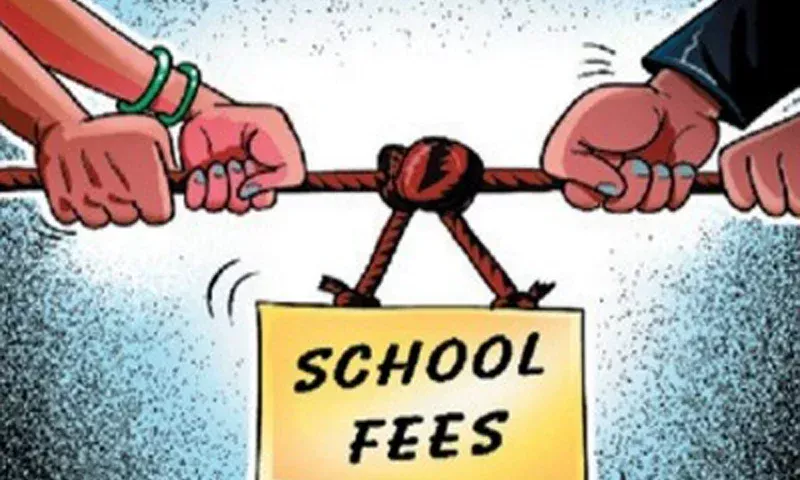
The conflict is not about refusing to pay fees. It is about method, timing, and dignity.
The Regulatory Framework: Strong on Paper, Weak in Practice?
Private school fee structures in Jammu & Kashmir fall under the purview of the Fee Fixation and Regulation Committee (FFRC), functioning alongside the Jammu and Kashmir School Education Department.
The FFRC’s mandate includes:
-
Approving fee structures.
-
Preventing arbitrary hikes.
-
Reviewing financial justifications.
-
Protecting parents from exploitation.
In theory, no private school can revise fees without regulatory scrutiny.
In practice, parents allege:
-
Mid-session hikes.
-
Sudden revisions.
-
Additional charges introduced without consultation.
-
Limited visible enforcement action.
Officials typically advise parents to file formal complaints. But many families hesitate, fearing subtle backlash against their children or prolonged bureaucratic processes.
The result: frustration without formal escalation.
Curriculum for Sale? The ₹6000 Syllabus Question
Another layer of controversy involves curriculum changes.
The government-prescribed curriculum aligned with the Jammu and Kashmir Board of School Education (JKBOSE) typically costs between ₹1000 and ₹1500 annually.
However, parents allege that several private schools mandate their own “customized” syllabi costing ₹4000–₹6000 per student.
Common complaints include:
-
Frequent textbook changes.
-
Mandatory purchase from select vendors.
-
Limited reuse of books between siblings.
-
Additional workbooks bundled compulsorily.
Parents question why:
-
Approved government textbooks are replaced.
-
New editions appear annually.
-
Books are often unavailable in open markets.
Some allege a vendor-school nexus, where higher margins influence curriculum choices. While no official investigation has publicly confirmed such arrangements, the perception is widespread.
An education observer in Budgam remarked:
“If curriculum changes frequently but outcomes don’t improve proportionately, stakeholders will question the motive.”
Schools defend these decisions as quality upgrades — enhanced content, better design, digital integration. But without transparent disclosure of academic rationale and cost breakdowns, suspicion persists.
The Economic Shock: A Household Budget Under Strain
For a family with two children:
-
Curriculum costs may reach ₹8000–₹12,000.
-
Add tuition fees, transport, uniforms.
-
Add annual charges and activity fees.
In many middle-class households, education expenses consume 30–50% of monthly income.
For families dependent on seasonal income — tourism, horticulture, small retail — unpredictability becomes devastating.
Parents describe:
-
Borrowing from relatives.
-
Mortgaging jewelry.
-
Delaying medical expenses.
-
Cutting household essentials.
The psychological burden compounds financial strain.
Children sense tension.
Parents approach PTMs with anxiety.
Education becomes transactional rather than inspirational.
Annual Charges: The Mystery Line Item
Perhaps the most opaque issue is “annual charges.”
Fee slips often include headings such as:
-
Development fee
-
Infrastructure maintenance
-
Smart class charges
-
Activity fund
-
Security fee
Parents ask a straightforward question:
What exactly are we paying for?
Allegations include:
-
No detailed written justification.
-
No public audit disclosure.
-
No visible infrastructure upgrade.
-
Charges revised periodically without explanation.
Schools argue that annual charges cover:
-
Maintenance of buildings.
-
Digital tools.
-
Co-curricular activities.
-
Administrative overhead.
Yet without transparent financial statements accessible to parents, clarity remains elusive.
The demand is not elimination of annual charges — but transparency.
Fee Hikes: “Any Time, Any Amount”
Parents allege unpredictability in fee revisions:
-
Mid-year increases.
-
Transport fee adjustments.
-
Separate exam-related charges.
-
Incremental additions categorized as “miscellaneous.”
Administrators cite inflation, teacher salary revisions, rising utility costs, and technological upgrades as reasons.
These operational realities are legitimate.
However, procedural integrity matters:
-
Were hikes pre-approved?
-
Were parents consulted?
-
Was regulatory clearance obtained?
-
Is the FFRC auditing compliance?
When fee hikes appear unchecked, perception of impunity grows.
The Silence of Oversight
The Jammu and Kashmir School Education Department has issued advisories discouraging arbitrary hikes and student harassment over fees.
Yet parents argue that enforcement visibility is limited.
Governance gaps manifest when:
-
Complaints are resolved privately without transparency.
-
Penalties are not publicly disclosed.
-
Audits lack periodic publication.
In such an environment, trust deteriorates.
Education as Commodity: A Socio-Economic Lens
Globally, private education markets face similar tensions — balancing sustainability with ethics.
In Kashmir, the stakes are higher.
Education symbolizes:
-
Social mobility.
-
Stability amid uncertainty.
-
Escape from economic vulnerability.
When academic processes appear monetized, the emotional reaction is intense.
Some parents have used harsh metaphors — describing schools as “vultures.” While emotionally charged, such language reflects deep frustration, not merely financial complaint.
It signals perceived betrayal of trust.
The Schools’ Perspective: Financial Survival or Profit Maximization?
To maintain balance, the institutional perspective must be acknowledged.
Private schools face:
-
Year-round salary obligations.
-
Heating and infrastructure costs in severe winters.
-
Regulatory compliance expenses.
-
Technological modernization costs.
Administrators argue that delayed fee payments threaten operational continuity.
This argument holds merit.
But sustainability must coexist with transparency and fairness.
Homework, PTMs, report cards — these are academic tools, not debt recovery instruments.
Curriculum decisions should prioritize pedagogy, not profit.
Annual charges should be justified, not assumed.
Larger Implications: Inequality and Trust Deficit
When education becomes expensive and unpredictable:
-
Lower-income families exit private schooling.
-
Government schools face overcrowding.
-
Social segmentation deepens.
Trust deficit expands.
Parents begin viewing schools as commercial enterprises rather than community institutions.
Once trust erodes, long-term institutional credibility suffers.
The Way Forward: Reform Without Confrontation
Experts suggest structural remedies:
1. Active Audits by the FFRC
The Fee Fixation and Regulation Committee must publish periodic compliance reports.
2. Transparent Fee Disclosure Portals
All approved fees, annual charges, and curriculum details accessible online.
3. Clear Prohibition on Academic Penalties
Written enforcement ensuring no student faces academic restriction due to fee disputes.
4. Curriculum Justification Framework
Schools must document academic rationale for syllabus deviations from JKBOSE norms.
5. Parent Representation
Inclusion of parent representatives in review committees.
A Valley at an Educational Crossroads
Kashmir stands at a critical juncture.
If education continues to be perceived as a marketplace without strict oversight, public confidence will decline further.
But confrontation is not the solution.
Dialogue, transparency, and enforcement are.
Parents are not demanding charity.
Schools are not inherently adversaries.
Authorities are not powerless.
The system requires recalibration.
Final Editorial Reflection: Ladder or Ledger?
Education must remain a ladder — not a ledger.
When:
-
Winter assignments become fee reminders,
-
Curriculum costs quadruple,
-
Annual charges remain unexplained,
-
Fee hikes appear unpredictable,
the social contract weakens.
Children deserve classrooms free from financial tension.
Parents deserve clarity and dignity.
Schools deserve sustainability — but within transparent limits.
Authorities must ensure rules are not ornamental.
The Valley’s future sits inside its classrooms.
Whether those classrooms become centers of learning or extensions of accounting offices depends on collective accountability.
The question remains:
Will education in Kashmir inspire — or invoice?
The answer lies not in rhetoric, but in reform.