Vaishno Devi Ropeway Row: Omar Abdullah Says Cabinet Didn’t Approve Project | Full Analysis
By: Javid Amin | 09 February 2026
A Statement That Shifted the Political Conversation
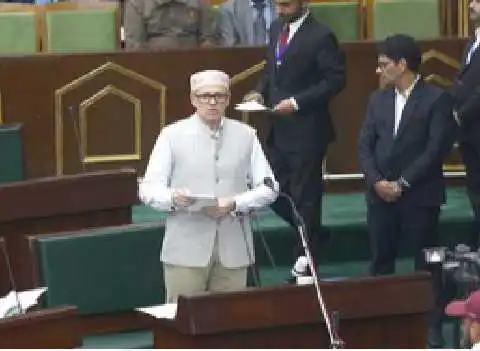
Jammu & Kashmir Chief Minister Omar Abdullah on February 10, 2026, issued a striking clarification in the Legislative Assembly: the controversial Vaishno Devi ropeway project was never approved by the cabinet.
His statement came in response to a member claiming that the project had cabinet sanction. Abdullah told the House that he personally verified the records and found no cabinet approval attached to the project.
“One member had said that the cabinet had approved the ropeway project. I checked the records and found that the cabinet did not approve it. It is also not a cabinet decision.”
This clarification immediately changed the tone of the debate. Until now, the ropeway controversy was framed as a policy decision backed at the highest executive level. Abdullah’s intervention shifted the focus toward administrative procedure, institutional accountability, and decision-making transparency.
The issue is no longer just about a ropeway. It has become a test case for how large religious-tourism infrastructure projects are conceived, sanctioned, and communicated to the public in Jammu & Kashmir.
What Is the Vaishno Devi Ropeway Project?
The ropeway proposal is a ₹250 crore infrastructure project planned to connect Tarakote Marg to Sanji Chhat on the steep pilgrimage route leading to the Vaishno Devi cave shrine in Reasi district.
Key project features include:
-
Designed capacity of around 1,000 pilgrims per hour
-
Intended to reduce trek time and congestion
-
Focus on elderly and differently-abled pilgrims
-
Expected operational target: December 2026
-
Implemented under the Shri Mata Vaishno Devi Shrine Board
The shrine attracts over 10 million pilgrims annually, making it one of India’s busiest religious destinations. During peak seasons, the trek route experiences heavy crowd pressure, logistical strain, and safety risks.
Supporters describe the ropeway as a modern mobility solution. Opponents describe it as a structural disruption of a sacred tradition.
Why the Cabinet Clarification Matters
In governance terms, Omar Abdullah’s statement is significant for three reasons:
1. Decision-Making Legitimacy
If a project of this scale was not approved by the cabinet, it raises questions:
-
Which authority sanctioned it?
-
Was it processed solely through the Shrine Board?
-
What level of executive oversight existed?
-
Were environmental and social impact approvals fully institutional?
The Assembly debate is now less about the ropeway itself and more about procedural transparency.
2. Political Accountability
Cabinet approval signals collective executive responsibility. Without it, the chain of accountability becomes diffuse. Opposition members are now asking:
-
Who owns the decision politically?
-
Who answers for its consequences?
3. Public Trust
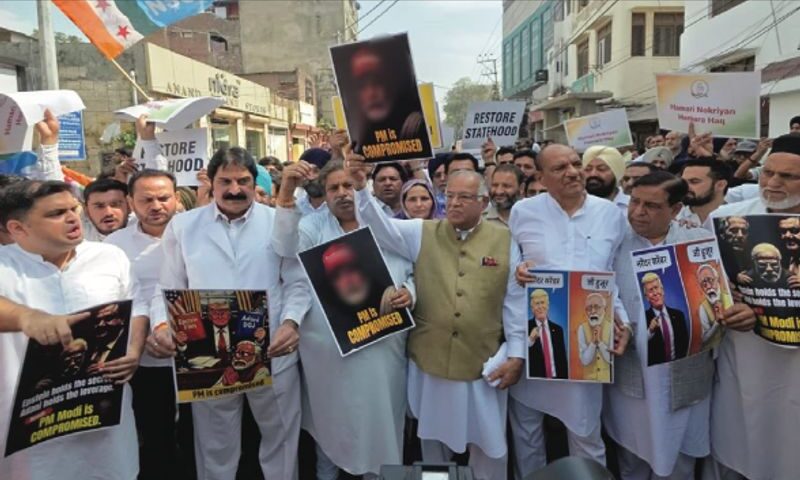
The controversy has already triggered protests in Katra. Ambiguity around approvals risks deepening suspicion among stakeholders who already feel excluded from the process.
In politically sensitive regions, perception often matters as much as legality.
Supporters: Efficiency, Safety, and Accessibility
Proponents of the ropeway argue that the project is a rational response to rising pilgrimage volumes.
Managing Crowds
With over 1 crore annual visitors, the shrine infrastructure faces recurring bottlenecks. During peak yatra periods:
-
Trek congestion increases accident risk
-
Emergency response times lengthen
-
Crowd management becomes unpredictable
A ropeway offers controlled throughput and predictable scheduling.
Accessibility for Vulnerable Pilgrims
Elderly pilgrims and persons with disabilities often struggle with the steep climb. While ponies and palanquins exist, they are:
-
Expensive for many families
-
Physically taxing
-
Weather-dependent
The ropeway is framed as an inclusion measure, not just a convenience.
Tourism Multiplier Effect
Faster access could expand pilgrimage tourism:
-
More short-duration visits
-
Higher off-season travel
-
Increased hotel and transport demand
Supporters see the ropeway as a tourism infrastructure upgrade comparable to ropeways in Kedarnath and other Himalayan pilgrimage sites.
Opposition: Livelihood Shock and Cultural Disruption
Resistance to the ropeway is not abstract. It is grounded in economic and cultural anxiety.
Livelihood Threats
Local unions estimate that tens of thousands of families depend directly or indirectly on the pilgrimage economy:
-
Pony operators
-
Palki (palanquin) carriers
-
Porters
-
Food vendors
-
Shopkeepers
-
Lodge workers
For many households, the yatra is the primary income source. Workers fear that mechanized transport will:
-
Collapse traditional services
-
Concentrate revenue in centralized operators
-
Erode informal employment networks
This is not just about jobs — it is about intergenerational economic identity.
Spiritual Experience vs. Mechanization
For many devotees, the trek itself is part of the pilgrimage ritual. Critics argue:
-
The physical journey is an act of devotion
-
The climb carries symbolic meaning
-
Replacing it with a ropeway commodifies spirituality
This tension reflects a broader global debate: can sacred spaces absorb modernization without losing authenticity?
Environmental Concerns in a Fragile Mountain Zone
The Trikuta hills sit within a sensitive Himalayan ecosystem.
Environmental activists warn that ropeway construction could trigger:
-
Deforestation along the alignment
-
Soil destabilization
-
Wildlife disturbance
-
Increased commercial footprint
Even if the physical structure is limited, secondary effects — roads, stations, tourism sprawl — could alter the landscape permanently.
The region has already experienced climate stress through erratic weather patterns. Any new project invites scrutiny under ecological sustainability frameworks.
Katra Protests and Social Unrest
The controversy has moved beyond legislative debate into street politics.
Katra has witnessed:
-
Shutdown calls
-
Protest marches
-
Hunger strikes
-
Threats of escalated agitation
Local unions insist they were not adequately consulted. Their core demand is not outright cancellation in every case; many seek:
-
Compensation frameworks
-
Alternative employment guarantees
-
Revenue-sharing models
-
Phased implementation
The absence of structured dialogue has intensified mistrust.
The Shrine Board’s Position
The Shri Mata Vaishno Devi Shrine Board maintains that:
-
The ropeway is essential for long-term crowd management
-
It enhances safety standards
-
It aligns with modern pilgrimage infrastructure
The Board argues that spiritual access should evolve alongside technology, especially when millions of lives and safety logistics are involved.
However, critics say the Board operates with high autonomy and insufficient public engagement.
Assembly Exchanges: A Governance Flashpoint
The ropeway issue triggered heated scenes in the Assembly. Members pressed for clarity on:
-
Approval pathways
-
Environmental clearance status
-
Rehabilitation planning
-
Worker compensation
The Chief Minister’s clarification did not end the debate — it widened it.
Lawmakers now want formal documentation of the project’s sanction route and a framework for oversight.
The Larger Governance Question
At its core, the ropeway controversy is about how governments manage development in culturally sensitive zones.
It forces difficult policy questions:
-
Can modernization coexist with tradition?
-
How should states protect informal economies?
-
What constitutes meaningful stakeholder consultation?
-
Who arbitrates between heritage and efficiency?
This debate is not unique to Vaishno Devi. Similar tensions exist in pilgrimage sites worldwide, from Machu Picchu to Mount Kailash.
Analysis: Development vs. Cultural Continuity
The ropeway represents a classic infrastructure paradox:
| Promise | Risk |
|---|---|
| Faster access | Loss of traditional livelihoods |
| Safer pilgrim flow | Cultural dilution |
| Tourism growth | Environmental strain |
| Inclusion for elderly/disabled | Economic displacement |
Neither side is entirely wrong.
The project’s fate will depend less on engineering and more on policy design:
-
Can displaced workers be retrained?
-
Can pilgrimage tradition be preserved symbolically?
-
Can ecological safeguards be enforceable?
-
Can revenue be shared with local communities?
Without these answers, the ropeway remains politically combustible.
Conclusion: A Project at a Crossroads
Omar Abdullah’s statement that the cabinet did not approve the Vaishno Devi ropeway has transformed a development dispute into a governance controversy.
The issue now sits at the intersection of:
-
faith
-
employment
-
environmental stewardship
-
administrative transparency
-
political accountability
The ropeway may still be built. But its legitimacy will depend on whether authorities can convince the public that modernization is not coming at the cost of identity, livelihoods, or trust.
For Jammu & Kashmir, the outcome will signal how future mega-projects in sacred and socially sensitive spaces are handled.