The Rotten Meat Scandal in Jammu & Kashmir: When Governance Fails, Citizens Pay
By: Javid Amin | 16 February 2026
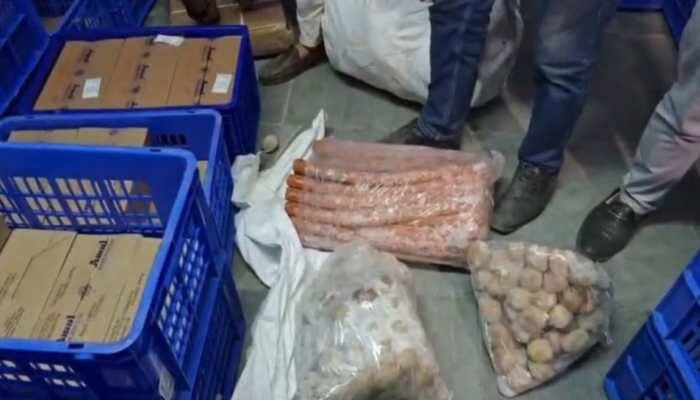
Srinagar/Jammu, February 2026 — The seizure of more than 12,000 kilograms of rotten meat, valued at nearly ₹29 lakh, has shaken public confidence across Jammu & Kashmir. What began as a routine enforcement drive has now exposed deeper cracks in regulatory oversight, inspection systems, and institutional accountability.
For many residents, the question is no longer just about contaminated meat — it is about governance.
This is not merely a food safety lapse. It is a structural failure with direct consequences for public health, economic stability, and citizen trust.
What Happened: The Seizures That Exposed the System
Authorities across Jammu & Kashmir conducted inspections that led to:
-
Over 12,000 kg of decomposed meat seized
-
Market value estimated at ₹29 lakh
-
Storage in unauthorized facilities
-
Distribution networks operating without compliance
Earlier enforcement actions had uncovered 13 tonnes of contaminated meat, indicating the problem was not isolated.
The most troubling revelation?
Only a small fraction of the Valley’s meat supply chain was inspected, raising fears about how much contaminated product may have already entered kitchens and restaurants.
The Regulatory Framework: Where Did It Break Down?
India’s food safety regulations are governed by the Food Safety and Standards Authority of India (FSSAI), which mandates:
-
Hygienic storage standards
-
Cold chain maintenance
-
Licensing and registration of meat handlers
-
Regular inspection and sampling
-
Traceability across supply chains
Yet enforcement gaps in Jammu & Kashmir appear significant.
1. Weak Enforcement of FSSAI Norms
Despite clear guidelines, illegal storage facilities operated without adequate monitoring.
Cold chain compliance — essential for meat preservation — was reportedly absent in several locations.
This raises two possibilities:
-
Either inspections were insufficient,
-
Or violations were ignored.
Both reflect governance shortcomings.
2. Limited Inspections: A System Stretched Thin
Reports indicate that only 1,676 inspections were conducted in a year across the region’s vast meat supply chain.
For a territory with thousands of vendors, transporters, cold storage units, and retail outlets, this inspection volume is disproportionately low.
Effective food safety systems rely on:
-
Risk-based inspections
-
Randomized sampling
-
Surprise audits
-
Digital traceability
The current model appears reactive rather than preventive.
3. Delayed Intervention
Officials acknowledge that the rotten meat trade may have been ongoing for years.
If true, this suggests:
-
Long-standing systemic loopholes
-
Possible collusion or negligence
-
Weak deterrence mechanisms
In public health governance, delay is often more dangerous than the violation itself.
Public Health Risks: The Invisible Threat
Consumption of decomposed meat can result in:
-
Salmonella infection
-
E. coli contamination
-
Listeriosis
-
Severe gastrointestinal illness
-
Food poisoning outbreaks
Vulnerable populations — children, elderly individuals, and immunocompromised patients — face higher risk.
In extreme cases, untreated foodborne illness can lead to:
-
Organ failure
-
Septic shock
-
Death
The absence of transparent data on reported illnesses further complicates impact assessment.
Erosion of Trust: When Institutions Fail
Food safety scandals create ripple effects far beyond the immediate health threat.
Citizens expect regulatory bodies to:
-
Protect their food supply
-
Conduct routine oversight
-
Penalize violators swiftly
When enforcement collapses, trust collapses.
For a region already navigating socio-economic challenges, institutional credibility is critical.
Economic Fallout: Tourism & Reputation at Stake
Jammu & Kashmir’s economy depends heavily on tourism and hospitality.
Food safety crises can:
-
Deter visitors
-
Harm restaurant businesses
-
Increase compliance costs for legitimate vendors
-
Reduce consumer spending
Tourism perception is fragile. Even isolated food safety incidents can trigger disproportionate reputational damage.
Supply Chain Weaknesses: The Structural Problem
The meat supply chain involves:
-
Slaughterhouses
-
Cold storage facilities
-
Transport logistics
-
Wholesale distributors
-
Retail vendors
Failure at any node compromises the entire system.
Investigations suggest gaps in:
-
Cold chain monitoring
-
Licensing verification
-
Quality certification
-
On-ground surveillance
Without digital tracking, contaminated meat can move rapidly through informal networks.
The Governance Question
This scandal is fundamentally about regulatory oversight.
Key governance concerns include:
-
Are inspection staff numbers adequate?
-
Is there independent auditing?
-
Are penalties strong enough to deter violations?
-
Is there transparency in enforcement reporting?
Food safety systems fail when:
-
Accountability is weak
-
Monitoring is sporadic
-
Enforcement is inconsistent
Government Response: Immediate Measures Announced
Authorities have now ordered:
-
Strict compliance with FSSAI handling and storage rules
-
Intensified inspection drives
-
Crackdowns on unauthorized facilities
-
Legal proceedings against violators
However, experts argue that emergency drives are not substitutes for systemic reform.
Lessons Learned
1. Prevention Over Reaction
Routine inspections must become continuous, not episodic.
2. Digital Monitoring
Implementation of:
-
QR-based traceability
-
Real-time cold chain monitoring
-
Public dashboards for inspection data
3. Transparency
Publishing:
-
Monthly inspection reports
-
Violator lists
-
Penalty actions
Public reporting rebuilds confidence.
4. Consumer Awareness
Citizens should:
-
Check licensing certificates
-
Report suspicious vendors
-
Avoid improperly stored meat
Food safety is a shared responsibility.
The Broader Context: Food Safety in India
Across India, food adulteration and cold chain gaps remain ongoing challenges.
Rapid urbanization and informal markets often outpace regulatory capacity.
Jammu & Kashmir’s scandal reflects a larger national issue — but with local consequences.
When Oversight Collapses, Citizens Pay
This crisis underscores a fundamental truth:
Governance is not abstract.
It determines:
-
What reaches your plate
-
What your children consume
-
What risks your family unknowingly takes
When oversight mechanisms weaken, ordinary citizens absorb the cost — through illness, anxiety, and economic strain.
Conclusion: A Turning Point or Temporary Outrage?
The Rotten Meat Scandal is not merely about contaminated food.
It is about:
-
Institutional vigilance
-
Regulatory credibility
-
Public health protection
If reforms follow — stronger enforcement, transparent reporting, digital modernization — the crisis could become a turning point.
If not, it risks becoming another forgotten episode in a system that reacts loudly but reforms slowly.
In matters of food safety, delay is dangerous.
Because when governance fails, it is never the system that falls sick — it is the people.