‘PDP Government, Not SASCI, Pushed J&K Into a Debt Trap’: Omar Abdullah Hits Back at Opposition During Budget Debate
By: Javid Amin | 11 February 2026
Chief Minister defends ₹3,000 crore SASCI funding, calls it a long-term investment—not a liability—amid fierce criticism in the Assembly
A Sharp Rebuttal in a Charged Assembly
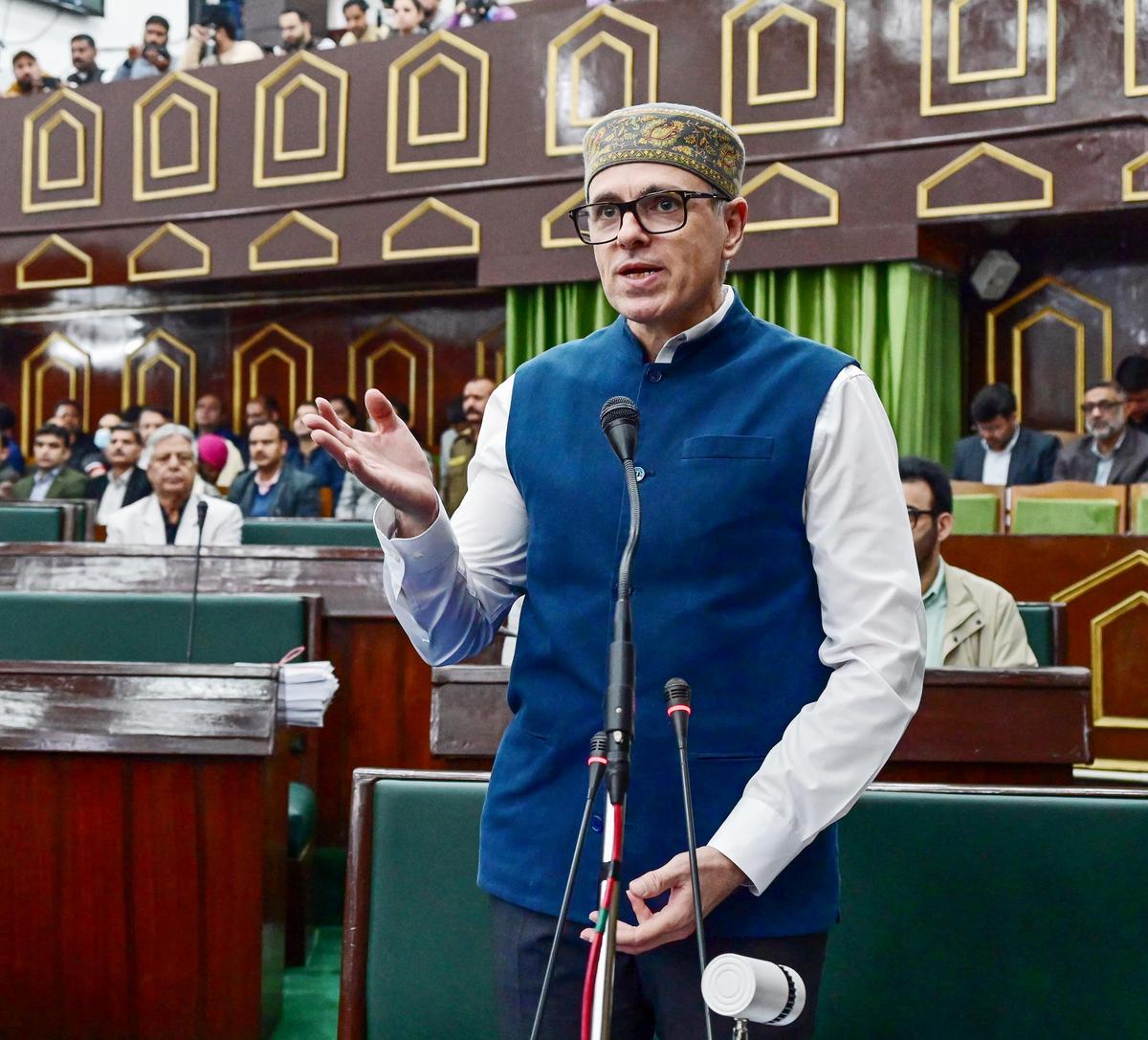
As debates intensified during the 2026–27 Budget Session of the Jammu and Kashmir Legislative Assembly, Chief Minister Omar Abdullah delivered one of his strongest political rebuttals yet—forcefully rejecting opposition claims that the Union Territory had been pushed into a “debt trap” due to the Special Assistance to States for Capital Investment (SASCI) scheme.
Instead, Abdullah placed responsibility squarely on the previous PDP-led government, accusing it of fiscal mismanagement that left Jammu and Kashmir financially vulnerable long before the SASCI scheme came into play.
“The debt trap narrative is misleading,” Abdullah asserted in the House. “Jammu and Kashmir’s financial stress did not begin with SASCI. It was inherited.”
His remarks came amid sustained criticism from opposition benches, including the PDP, BJP, and leaders like Sajad Lone, all of whom questioned the budget’s vision and borrowing structure.
What Is SASCI—and Why It Became Controversial
The Special Assistance to States for Capital Investment (SASCI) is a central government scheme designed to support infrastructure development by providing states with long-term financial assistance.
Key Features Highlighted by Omar Abdullah
According to the Chief Minister:
-
Jammu and Kashmir has secured ₹3,000 crore under SASCI
-
The funding is a 50-year interest-free loan
-
The money is meant for capital investment, not recurring expenditure
-
It does not carry corporate-linked repayment obligations
Abdullah described the allocation as a “big achievement”, particularly in a constrained fiscal environment.
“This is not corporate debt. This is not a commercial loan. It is long-term, interest-free assistance meant to build assets,” he told the Assembly.
Opposition’s ‘Debt Trap’ Charge—and the CM’s Response
Opposition parties had alleged that:
-
SASCI would burden future generations
-
The scheme indirectly benefits corporate interests
-
The UT was accumulating unsustainable liabilities
Abdullah dismissed these claims as stemming from a “poor understanding of the scheme”.
He stressed that equating SASCI with conventional borrowing was factually incorrect and politically motivated.
A 50-year interest-free structure, he argued, fundamentally changes the nature of the financial obligation.
Why Omar Abdullah Blamed the PDP Government
The Chief Minister used the opportunity not only to defend SASCI but also to revisit J&K’s fiscal history.
Core Argument
Abdullah asserted that:
-
Jammu and Kashmir’s financial stress predated the current government
-
The PDP-led administration’s policies had already weakened fiscal stability
-
Structural deficits and misaligned spending created long-term pressure
-
SASCI is part of a recovery effort, not the cause of the problem
By shifting the focus backward, Abdullah reframed the debate from current borrowing to legacy liabilities.
SASCI as Stabilisation, Not Strain
According to the ruling National Conference (NC), SASCI plays a corrective role.
Government’s Position
The NC argues that SASCI:
-
Enables infrastructure creation without interest burden
-
Frees up resources for social sector spending
-
Improves long-term economic capacity
-
Strengthens capital assets that generate growth
From this perspective, rejecting SASCI would mean foregoing development without reducing inherited debt.
The Budget Debate Context: A Polarised Assembly
The SASCI controversy unfolded amid a wider clash over the 2026–27 budget, which the opposition criticised as:
-
Lacking long-term vision
-
Over-reliant on central assistance
-
Insufficiently transformative
The ruling party countered by presenting the budget as:
-
A realistic roadmap
-
Focused on infrastructure and fiscal discipline
-
Designed to stabilise finances while enabling growth
SASCI became a symbolic flashpoint in this ideological divide.
Debt vs Investment: Competing Narratives
At the heart of the debate lies a fundamental disagreement:
Opposition View
Borrowing—even long-term—creates future pressure and reduces autonomy.
Government View
Strategic, interest-free capital investment strengthens the economy and improves fiscal health.
Omar Abdullah’s defence of SASCI positioned it firmly in the second category.
Political Messaging and Public Perception
By publicly rejecting the “debt trap” narrative, the Chief Minister aimed to:
-
Reassure citizens about fiscal responsibility
-
Counter opposition messaging
-
Establish economic credibility
-
Frame the government as corrective rather than reckless
In a region where public trust in financial governance is fragile, messaging matters as much as numbers.
Why the 50-Year Interest-Free Structure Matters
Abdullah repeatedly emphasised the 50-year, interest-free nature of SASCI funding.
This detail is crucial because:
-
It spreads repayment over generations
-
Eliminates interest accumulation
-
Reduces annual fiscal stress
-
Allows asset creation before repayment peaks
In policy terms, this aligns more with development financing than debt servicing.
Legacy Politics Meets Fiscal Debate
By blaming the PDP government, Abdullah also engaged in legacy politics—a common feature of budget debates.
Such framing:
-
Shifts responsibility for current constraints
-
Reinforces political contrast
-
Mobilises party supporters
-
Shapes historical narrative
However, it also ensures that fiscal debates remain deeply political.
What This Means for Future Budget Discussions
The SASCI debate is unlikely to end with this session.
It raises broader questions about:
-
How J&K finances development
-
The balance between autonomy and assistance
-
Inter-generational fiscal responsibility
-
Transparency in capital investment use
Future budgets will likely revisit these themes.
A Defensive but Confident CM
Omar Abdullah’s tone during the debate was defensive—but confident.
By:
-
Rejecting the debt trap label
-
Explaining SASCI’s structure
-
Naming PDP as responsible for legacy issues
He positioned himself as both guardian of fiscal stability and critic of past mismanagement.
Conclusion: More Than a Budget Argument
The clash over SASCI is not just about ₹3,000 crore.
It is about:
-
Who controls the narrative of J&K’s finances
-
How history is interpreted
-
What kind of development model the region follows
By declaring that the PDP government—not SASCI—pushed J&K into a debt trap, Omar Abdullah has drawn a clear political and economic line.
Whether that line convinces critics will depend not only on speeches—but on how these funds are ultimately used to transform Jammu and Kashmir’s infrastructure and economy.