“Some Decision Very Soon”: Fresh Statehood Assurances Revive J&K’s Long Wait
By: Javid Amin | 17 February 2026
A Renewed Promise in a Long-Running Debate
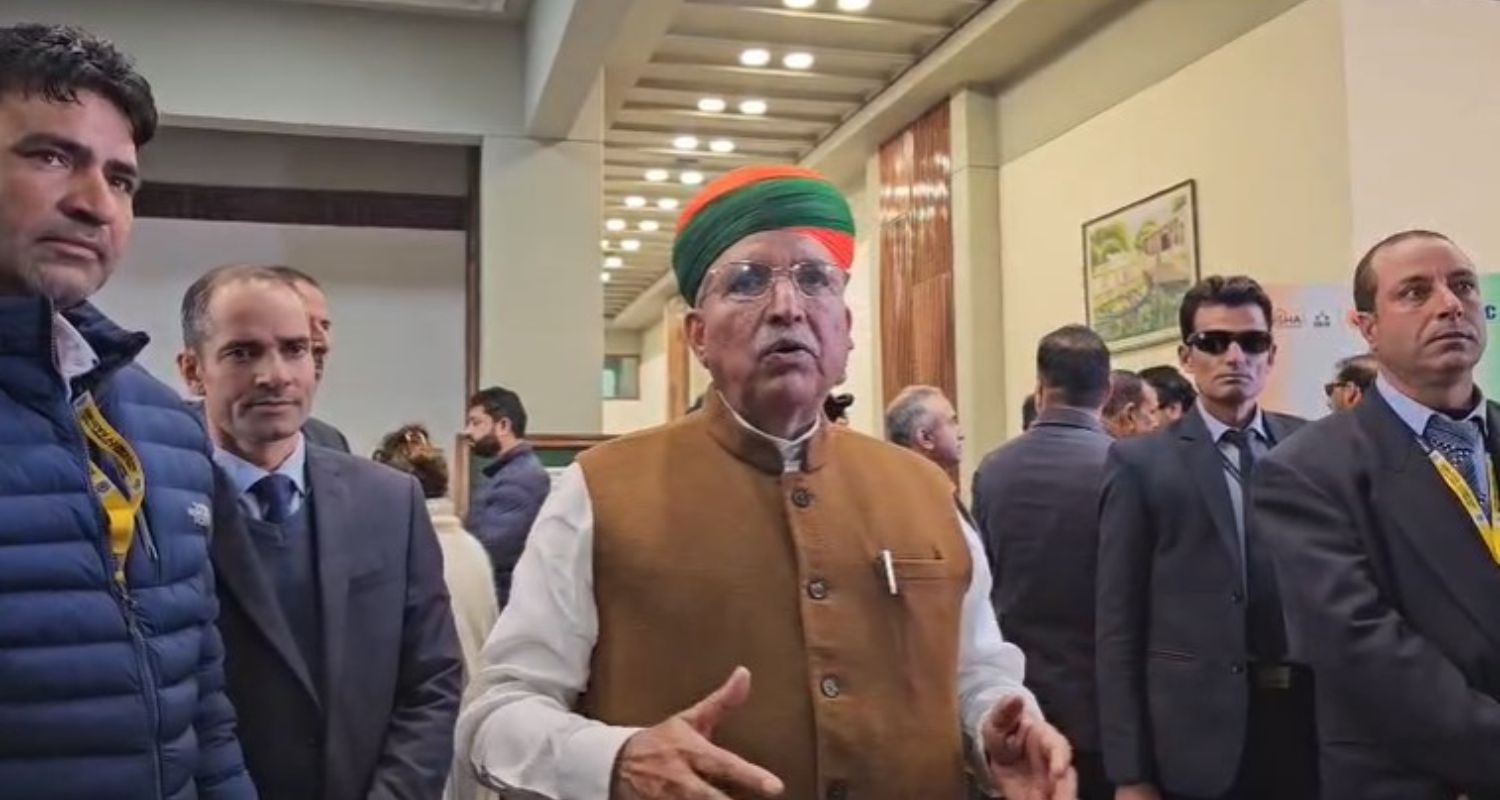
The debate over restoring statehood to Jammu and Kashmir returned to the political spotlight after Union Law and Justice Minister Arjun Ram Meghwal said the government would take “some decision very soon.”
Speaking in Srinagar, Meghwal described the issue as sensitive and stressed that the process would follow what he called a “rightful constitutional path.” He reminded audiences that the Union Government had already assured Parliament that statehood would eventually be restored.
The statement has re-energized political discussion in the region, where the restoration promise has become one of the most emotionally charged and persistent public demands since the 2019 reorganization.
Centre Reaffirms Its Position
Meghwal’s remarks echo earlier assurances from Union leaders, including statements made in Parliament by Amit Shah, that statehood would be returned at an appropriate time.
The Centre’s messaging has consistently framed the transition as:
-
legally structured
-
security-sensitive
-
tied to administrative stability
-
part of a phased normalization process
However, no formal timeline has been announced, and that absence continues to fuel political pressure inside J&K.
By saying a decision could come “very soon,” Meghwal introduced a sense of immediacy that has been largely missing from previous official language.
Omar Abdullah’s Response: Assurance Is Not Enough
J&K Chief Minister Omar Abdullah responded quickly, welcoming the statement but underlining a crucial point:
“Nobody in Jammu and Kashmir will be satisfied until statehood is actually restored.”
Abdullah acknowledged the reassurance as politically significant but argued that the delay has already stretched public patience. He urged the Union Government to translate promises into action without further postponement.
His response reflects a wider regional sentiment: verbal commitments are no longer politically sufficient. Citizens want institutional change, not incremental signals.
Why the Timing Matters
The renewed assurance arrives amid:
-
heightened Assembly debates on autonomy and governance
-
sustained opposition demands across party lines
-
civil society pressure
-
youth-driven political engagement
-
ongoing Centre–UT dialogue
The longer the issue remains unresolved, the more it dominates every other political conversation. Development projects, welfare policies, and infrastructure announcements repeatedly get filtered through the statehood lens.
In effect, statehood has become the region’s political baseline issue — the reference point against which all governance claims are measured.
The Emotional Weight of the Promise
For many residents, the question is not merely constitutional. It is psychological.
The downgrade from state to Union Territory is widely interpreted as a loss of political status. Restoration is therefore framed as:
-
recovery of dignity
-
restoration of agency
-
democratic reassurance
-
symbolic closure of a transitional chapter
That emotional dimension explains why even cautious ministerial language generates strong reactions.
Political Consensus — Rare but Real
One of the most striking aspects of the statehood debate is the breadth of agreement around it.
Regional parties, national parties operating in the UT, and independent lawmakers all publicly affirm that restoration is necessary. Their disagreements focus on timing and conditions, not principle.
This cross-spectrum consensus is unusual in J&K politics, where alignment is historically fragmented.
Governance Stakes
Beyond symbolism, statehood carries concrete administrative implications:
-
expanded legislative authority
-
stronger executive powers
-
faster decision cycles
-
localized policy design
-
clearer accountability
Critics of the prolonged UT arrangement argue that centralized governance slows economic and administrative responsiveness in a geographically and politically complex region.
Supporters of the phased approach argue that stability must precede structural change.
The tension between these positions defines the present moment.
What Happens Next
Meghwal’s “very soon” formulation raises expectations. If a decision follows quickly, it could reset the political atmosphere and shift focus toward governance outcomes.
If the timeline stretches again, skepticism will deepen.
The stakes are high because expectations are no longer abstract — they are accumulated. Each new assurance carries the weight of earlier delays.
Conclusion: A Promise Under Watch
The restoration of statehood to Jammu & Kashmir has evolved from a policy commitment into a credibility test.
The Union Government maintains that the process is underway. The region’s leadership insists the wait has gone on long enough. Citizens measure every statement against lived political reality.
Meghwal’s assurance has revived hope — but also scrutiny.
Until a formal decision is announced, the phrase “very soon” will remain both a promise and a pressure point.
And in Jammu & Kashmir’s current political climate, the difference between those two meanings matters enormously.