Second Day of J&K Assembly Budget Session Dominated by NLU Debate, Statehood Demands & Kashmiri Harassment Concerns
By: Javid Amin | 03 February 2026
Political Heat Surges in Budget Session
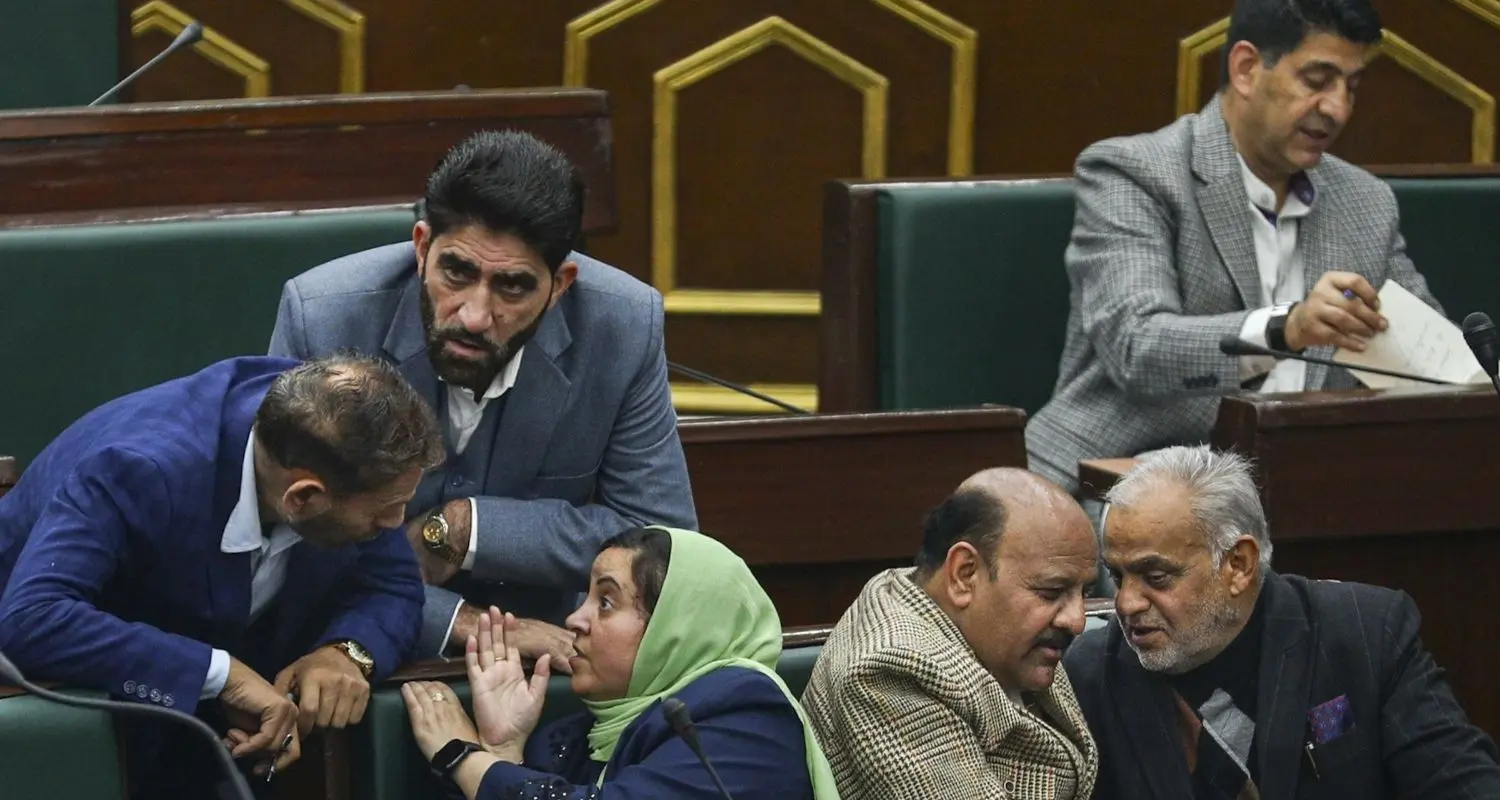
On February 3, 2026, the Jammu & Kashmir Legislative Assembly’s Budget Session turned sharply political, marked by uproarious debates over the proposed National Law University (NLU), renewed calls for restoration of statehood, and intense condemnation of harassment of Kashmiris outside the Union Territory. Lawmakers from ruling and opposition benches engaged in noisy exchanges that reflected broader political divides within J&K’s governance landscape.
Scenes inside the House included protests, slogan-shouting, and walkouts, while outside the legislature, political workers continued demonstrations around key issues.
National Law University: BJP Pushes for Expansion, Spark Ignites Debate
A Divisive Proposal
The session began with BJP legislators staging a protest inside the Assembly, demanding the establishment of a National Law University (NLU) in the Jammu region.
BJP leaders argued that while they were not opposed to the NLU planned for Kashmir, the Jammu region deserved equal consideration for such a premier legal institution. This demand was linked to ongoing student protests at Jammu University, where youth have been voicing support for a local law university.
During proceedings, BJP legislators stood up with placards reading “NLU for Jammu”, leading to interruptions and objections over assembly decorum from other parties.
Parliamentary Exchanges
Members from other benches, including the Congress, criticised the display of placards on the floor, arguing it violated House rules. Meanwhile, government supporters defended the decision to grant an NLU to Kashmir — emphasising it was done through due process.
The debate over the law university became emblematic of deeper regional rivalries between Jammu and Kashmir, particularly around access to advanced educational infrastructure.
Statehood Demand: Opposition Intensifies Pressure
NC and PDP Press the Issue
While the BJP pushed the NLU agenda, lawmakers from the National Conference (NC) and Peoples Democratic Party (PDP) up-scaled their long-standing demand for the restoration of full statehood to Jammu & Kashmir.
Legislators staged a dharna (sit-in) outside the Assembly ahead of the session, carrying placards demanding “Restore Statehood and Constitutional Guarantees.” The protest also highlighted alleged harassment of Kashmiris across India.
NC’s chief spokesperson underlined that fulfilling the statehood promise is overdue, urging national leaders, including Prime Minister Narendra Modi and the Union Home Minister, to act.
Inside the House Dynamics
Debate over statehood continued into the session, with opposition members repeatedly invoking the issue, arguing that J&K’s political identity and democratic rights remain central to any meaningful governance agenda.
The increasingly charged atmosphere reflected how statehood continues to dominate political discourse since the region’s constitutional status was reorganised in 2019.
Harassment of Kashmiris Outside J&K: Emotional Uproar in Assembly
Allegations of Hate Crimes
In sharp contrast to the NLU demand, lawmakers from NC and PDP highlighted alleged harassment and assault of Kashmiris living and studying outside the Union Territory — raising serious social concerns.
National Conference legislator Mubarak Gul claimed that Kashmiri students and traders faced hostility, abuse, and physical mistreatment in various parts of the country. Gul alleged in some instances groups of Kashmiris were not allowed to leave rented accommodations and were even beaten.
PDP MLA Wahid-ur-Rehman Para moved an adjournment motion seeking urgent discussion on what he termed growing incidents of hate crimes against Kashmiris outside J&K. However, the motion was rejected by the Speaker, who said these matters could be taken up through appropriate channels without disrupting official proceedings.
Government’s Position and CM’s Response
Chief Minister Omar Abdullah, addressing media ahead of the session, said the claim of harassment would be discussed on the House floor as part of the assembly’s business. He also noted he had raised concerns about victimisation of Kashmiris, including at the North Zone Chief Ministers’ Conference, urging other states and central authorities to protect them. He acknowledged prompt action by the Uttarakhand government in a recent case involving attackers of a Kashmiri shawl seller.
Ruckus, Walkouts and Assembly Atmosphere
Noisy Proceedings and Frayed Nerves
The combined weight of competing demands — law university establishment, statehood, and harassment allegations — created a chaotic legislative environment.
At times, BJP members staged walkouts when debates shifted towards statehood or alleged discrimination against Union Territory residents, reflecting deep political fissures within the House.
The Speaker, Abdul Rahim Rather, repeatedly urged members to maintain decorum, stressing that the Question Hour should continue and that substantive concerns like harassment could be addressed through official mechanisms.
Protests Outside Assembly: Grassroots Sloganeering
Beyond the legislature’s walls, political workers from various parties participated in parallel demonstrations, chanting slogans on key themes:
-
“Restore Statehood Now”
-
“Protect Kashmiri Identity and Rights”
-
“NLU for Jammu and Kashmir” (reflecting the BJP’s push)
These protests underscored how the political debates inside are tightly linked to public sentiment and grassroots mobilisation across the region.
Analysis: What This Means for J&K’s Political Landscape
NLU Debate — Policy vs. Regional Equity
The strong push for an additional National Law University highlights two competing imperatives: broader educational infrastructure expansion and underlying regional equity concerns — particularly the perception in Jammu of unequal investment compared to the Kashmir division.
How this debate evolves may influence future allocations of key institutions and reflect regional balance issues within the Union Territory’s governance.
Statehood — Core Political Fault Line
The persistent demand for statehood underscores the continuing central political friction in J&K following the revocation of Article 370 in 2019. The assembly proceedings reflect that statehood remains a unifying rallying point for many local parties, cutting across legislative strategy and public mobilisation.
Harassment Issues — National Security & Social Cohesion
The uproar over alleged harassment of Kashmiris outside the UT signals increasing anxiety among lawmakers about the safety and dignity of their constituents nationwide. While the Speaker rejected immediate adjournment on this matter, its repeated mention points to growing political pressure to secure stronger assurances and safeguards for community members beyond the region’s borders.
Conclusion: Budget Session Reflects Deeply Intertwined Issues
The second day of the J&K Assembly Budget Session delivered more than fiscal discussions — it showcased political contention, identity politics, and public sentiment converging in the state legislature.
From NLU demands and regional disparities to the unresolved statehood debate and concerns about harassment and discrimination, the session highlighted how development priorities, political aspirations, and social issues remain deeply interconnected in Jammu & Kashmir’s evolving political context.
As the session progresses, lawmakers and citizens alike will be watching for how these critical debates translate into action, policy, or further political confrontation in the weeks ahead.