Jama Masjid Closed & Mirwaiz Under House Arrest Ahead of Shab-e-Barat in Srinagar | Religious Rights Clash with Security Measures
By: Javid Amin | 03 February 2026
Historic Mosque Sealed on Holy Night
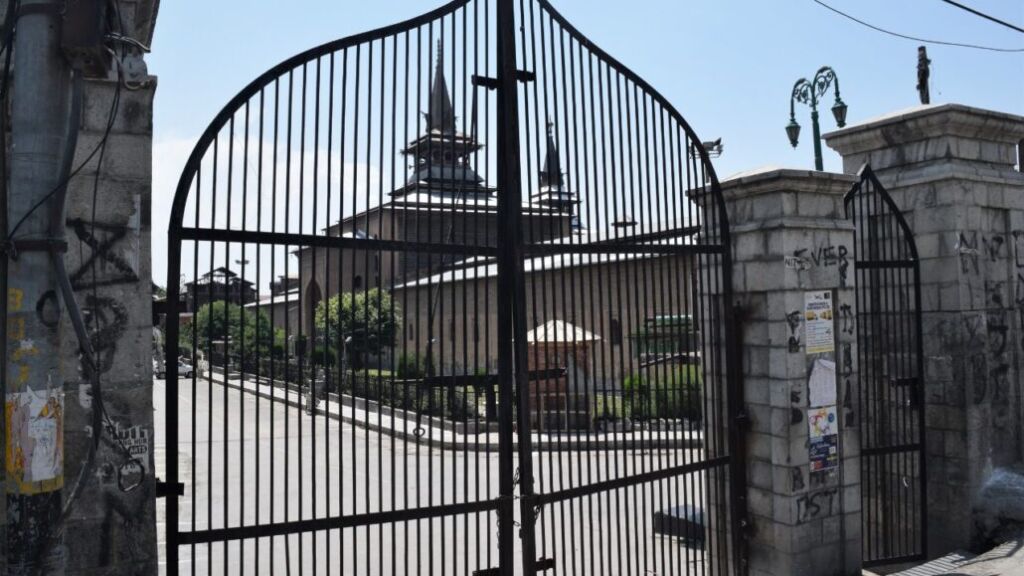
Authorities in Srinagar abruptly closed the gates of the historic Jama Masjid just after Asr prayers on Tuesday and denied permission for Shab-e-Barat observances inside the centuries-old mosque — one of the valley’s most important religious sites for Kashmiri Muslims.
At the same time, Mirwaiz Umar Farooq, the chief cleric of Jama Masjid and a prominent religious figure in Kashmir, was placed under house arrest at his residence, effectively preventing him from leading prayer gatherings or addressing worshippers for the night-long festivities.
This development drew immediate criticism from mosque authorities and community leaders, who condemned the move as a violation of religious rights and part of a broader pattern of repeated restrictions on congregational prayers at Jama Masjid.
What Happened: Authorities Bar Prayers and Lock Mosque Gates
Shortly after the afternoon prayers on February 3, police officials directed the Anjuman Auqaf Jama Masjid — the body responsible for managing the mosque — to close the mosque’s gates and ensure the complex remained locked throughout the night.
The Auqaf officials told authorities they had made prior preparations for Shab-e-Barat prayers, an important nocturnal worship occasion, only to be informed at the last minute that permission was denied.
According to the Anjuman’s statement, worshippers were asked to vacate the premises immediately, and security personnel maintained a presence around the mosque to enforce the closure.
Mirwaiz Umar Farooq: House Arrest and Public Response
Mirwaiz Umar Farooq took to social media to confirm that he had been confined to his home, unable to travel to the Jama Masjid to lead or participate in the prayers. In his post, he shared images of the mosque’s locked gates and described the situation as another instance of forced closure.
Mirwaiz noted that mosques across the Kashmir Valley were hosting Shab-e-Barat prayers on the same night — making Jama Masjid’s closure particularly striking. He said the mosque’s continued shutdown deepens doubts about claims of “normalcy” in the region and called for an explanation from authorities.
His statement highlighted a longer history of restrictions at the mosque on key religious occasions, arguing that those responsible for promoting narratives of regional normalcy owe an explanation for the contrast between official messages and on-ground restrictions.
Religious Significance: Shab-e-Barat and Congregational Worship
Shab-e-Barat — observed on the 15th night of the Islamic month of Sha’ban — is known in the Muslim world as a Night of Forgiveness, Prayer and Reflection. It holds deep spiritual importance, and congregational prayers are central to its traditional observance.
Muslims attend special nighttime prayers, recite passages from the Quran, and seek forgiveness and blessings. Jama Masjid, located in Srinagar’s historic Nowhatta locality, has for generations been a focal point of these sacred observances in Kashmir.
But this year, while many local mosques and shrines held night-long prayers and individual worshippers visited graves and lit candles in remembrance and supplication, Jama Masjid remained shut for the first time in many years on this major religious night.
Auqaf’s Strong Response: Religious Rights and Policy Critique
The Anjuman Auqaf Jama Masjid expressed deep regret and disappointment over the decision. In its official statement, the management said that closing Jama Masjid and restricting the Mirwaiz’s movement amounted to “blatant interference” in the religious rights of the people.
The body noted that major congregational gatherings at the mosque have been repeatedly disallowed since 2019, asserting that this long-standing pattern reflects an erosion of freedoms on significant religious occasions, diminishing the mosque’s role in community life.
The Auqaf also urged the authorities to review the policy on religious gatherings and refrain from blanket prohibitions that prevent peaceful worship, emphasizing that Jama Masjid remains an essential spiritual centre for Kashmir’s Muslim population.
Public Sentiment: Dismayed Worshippers and Criticism
Reports from Srinagar indicate that many worshippers were dismayed by the closure of Jama Masjid, especially given the night’s religious importance and the fact that other mosques across the valley were open for prayers.
Social media posts and local reactions reflected frustration and a sense of loss among the faithful, many of whom view congregational prayer at Jama Masjid as a central observance during major Islamic nights.
Some congregants expressed that while individual devotion continued across the region, the symbolic absence of Jama Masjid’s festivities dampened the communal spirit of the occasion.
Why Authorities Cited Restrictions: Security History and Caution
While no official government explanation was issued this time, authorities in Kashmir have, in the past, cited security concerns when restricting access to Jama Masjid on important nights.
Notably, during previous Shab-e-Qadr observances and other significant religious occasions, authorities referenced past incidents — such as the 2017 killing of a police officer outside the mosque — when explaining stringent security measures and closures to prevent violence or crowd unrest.
These decisions were often defended as necessary precautions in a region that has experienced prolonged conflict and heightened tensions. However, critics note that the repeated closures on major nights risk alienating worshippers and fueling perceptions of unequal treatment of religious freedoms.
Continuing Pattern: Closures Since 2019
Observers and mosque authorities say the restrictions at Jama Masjid — including barring prayers on Shab-e-Barat — are part of a continuing pattern since 2019, when authorities began imposing limits on major congregational events at the mosque.
Community leaders point out that this marks multiple years of limited access during key observances, even as other mosques and shrines remain open for faithful throughout the valley.
This pattern has frequently drawn public debate, especially during Ramadan and other holiest nights, with supporters of unrestricted worship arguing that spiritual rights should be upheld even amidst security concerns.
Broader Context: Religious Freedom and Security Balance
The closure of Jama Masjid and house arrest of Mirwaiz Umar Farooq underscore the ongoing tension between religious freedoms and security measures in the Kashmir Valley — a region with a complex political and social landscape shaped by decades of conflict and governance challenges.
While authorities emphasize caution and preventive steps, religious leaders and civil society continue to call for transparent policies that respect constitutional rights and community sentiments.
Conclusion: Sacred Night, Closed Gates, Stirring Emotion
The closure of Jama Masjid and the house arrest of Mirwaiz Umar Farooq on the eve of Shab-e-Barat have sparked deep concern among Kashmiri worshippers and religious leaders alike. What was meant to be a night of communal prayer and spiritual reflection became a flashpoint in ongoing discussions about religious rights, security policy, and the cultural life of the valley.
As the region continues to navigate these complex questions, voices from all sides stress the importance of finding a path that upholds both respect for religious traditions and legitimate security imperatives — a balance that has eluded clear resolution for many in Kashmir.