Iran Sends Chilling Warning as U.S. Flexes Military Muscle With Diplomacy
By: Javid Amin | 07 February 2026
Introduction: A Crisis Where Words and Warships Collide
In geopolitics, moments of greatest danger are often marked not by explosions, but by silence — canceled talks, rigid ultimatums, and carefully chosen words that leave little room for compromise. That is precisely where the United States and Iran find themselves today.
As American warships patrol the waters near Iran and nuclear negotiations cautiously resume in Oman, Tehran has issued what officials describe as a “clear and chilling warning”: pressure will be met with resistance, not retreat.
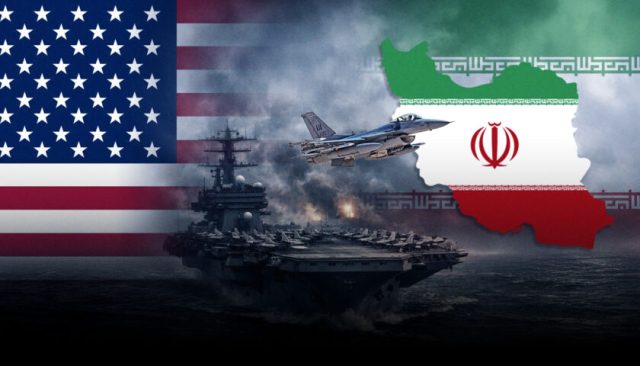
The deployment of the USS Abraham Lincoln Carrier Strike Group to the Arabian Sea has dramatically raised the stakes. Simultaneously, indirect diplomatic talks — fragile, conditional, and mistrust-laden — have opened a narrow channel to prevent escalation. Yet both sides appear locked into a dangerous dual-track strategy: deterrence backed by diplomacy, and diplomacy constrained by deterrence.
This unfolding confrontation is not just about centrifuges, sanctions, or missiles. It is about power, perception, and political survival — in Washington, Tehran, and across a Middle East already stretched to its limits.
What Triggered the Latest Escalation?
The immediate backdrop to the current standoff is the collapse — before it even began — of a proposed round of direct U.S.–Iran talks. American officials conveyed a blunt message to Tehran: accept U.S. conditions or receive nothing. Iran’s response was equally stark: “Nothing.”
That exchange crystallized months of diplomatic stagnation.
Behind closed doors, both governments had been maneuvering cautiously:
-
The U.S. sought to broaden negotiations beyond Iran’s nuclear program to include ballistic missiles and regional proxy activity.
-
Iran insisted talks must remain strictly nuclear, accusing Washington of attempting to rewrite the rules mid-game.
When talks were eventually rescheduled in Oman, they were downgraded to indirect negotiations, underscoring just how deep the mistrust runs.
The Carrier in the Room: Why the Abraham Lincoln Matters
The arrival of the Abraham Lincoln Carrier Strike Group is no routine naval deployment. Carrier strike groups are among the most powerful symbols of American military capability — floating airbases capable of projecting force across thousands of kilometers.
What This Deployment Signals
-
Deterrence: A warning to Iran against actions such as blocking shipping lanes or accelerating nuclear activities.
-
Leverage: A reminder that diplomacy is occurring under the shadow of overwhelming force.
-
Reassurance: A signal to U.S. allies in the Gulf and Israel that Washington remains committed to regional security.
But deterrence cuts both ways. For Tehran, the carrier’s presence is viewed not as a stabilizing force, but as a provocation.
Iranian officials have openly framed the deployment as coercive diplomacy, arguing that negotiations conducted under military threat cannot be genuine.
Iran’s ‘Chilling Warning’: What Tehran Is Really Saying
Iran’s response has been deliberate, calculated, and unmistakable.
Senior Iranian officials have stated that:
-
Any attack on Iran would trigger retaliation against U.S. military assets in the region.
-
Iran does not seek war, but will not negotiate under pressure.
-
The U.S. military presence near its borders undermines trust and raises the risk of miscalculation.
Crucially, Iran has emphasized that retaliation would target U.S. installations, not host nations — a subtle attempt to avoid dragging regional states directly into conflict while keeping Washington on notice.
This messaging reflects Iran’s broader strategic doctrine: resist direct confrontation, rely on deterrence, and preserve diplomatic legitimacy by appearing restrained but resolute.
Oman Talks: Diplomacy in a Narrow Corridor
Why Oman?
Oman has long served as a discreet diplomatic bridge between Washington and Tehran. Its neutral posture and history of quiet mediation make it one of the few venues both sides trust — if only marginally.
What’s Being Discussed
The current talks revolve around:
-
Uranium enrichment limits
-
Monitoring and inspection mechanisms
-
Partial sanctions relief
However, talks remain indirect, with messages passed through intermediaries. This format reflects not progress, but precaution.
The Core Dispute
-
U.S. position: Nuclear issues cannot be separated from missiles and regional security.
-
Iran’s position: Expanding the agenda is a red line.
This gap is not procedural — it is philosophical. Washington sees Iran’s nuclear program as inseparable from its broader military posture. Tehran sees missile capabilities as non-negotiable pillars of sovereignty.
Trump’s Role: Pressure as Policy
President Donald Trump’s public messaging has added another layer of complexity.
By openly referencing “large warships heading toward Iran” and warning that “bad things would probably happen” without a deal, Trump has reinforced his long-standing strategy: maximum pressure paired with selective engagement.
This approach plays well domestically, projecting strength and decisiveness. Internationally, however, it raises concerns that diplomacy may be viewed as an ultimatum rather than a negotiation.
Trump’s rhetoric signals that:
-
Military options remain on the table.
-
Talks are a means to an end, not an end in themselves.
-
Failure to comply will carry visible consequences.
For Iran’s leadership, this reinforces suspicion that Washington seeks capitulation, not compromise.
The Risk of Accidental War
One of the most dangerous aspects of the current standoff is the risk of unintended escalation.
Recent incidents involving drones and naval maneuvers illustrate how quickly situations can spiral:
-
Close encounters between U.S. forces and Iranian drones
-
Heightened alert levels across the Gulf
-
Increased surveillance and counter-surveillance operations
In such an environment, a misread radar signal or aggressive maneuver could trigger a chain reaction neither side intends — but both would feel compelled to respond to.
Regional Shockwaves: Why the Middle East Is Watching Closely
The Iran–U.S. confrontation does not exist in isolation.
Energy Markets
Any escalation threatens shipping through the Strait of Hormuz, a chokepoint for global oil supplies. Even rumors of conflict can send prices soaring.
Proxy Dynamics
From Iraq and Syria to Lebanon and Yemen, regional actors aligned with Iran could react independently, complicating crisis management.
Israel’s Calculus
Israel views Iran’s nuclear ambitions as existential. Diplomatic failure could push Jerusalem toward unilateral action — a scenario that would dramatically widen the conflict.
Scenario Analysis: What Happens Next?
Scenario 1: Talks Succeed (Low Probability, High Impact)
-
Iran caps enrichment levels.
-
Sanctions relief provides economic breathing room.
-
Military tensions de-escalate without full normalization.
Scenario 2: Managed Stalemate (Most Likely)
-
Talks continue without breakthroughs.
-
Military posturing remains high.
-
Neither side crosses red lines, but tensions persist.
Scenario 3: Talks Collapse (High Risk)
-
Iran accelerates nuclear activities.
-
U.S. expands sanctions and military presence.
-
A single incident triggers wider confrontation.
Why This Crisis Is Different From Past Ones
Unlike earlier standoffs, today’s crisis unfolds in a world already strained by:
-
Ongoing regional conflicts
-
Global energy uncertainty
-
A fractured international order
Neither Washington nor Tehran enjoys unlimited room for error. Domestic pressures, economic realities, and alliance politics all constrain decision-making.
This makes the current moment unusually volatile — and unusually consequential.
The Language of Power: When Words Become Weapons
Perhaps the most revealing aspect of the crisis is how language itself has become a battleground.
-
“Accept or get nothing.”
-
“Nothing.”
-
“Bad things will happen.”
-
“We will retaliate.”
These are not negotiating phrases. They are signals — to voters, allies, rivals, and history.
When diplomacy adopts the tone of confrontation, compromise becomes politically costly, even when strategically necessary.
Conclusion: A Narrow Window Before the Door Slams Shut
The U.S.–Iran standoff of 2026 stands at a precarious crossroads.
Military power looms large, yet diplomacy persists — not out of trust, but necessity. Both sides understand the cost of war. Both fear the price of appearing weak.
Whether the Oman talks become a bridge to stability or a footnote before escalation will depend on something increasingly rare in global politics: strategic restraint.
For now, war has not begun. But peace is far from secured.
The carrier sails. The talks continue. And the world watches, aware that history often turns not on decisive actions, but on moments when leaders choose — or refuse — to step back from the edge.