India Aviation Safety Under Scrutiny
By: Javid Amin | 23 February 2026
Three Incidents. One Question: Is India’s Rapid Aviation Expansion Outpacing Oversight?
In the span of days, three aviation incidents shook public confidence in India’s air safety ecosystem:
-
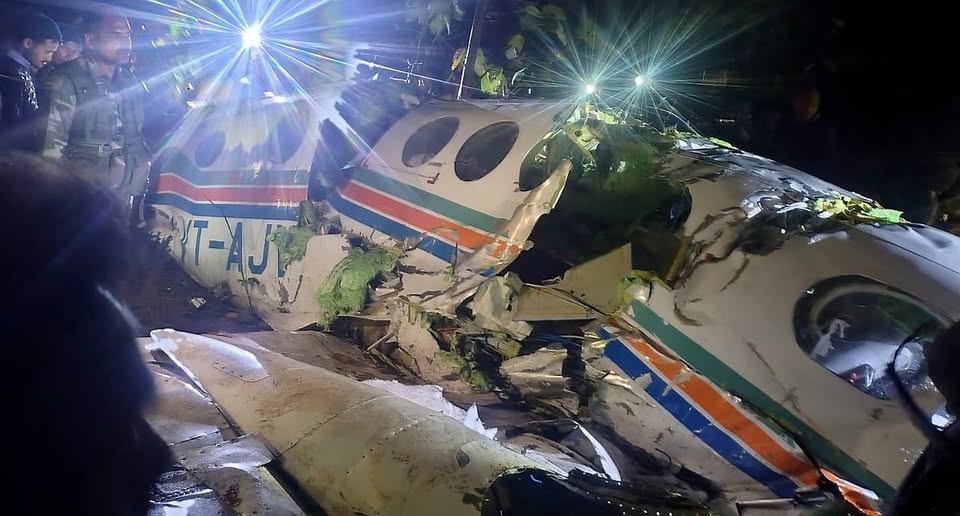
A fatal air ambulance crash near Ranchi involving a Redbird Airways Pvt Ltd Beechcraft C90.
-
A helicopter operated by Pawan Hans ditching into the sea near Mayabunder.
-
A SpiceJet Delhi–Leh flight declaring a full emergency due to suspected engine trouble.
Individually, each incident falls into a distinct operational category: charter medical aviation, island helicopter connectivity, and commercial high-altitude jet operations. Together, they reopen a critical debate: Is India aviation safety keeping pace with its aggressive expansion?
This 6000+ word investigative feature examines the technical, regulatory, economic, and human dimensions of these events — and what they reveal about India’s aviation future.
The Ranchi Air Ambulance Crash — When a Lifeline Becomes a Fatal Flight
The Flight That Didn’t Return
The Beechcraft C90, a twin-engine turboprop aircraft widely used for charter and medical evacuation missions, went down near Ranchi while operating as an air ambulance. The aircraft was linked to Redbird Airways Pvt Ltd, a smaller charter operator.
Air ambulances are not ordinary flights. They operate under urgency. Every mission carries the weight of life-saving timelines. Every delay can cost survival odds.
But urgency can never override safety protocol.
The Human Story: “I Sold My Farm for Him”
Among the grieving families was a father who broke down publicly, saying he had sold his farmland to fund his son’s education and career.
That one statement reframed the Ranchi air ambulance crash beyond aviation safety — it became a story about aspiration, sacrifice, and fragility.
In rural India, land is wealth. Selling farmland is not a minor financial decision; it is a generational shift. When tragedy strikes, the loss is both emotional and structural.
This is the human cost of aviation accidents — the part never captured in cockpit voice recorders.
Understanding the Aircraft: Beechcraft C90 Operational Realities
The Beechcraft C90 is:
-
A twin turboprop aircraft
-
Often used for short-haul missions
-
Common in charter and medevac services
-
Suitable for regional connectivity
However, smaller aircraft face different risk profiles than commercial jets:
-
Limited redundancy compared to wide-body jets
-
Greater sensitivity to weather patterns
-
Dependence on meticulous maintenance cycles
-
Higher operational variability
The DGCA (Directorate General of Civil Aviation) has launched an investigation, but key areas typically examined include:
-
Maintenance logs
-
Engine performance records
-
Pilot flight hours and rest compliance
-
Weather advisories
-
Air Traffic Control communication
India aviation safety investigations often hinge on maintenance documentation integrity.
Charter Aviation: The Quiet Risk Sector
India’s charter aviation sector has expanded rapidly due to:
-
Corporate travel demand
-
Medical evacuation services
-
Regional connectivity gaps
But charter operators often operate with:
-
Smaller fleets
-
Thin profit margins
-
Limited economies of scale
-
Aging aircraft inventories
This does not imply negligence. However, cost pressures can influence maintenance planning cycles, spare part procurement timelines, and training investments.
India aviation safety oversight must be more stringent for charter operations than scheduled commercial airlines — not less.
Pawan Hans Helicopter Ditching — When Geography Tests Engineering
The Incident Near Mayabunder
A helicopter operated by Pawan Hans was forced to ditch into the sea shortly after takeoff from Mayabunder in the Andaman & Nicobar Islands.
All seven onboard were rescued — a fortunate outcome.
But the incident revealed the inherent risks of island aviation.
Why Helicopter Operations in Andaman Are High Risk
The Andaman and Nicobar Islands present:
-
High humidity corrosion exposure
-
Sudden maritime wind shifts
-
Limited alternate landing options
-
Sparse radar infrastructure
-
Long stretches of open water
Helicopters in such regions serve as lifelines. Pawan Hans connects remote settlements to Port Blair for:
-
Medical emergencies
-
Administrative access
-
Supply chain movement
However, sea-ditching scenarios are complex:
-
Pilots must execute controlled descent
-
Cabin crew must manage passenger panic
-
Rescue response time is critical
This case demonstrated emergency preparedness working correctly — but also underscored how narrow the safety margins can be.
Maintenance & Maritime Corrosion
Aircraft operating in island regions face accelerated:
-
Salt corrosion on fuselage
-
Electrical wiring degradation
-
Rotor system wear
-
Hydraulic system vulnerability
India aviation safety standards mandate inspection cycles, but frequency and compliance transparency remain opaque to the public.
SpiceJet Delhi–Leh Emergency — High Altitude Aviation Is a Different Discipline
What Happened
A SpiceJet flight from Delhi to Leh declared a full emergency due to suspected engine malfunction.
Full emergency means:
-
Fire services deployed
-
Medical teams on standby
-
Priority landing clearance
The aircraft returned safely.
But the route itself deserves scrutiny.
Why Leh Is One of India’s Most Demanding Airports
Leh airport presents:
-
Elevation above 10,000 feet
-
Reduced air density
-
Lower engine thrust margins
-
Narrow approach corridors
-
Mountain wind shear
Engine irregularities at high altitude amplify risk because:
-
Performance margins shrink
-
Turnaround options reduce
-
Weather changes rapidly
India aviation safety in high-altitude operations requires:
-
Specialized pilot training
-
Conservative fuel planning
-
Enhanced engine monitoring
The Bigger Question: Are These Isolated Events — Or Systemic Signals?
India’s Aviation Boom
India is among the fastest-growing aviation markets globally:
-
Expansion of regional routes under UDAN
-
Increased charter usage
-
Helicopter connectivity in remote zones
-
Growing low-cost carrier dominance
Fleet expansion often outpaces regulatory hiring capacity.
Oversight must scale proportionally.
DGCA Capacity vs Industry Growth
The DGCA oversees:
-
Commercial airlines
-
Charter operators
-
Flight schools
-
Helicopter services
-
Maintenance organizations
As traffic rises, inspection frequency must also increase.
But recruitment, technical training, and audit transparency have lagged historically.
India aviation safety depends not just on rules — but on enforcement intensity.
Maintenance Culture: The Unseen Determinant
Aviation safety globally hinges on one factor: maintenance culture.
Maintenance failures rarely occur due to a single oversight. Instead, they emerge from:
-
Documentation gaps
-
Deferred rectification
-
Spare part delays
-
Training fatigue
-
Cost optimization pressure
In commercial aviation, internal safety management systems (SMS) mitigate risk.
In smaller charter ecosystems, SMS maturity varies.
The Human Psychology of Aviation Fear
Statistically, aviation remains safer than road travel.
But aviation incidents trigger outsized public anxiety because:
-
They are rare but catastrophic
-
Media coverage is intense
-
Survivability perception is low
India aviation safety narratives often become politicized quickly.
Economic Stakes
India’s aviation contributes:
-
Tourism revenue
-
Regional integration
-
Employment generation
-
Medical evacuation capacity
-
Strategic defense connectivity
Undermining safety confidence impacts:
-
Investor trust
-
Tourism growth
-
Airline valuations
International Benchmarking
Globally, regulators like:
-
FAA (United States)
-
EASA (Europe)
Operate with:
-
Public accident data portals
-
Transparent audit findings
-
Mandatory corrective action tracking
India aviation safety transparency could benefit from similar public-facing dashboards.
Policy Recommendations
1. Independent Accident Transparency Portal
Real-time publication of investigation stages.
2. Charter-Specific Audit Intensification
Quarterly inspection cycles for air ambulance operators.
3. Maritime Aircraft Monitoring
Enhanced corrosion tracking for island-based fleets.
4. High-Altitude Route Engine Monitoring
Mandatory predictive engine diagnostics for Leh flights.
5. Public Communication Reform
Clear explanations reduce rumor-driven panic.
Conclusion: Growth Must Not Dilute Vigilance
The Ranchi air ambulance crash.
The Pawan Hans sea ditching.
The SpiceJet Leh emergency.
Three incidents. Three operational categories. One common denominator: India aviation safety is under pressure from rapid expansion.
Aviation safety is not static. It is a dynamic equilibrium between:
-
Technology
-
Regulation
-
Human judgment
-
Maintenance rigor
-
Transparency
India’s aviation future remains strong. But safety governance must scale faster than fleet size.
Because behind every aircraft registration number is a family.
And behind every investigation file is a story like the father who sold his farm.
If aviation is the engine of national connectivity, safety is its oxygen.
Without it, growth suffocates.