Farooq Abdullah Urges Centre to Restore Full Statehood to J&K | NC Reaffirms Demand
By: Javid Amin | 23 February 2026
‘Statehood Is a Constitutional Right’: Farooq Abdullah Renews Call for Restoration in J&K
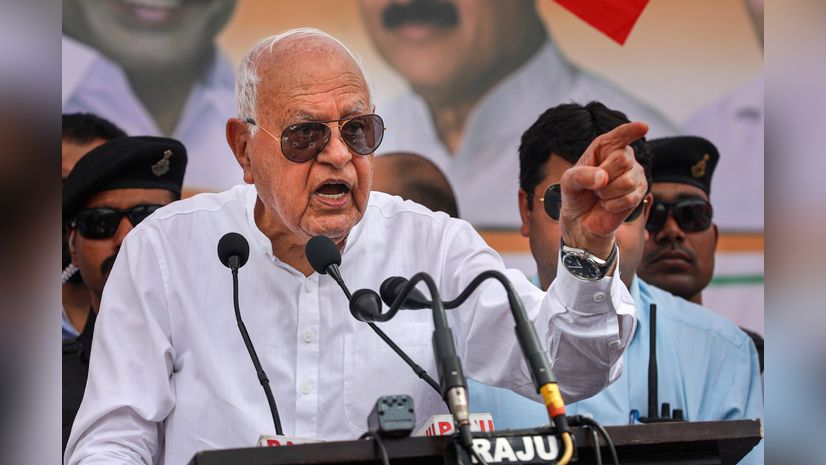
National Conference (NC) president and former Chief Minister Farooq Abdullah has once again urged the Centre to restore full statehood to Jammu and Kashmir, expressing concern over what he described as a prolonged delay in fulfilling the commitment.
Abdullah stressed that the restoration of statehood is not merely a political slogan but a constitutional entitlement of the people of J&K. According to him, democratic governance in the region remains incomplete without an elected government exercising full administrative authority.
‘Not a Political Favour, but a Right’
Speaking at recent public events, Abdullah emphasized that:
-
Statehood is tied to dignity and democratic representation.
-
The people of Jammu and Kashmir deserve self-governance.
-
Continued Union Territory status limits political autonomy.
He said that while political differences may persist, the constitutional framework provides space for restoring statehood, and the Centre must honor its earlier assurances.
“The people of J&K deserve dignity, representation, and self-governance,” Abdullah stated, reiterating that prolonged delay weakens democratic confidence.
Backdrop: From State to Union Territory
The demand for restoration of statehood traces back to August 2019, when Article 370 was abrogated and Jammu and Kashmir was reorganized into two Union Territories — J&K and Ladakh.
Since then:
-
Legislative powers have remained curtailed.
-
Key administrative decisions are overseen by the Lieutenant Governor.
-
Political parties have consistently pressed for restoration of full statehood.
The Centre has previously indicated that statehood would be restored “at an appropriate time,” but no formal timeline has been announced.
NC’s Consistent Position Since 2019
The Jammu & Kashmir National Conference has maintained a steady stance on the issue.
For the NC, restoration of statehood is central to:
-
Strengthening democratic institutions.
-
Reducing bureaucratic dominance.
-
Enhancing accountability through elected representatives.
Abdullah has repeatedly argued that bureaucratic control without full legislative authority weakens governance responsiveness.
Concerns Over Bureaucratic Dominance
A recurring theme in Abdullah’s speeches has been the perceived imbalance between elected representatives and the administrative machinery.
He contends that:
-
Policy decisions require stronger legislative oversight.
-
Local aspirations must be addressed through representative governance.
-
Excessive bureaucratic centralization creates distance between people and policymakers.
For Abdullah, restoring statehood would recalibrate this balance.
Political Representation and Public Aspirations
Abdullah framed the statehood demand as reflective of broader public sentiment.
He noted that:
-
Youth and civil society groups seek meaningful participation in governance.
-
Economic and employment challenges require empowered local decision-making.
-
Statehood restoration would symbolically restore political confidence.
The issue has become a common rallying point across party lines, with several regional leaders supporting similar demands.
Centre’s Commitment and Political Patience
The Union government has previously stated that statehood will be restored after certain administrative and security considerations are met.
However, Abdullah’s remarks signal growing impatience among regional political actors.
While avoiding direct confrontation, he expressed hope that the Centre would act on its assurances.
Why Statehood Remains Central in J&K Politics
The restoration of statehood remains one of the most defining political issues in Jammu & Kashmir for several reasons:
-
Symbolic Importance – Statehood carries historical and emotional significance.
-
Institutional Authority – It expands legislative and executive powers.
-
Political Stability – Clear governance structures reduce uncertainty.
-
Electoral Accountability – Full statehood strengthens democratic checks and balances.
For many voters, the debate is less about constitutional technicalities and more about representation and empowerment.
Broader Political Discourse
The statehood demand continues to shape:
-
Election campaigns.
-
Public rallies.
-
Inter-party negotiations.
While the NC leads the narrative, other regional actors have echoed similar calls, making statehood restoration a shared regional aspiration rather than a single-party agenda.
Conclusion: Statehood as the Core Democratic Question
Farooq Abdullah’s renewed appeal underscores how central the statehood issue remains in Jammu & Kashmir’s political landscape.
For the NC, restoration is not a rhetorical device but a foundational demand tied to democratic legitimacy and constitutional structure.
As the Centre weighs its next steps, the statehood question is likely to remain at the forefront of political discourse — shaping alliances, public sentiment, and governance debates in the Union Territory.
In J&K, statehood is no longer just a constitutional arrangement; it is a symbol of representation, dignity, and political identity.