Centre Tells Supreme Court Wangchuk Tried to Instigate Nepal-Type Gen-Z Protests in Ladakh | NSA Detention Explained
By: Javid Amin | 02 February 2026
A Strategic Legal Battle in India’s Highest Court
In a critically watched legal confrontation, the Central government of India has informed the Supreme Court that prominent Ladakh activist Sonam Wangchuk attempted to “instigate Gen-Z” in Ladakh towards **protests similar to those seen in Nepal and Bangladesh.” The argument was advanced as the government defended its decision to detain him under the National Security Act (NSA) — a law that permits preventive detention if authorities believe a person’s actions may threaten public order or national security.
The hearing, before a bench led by Justices Aravind Kumar and Prasanna B Varale, brought into sharp focus tensions between civil liberties and national security imperatives in sensitive border regions like Ladakh.
Sonam Wangchuk: Who Is He and Why the NSA?
A Profile of a High-Profile Activist
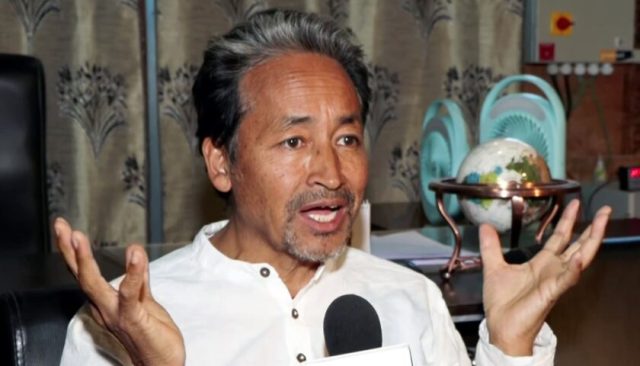
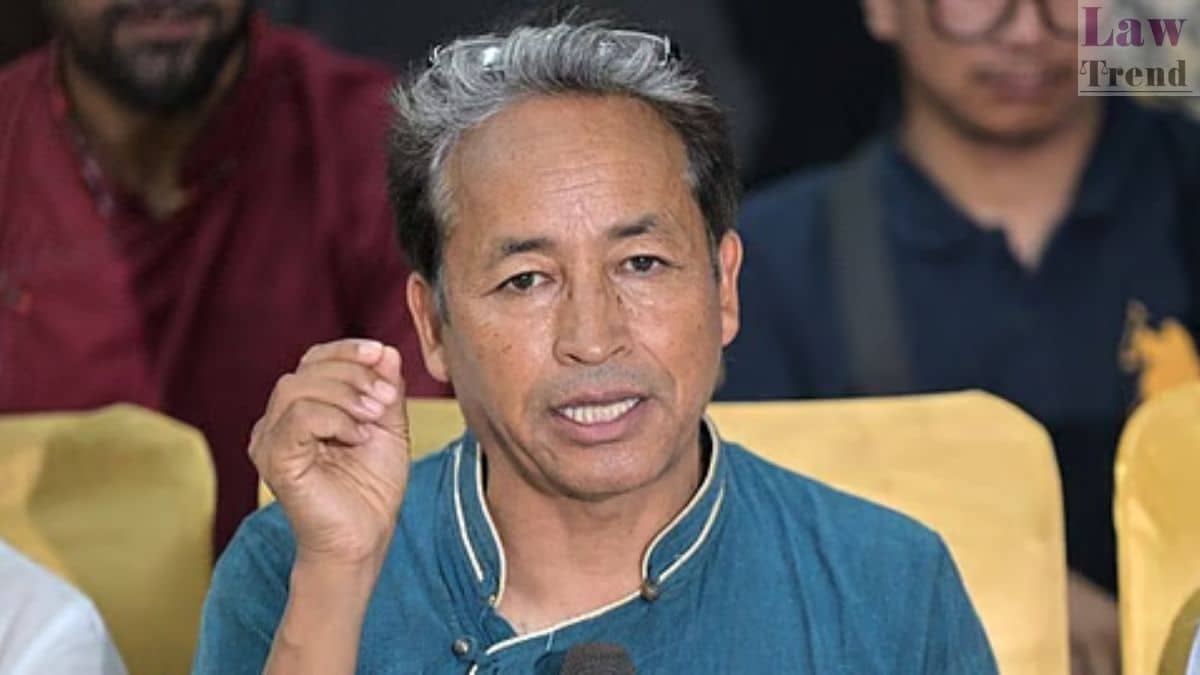
Sonam Wangchuk, a 59-year-old engineer, environmentalist, and climate activist, is widely known both in India and internationally — including being recognised as a Ramon Magsaysay Award winner for his work in education and sustainable development through initiatives such as SECMOL and other community-driven projects.
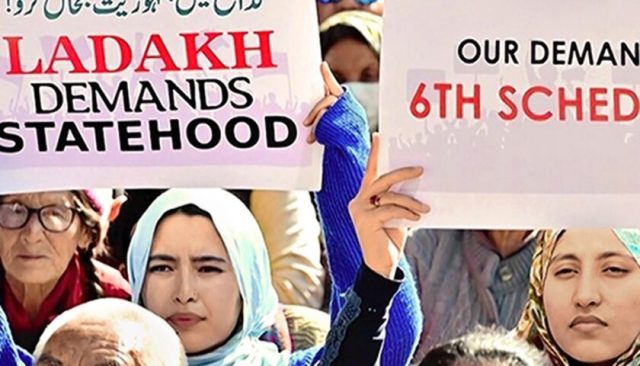
In recent years, he emerged as a leading voice in advocating for full statehood for Ladakh and constitutional safeguards under the Sixth Schedule, which provides special protections to tribal societies in India’s northeast and central regions. These demands, central to Ladakh’s evolving political discourse, have drawn strong public support and significant grassroots mobilisation.
Detention Under the NSA
Wangchuk was detained on September 26, 2025, under the NSA — two days after protests in Leh over statehood and Sixth Schedule demands turned violent, resulting in several deaths and scores of injuries. Authorities accused him of inciting the unrest, allegations he has strongly denied. He has since been lodged in Jodhpur Central Jail in Rajasthan.
His detention, initiated without traditional criminal charges due to the preventive nature of the NSA, is the subject of a habeas corpus petition filed by his wife, Gitanjali J Angmo, challenging its legality and constitutionality.
Centre’s Argument Before the Supreme Court
Allegations of “Instigating Gen-Z”
During Monday’s Supreme Court hearing, the Solicitor General of India, Tushar Mehta, representing the Centre, told the bench that Wangchuk’s speeches encouraged the youth of Ladakh — particularly “Generation Z” — to draw inspiration from protest movements in Nepal, Bangladesh, Sri Lanka and even the Arab Spring if their demand for Sixth Schedule protections were not met.
Mehta suggested that Wangchuk’s rhetoric was carefully crafted — using seemingly Gandhian language — but had an underlying intent to provoke unrest. He argued that such messaging could be interpreted as fostering an “us vs. them” narrative by positioning the government as “them” and Ladakh’s young people as “us”, potentially destabilising a region that India deems strategically crucial due to its proximity to the China border.
He reportedly told the court that Wangchuk’s references to civil uprisings abroad were akin to encouraging a “civil war with bloodbath.” He also noted references to actions such as self-immolation, linking them to the wider global contexts of protests and unrest.
Use of “Arab Spring” and Foreign Events in Government Submissions
The Centre’s submission included comparisons to foreign upheavals like the Arab Spring, and broad insistence that Wangchuk’s commentary was not merely aspirational or historical but intended to mobilise impressionable youth toward similar cumulative protest dynamics. This contention is central to the government’s plea that the detention was necessary for the “defence of India” — the statutory benchmark under the NSA.
Legal and Constitutional Questions at Stake
The NSA: Security vs. Liberty
The National Security Act allows detention without traditional criminal charges for up to 12 months if an individual’s actions are deemed prejudicial to public order or national security. But that preventive framework has been subject to intense legal scrutiny and civil liberties debates.
Wangchuk’s petition, framed as a habeas corpus plea, raises foundational questions about whether peaceful dissent, even if robust and politically charged, can legitimately be construed as a threat warranting preventive detention. His counsel argues that authorities have relied on “borrowed material” and selective videos rather than contemporaneous evidence of imminent harm.
Right to Dissent and Democratic Discourse
Wangchuk’s wife and her legal team have asserted that protest and criticism — core components of democratic expression under Articles 19 and 21 of the Indian Constitution — cannot be criminalised. They argue that the violence in September 2025 was a by-product of larger grievances and not directly caused by his speeches, citing his own public condemnation of violent actions.
The case therefore pivots on the constitutional tension between preventive security measures and freedom of speech and peaceful protest — a balance courts globally grapple with in democracies where civil rights and security interests intersect.
Political and Strategic Context
Ladakh’s Unique Position
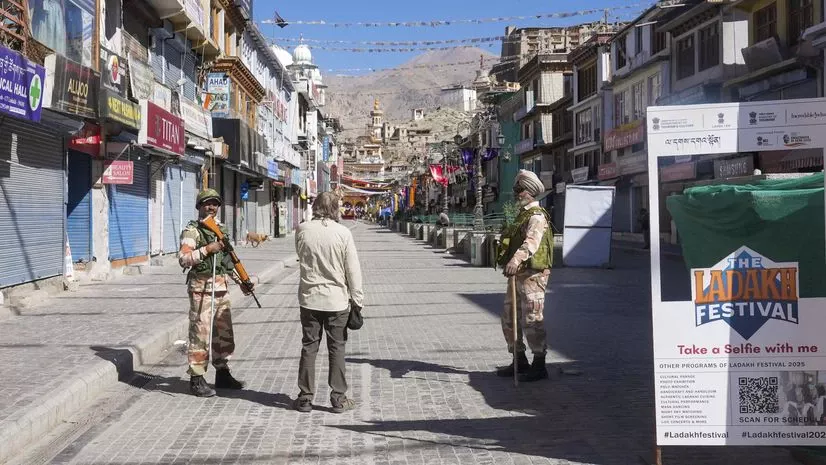
Ladakh holds a strategic geopolitical position on India’s northern frontier, sharing borders with China and Pakistan. The region’s stability is a priority for national defence and logistics, especially after the 2020-21 standoffs between Indian and Chinese forces. Any suggestion of unrest or civil destabilisation is viewed through the lens of national security.
Wangchuk’s advocacy — particularly calls for greater autonomy and constitutional protections — has been welcomed by many in Ladakh but met with suspicion by authorities who fear escalation into broader regional instability.
Protests in South Asia: Nepal and Bangladesh
The government’s references to protests in Nepal and Bangladesh signal broader regional sensitivities. In recent years, both countries witnessed significant youth-led demonstrations that challenged established political orders — with Bangladesh experiencing sustained street movements led by Gen-Z in 2024. By invoking these precedents, the Centre’s argument frames Wangchuk’s rhetoric in a wider South Asian context of youth-driven upheavals.
Reactions and Wider Public Discourse
Supporters and Civil Liberties Advocates
Supporters of Wangchuk and civil liberties advocates argue that his detention represents an overly broad application of the NSA against legitimate activism. They caution that preventive detention powers should not be used to silence peaceful dissent on issues of public policy and regional governance structures.
Some commentators have underscored that Wangchuk’s activism over decades has focused on education reform, ecological sustainability and inclusive development, and that his voice has historically been constructive rather than seditious.
Government’s Emphasis on Security Imperatives
The government, by contrast, is emphasising public order and national security considerations. Officials assert that in the fraught geopolitical environment of Ladakh, even seemingly peaceful protest narratives can have cascading effects if they galvanise broad segments of youth toward anti-state actions.
What Happens Next in Court
The Supreme Court is expected to continue hearings on the case, weighing submissions from both the Centre and Wangchuk’s legal team. Central to the adjudication will be whether the Court finds that preventive detention under the NSA was a proportionate and necessary response to the alleged risks posed, or whether Wangchuk’s constitutional rights have been disproportionately curtailed.
The outcome could set significant precedent on how activism, protest, and national security law intersect in India’s legal landscape, particularly in sensitive border regions.
Conclusion
The confrontation between the Centre and Sonam Wangchuk in the Supreme Court represents more than a single legal case. It highlights intensifying debates over civil liberties, democratic dissent, and national security in India’s border states. The government’s assertion that Wangchuk attempted to catalyse Nepal-type Gen-Z protests in Ladakh underscores the seriousness with which authorities view any public mobilisation in the region. As the Supreme Court deliberates, the legal arguments will resonate far beyond the immediate case, shaping the contours of protest, state authority, and constitutional freedoms in a rapidly changing political environment.