Omar Abdullah Seeks Accountability for SMVDIME Failure as BJP Defends Closure and Rejects Division Rumours
By: Javid Amin | 08 January 2026
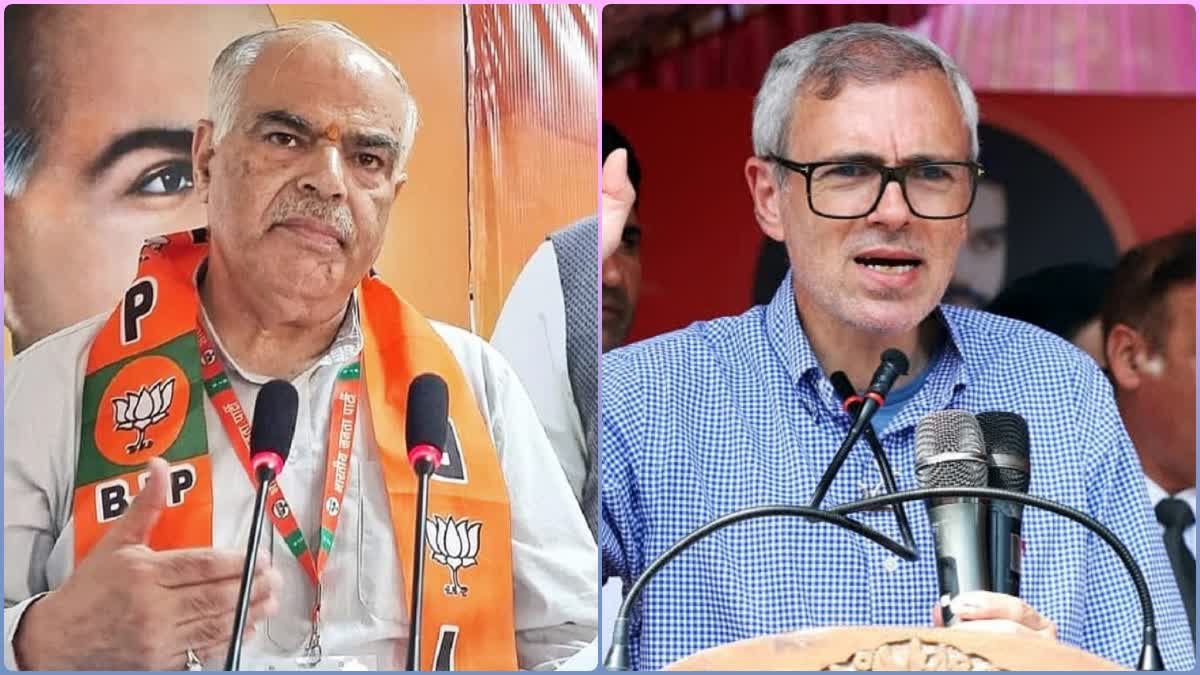
The controversy surrounding the Shri Mata Vaishno Devi Institute of Medical Excellence (SMVDIME) has taken a sharper political turn, with former Jammu and Kashmir Chief Minister Omar Abdullah calling for clear accountability over the institute’s failure to meet mandatory regulatory standards, even as the Bharatiya Janata Party (BJP) defended the National Medical Commission’s (NMC) decision to withdraw MBBS recognition and firmly rejected speculation about any division of Jammu and Kashmir.
What began as a regulatory action has now evolved into a broader debate touching on governance lapses, institutional responsibility, healthcare infrastructure, and regional politics — exposing persistent fault lines in Jammu and Kashmir’s post-2019 administrative landscape.
Omar Abdullah: “Fix Responsibility, Not Just Accept Closure”
Omar Abdullah’s intervention has focused squarely on accountability, rather than on the politics of admission or regional rivalry. He questioned how an institution established with significant public and institutional backing was allowed to deteriorate to a point where the NMC identified “gross deficiencies” across critical parameters.
According to Omar, the failure was not sudden but systemic. He argued that shortcomings in faculty strength, infrastructure readiness, clinical material, and patient inflow should have been detected and corrected well before regulatory action became inevitable.
In his view, simply accepting the closure as a regulatory outcome risks normalising administrative negligence. He stressed that unless responsibility is fixed — whether on officials, management, or oversight mechanisms — similar failures could recur in future educational and healthcare institutions.
For Omar Abdullah, the SMVDIME episode represents a test case for governance accountability in Jammu and Kashmir, particularly at a time when new institutions are being projected as symbols of development and integration.
A Governance Question, Not Just an Educational One
By framing the issue around responsibility, Omar has shifted the conversation from who benefited or lost politically to who failed administratively. His stance reflects a broader concern: that the region’s institutional capacity has not kept pace with ambitious announcements and project launches.
Healthcare experts and policy observers note that establishing a medical college requires sustained planning, staffing, and hospital ecosystem development — not just physical infrastructure. Omar’s critique implicitly questions whether due diligence and long-term planning were sidelined in the rush to operationalise the institute.
BJP Defends Closure as Regulatory, Not Political
The BJP, meanwhile, has strongly defended the NMC’s decision, insisting that the withdrawal of MBBS recognition was a technical and regulatory necessity, not a political or communal move.
Party General Secretary (Organization) Ashok Koul reiterated that the NMC acted strictly in accordance with its mandate to ensure minimum standards in medical education. According to the BJP, allowing an under-prepared institution to continue would have compromised both student futures and patient safety.
By emphasising regulatory compliance, the BJP has sought to counter allegations that the closure was influenced by protests, political pressure, or regional sentiment. The party’s messaging underscores that quality assurance in medical education cannot be diluted for political convenience.
Rejecting J&K Division Rumours
Alongside defending the closure, Ashok Koul also addressed — and dismissed — speculation that the SMVDIME controversy could fuel renewed calls for dividing Jammu and Kashmir.
He categorically rejected any proposal for bifurcation, reiterating that the BJP remains committed to a united Jammu & Kashmir and to equitable development across all regions.
This clarification appears aimed at containing parallel debates that have surfaced in Jammu over perceived regional neglect. By linking the SMVDIME issue strictly to regulatory failure, the BJP is attempting to prevent it from being absorbed into larger narratives of regional imbalance or political restructuring.
NMC’s Role: Regulatory, Not Political
The National Medical Commission has consistently maintained that its decision was based solely on inspection findings. These included:
-
Inadequate faculty strength
-
Insufficient clinical exposure and patient inflow
-
Incomplete or substandard infrastructure
-
Failure to meet minimum norms for an MBBS programme
From a regulatory standpoint, the NMC’s position remains neutral and procedural. However, in a politically sensitive region like Jammu and Kashmir, even technical decisions tend to acquire political interpretations.
Public Reaction: Anger, Anxiety, and Demand for Answers
Public response to the controversy remains deeply polarised.
-
Some sections express anger over the closure, viewing it as a setback to healthcare access and educational opportunity in a region already short of medical institutions.
-
Others support Omar Abdullah’s call for accountability, arguing that poor governance — not regulatory enforcement — is the real failure.
Students and families affected by the closure remain particularly anxious, despite assurances of relocation to other medical colleges, highlighting the human cost of institutional lapses.
Perspectives at a Glance
| Stakeholder | Position | Tone |
|---|---|---|
| Omar Abdullah (NC) | Demands accountability for SMVDIME’s failure | Critical, demanding |
| BJP (Ashok Koul) | Defends closure as regulatory, rejects division rumours | Assertive, defensive |
| NMC | Closure due to gross deficiencies | Regulatory, neutral |
| Public | Split between anger over closure and support for accountability | Polarised |
Why This Debate Matters Beyond SMVDIME
The SMVDIME controversy goes beyond one medical college. It raises fundamental questions about:
-
Institutional preparedness in J&K
-
Oversight mechanisms in new public institutions
-
Political accountability versus regulatory enforcement
-
Healthcare capacity building in conflict-affected regions
For Omar Abdullah, the episode underscores the risks of announcing institutions without ensuring operational readiness. For the BJP, it is a reminder that regulatory discipline must be defended even amid political pressure.
Conclusion: Accountability vs Damage Control
As Jammu and Kashmir continues to navigate administrative restructuring and development promises, the SMVDIME episode stands as a cautionary tale. Omar Abdullah’s demand for accountability challenges the system to look beyond immediate damage control and ask deeper questions about responsibility and governance.
The BJP’s defence of the closure reinforces the primacy of regulatory standards but also highlights the political sensitivity surrounding institutional failures in the region.
Whether this controversy leads to meaningful reforms or fades into another unresolved episode will depend on whether accountability — not just explanations — follows. For now, SMVDIME has become a symbol of how education, governance, and politics remain tightly intertwined in Jammu and Kashmir.