Omar Abdullah Says Jammu Got IIT, IIM—No Discrimination Cry Then Amid NLU Debate
By: Javid Amin | 13 January 2026
How a Proposed National Law University Has Reignited Old Regional Fault Lines in Jammu & Kashmir
One University, A Familiar Political Storm
In Jammu and Kashmir, even the proposal of an educational institution rarely remains confined to academia. It quickly becomes a mirror reflecting deep-seated regional anxieties, political histories, and unresolved questions of balance and fairness.
The latest flashpoint is the proposed National Law University (NLU) for Jammu & Kashmir. Even before a final location has been announced, the proposal has ignited a political storm — particularly from sections in Jammu demanding that the NLU be established there, citing regional balance, connectivity, and infrastructure.
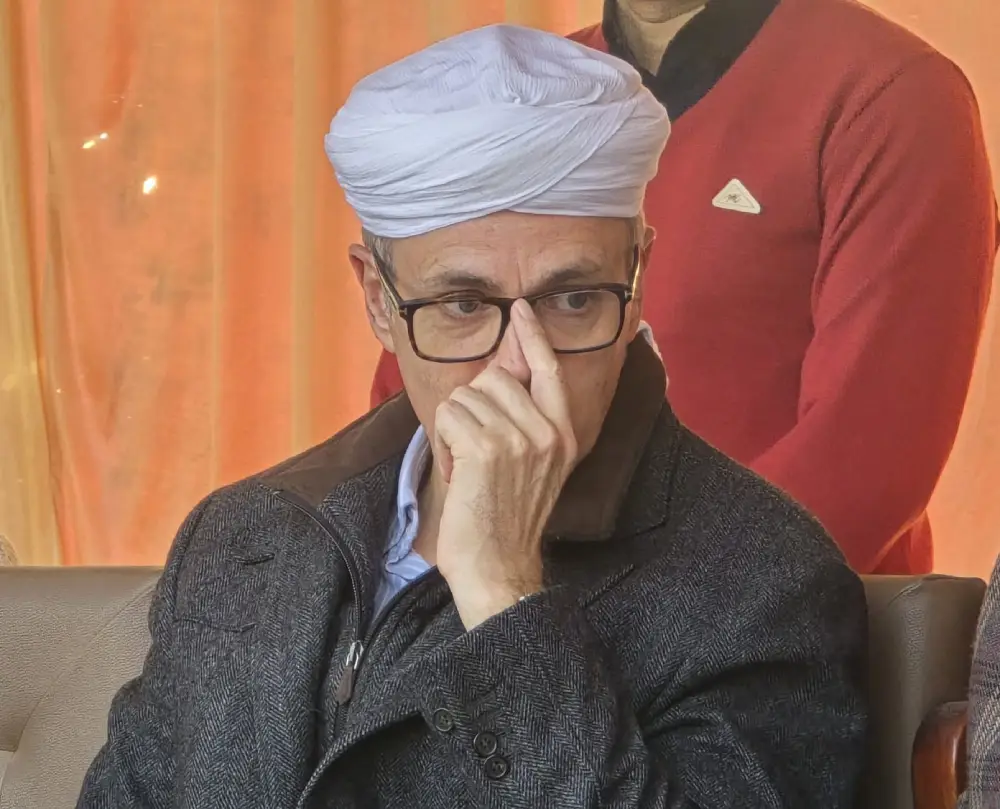
Responding sharply, Chief Minister Omar Abdullah dismissed allegations of discrimination, arguing that Jammu had earlier received two of India’s most prestigious central institutions — an IIT and an IIM — without any comparable outcry from Kashmir.
“Jammu got both an IIT and an IIM. Where was the talk of equality then?” Omar asked, calling the current criticism selective, premature, and politically motivated.
His remarks have once again placed the spotlight on a persistent question in J&K politics: How should national institutions be distributed in a region shaped by historical imbalance, conflict, and competing regional narratives?
The NLU Proposal — What Is at Stake
Why a National Law University Matters
A National Law University is not just another campus. NLUs are:
-
Centres for elite legal education
-
Pipelines to the higher judiciary, civil services, and policy roles
-
Symbols of intellectual and institutional prestige
For a region like Jammu & Kashmir, which has long argued that conflict has stunted academic ecosystems, an NLU represents both opportunity and recognition.
The Current Status
-
The NLU proposal for J&K is still under consideration.
-
No final decision has been taken on location.
-
The debate erupted before formal announcements, driven largely by political positioning rather than policy clarity.
Omar Abdullah has urged restraint, stating that financial feasibility, academic viability, and long-term sustainability must guide the decision — not regional point-scoring.
Omar Abdullah’s Argument — Context, Not Confrontation
“Where Was the Debate Then?”
Omar Abdullah’s central argument is rooted in historical context.
When IIT Jammu and IIM Jammu were sanctioned and established:
-
Kashmir did not raise sustained protests.
-
There were no mass allegations of discrimination.
-
The focus remained on welcoming investment in J&K as a whole.
By recalling this history, Omar sought to expose what he called selective outrage — objections raised only when Kashmir is seen as a beneficiary.
Not Anti-Jammu, But Pro-Fairness
Importantly, Omar’s position does not argue against institutions in Jammu. Instead, he frames the debate as one of equitable progression over time, not instantaneous parity.
His underlying message is clear:
-
One region benefiting does not automatically mean the other is being discriminated against.
-
Fairness must be assessed over decades, not isolated decisions.
Jammu’s Perspective — Why the Pushback Exists
Connectivity and Infrastructure Arguments
Leaders and civil society voices in Jammu argue that:
-
Jammu has better rail, road, and air connectivity.
-
It is geographically more accessible to students from outside J&K.
-
Institutional clustering (IIT, IIM) strengthens academic ecosystems.
From this perspective, placing the NLU in Jammu is seen as pragmatic rather than political.
Fear of Marginalisation
There is also a psychological dimension. Some in Jammu fear that:
-
Post-2019 political recalibrations may increasingly favour Kashmir.
-
Symbolic institutions carry political weight beyond education.
This fear, whether justified or not, fuels resistance whenever Kashmir is projected as the site for a premier institution.
Kashmir’s Counter-View — “We Were Overlooked”
Historical Academic Deficit
Kashmir-based academics and political voices counter Jammu’s arguments by pointing to:
-
Decades of conflict disrupting higher education.
-
Limited access to national-level institutions within the Valley.
-
Brain drain due to lack of elite academic options.
For them, the NLU is not about competition with Jammu but correcting historical neglect.
Symbolism Matters
In a region where political representation has shrunk and autonomy debates dominate public discourse, institutional presence becomes symbolic — a marker of inclusion and trust.
The Politics of “Regional Balance” in J&K
A Term With No Clear Definition
“Regional balance” is frequently invoked in J&K politics, yet rarely defined.
Does it mean:
-
Equal number of institutions in each region?
-
Proportional to population?
-
Compensatory allocation based on historical disadvantage?
Omar Abdullah’s critique suggests that the term is often used selectively, depending on who stands to gain.
The Risk of Zero-Sum Thinking
One of the greatest dangers, analysts warn, is the framing of development as a zero-sum game — where progress in one region is automatically seen as loss for another.
This mindset:
-
Deepens mistrust
-
Politicises governance decisions
-
Delays projects that require consensus
Financial Reality and Governance Constraints
Omar’s Fiscal Argument
Beyond regional politics, Omar Abdullah highlighted a less emotive but crucial factor: J&K’s financial health.
He argued that:
-
The Union Territory cannot afford duplication of elite institutions.
-
Each project must be justified on long-term viability.
-
Decisions must prioritise sustainability over symbolism.
This intervention reframes the debate from emotion to economics, a move often unpopular but necessary in governance.
A Pattern Repeats — Institutions as Political Flashpoints
The NLU row fits into a larger pattern in J&K:
-
Medical colleges
-
AIIMS locations
-
Tourism infrastructure
-
Industrial corridors
Each has sparked similar debates, reflecting unresolved regional insecurities rather than isolated disputes.
The repeated cycle suggests that institutional allocation has become a proxy battlefield for deeper political and identity questions.
What This Means for Governance in J&K
Policy Paralysis Risk
When every decision invites regional confrontation, governance risks:
-
Delay
-
Dilution
-
Politicisation
This can deter investment, weaken planning, and frustrate public expectations.
Need for a Transparent Framework
Experts argue that J&K urgently needs:
-
A clear, public framework for institutional allocation
-
Objective criteria communicated upfront
-
Regional consultation mechanisms
Such transparency could reduce suspicion and pre-empt political escalation.
Conclusion: Beyond IITs, IIMs, and NLUs
Omar Abdullah’s remark — “Jammu got IIT and IIM, where was the discrimination cry then?” — is not merely a rhetorical jab. It is a reminder of how memory, silence, and selective outrage shape political narratives in Jammu & Kashmir.
The NLU debate reveals once again that development in J&K is never just about infrastructure. It is about recognition, trust, and reassurance.
Whether the NLU eventually comes up in Jammu or Kashmir, the larger challenge remains the same:
Can Jammu & Kashmir move beyond competitive regionalism toward cooperative development?
The answer will determine not just where universities are built, but how the region imagines its shared future.