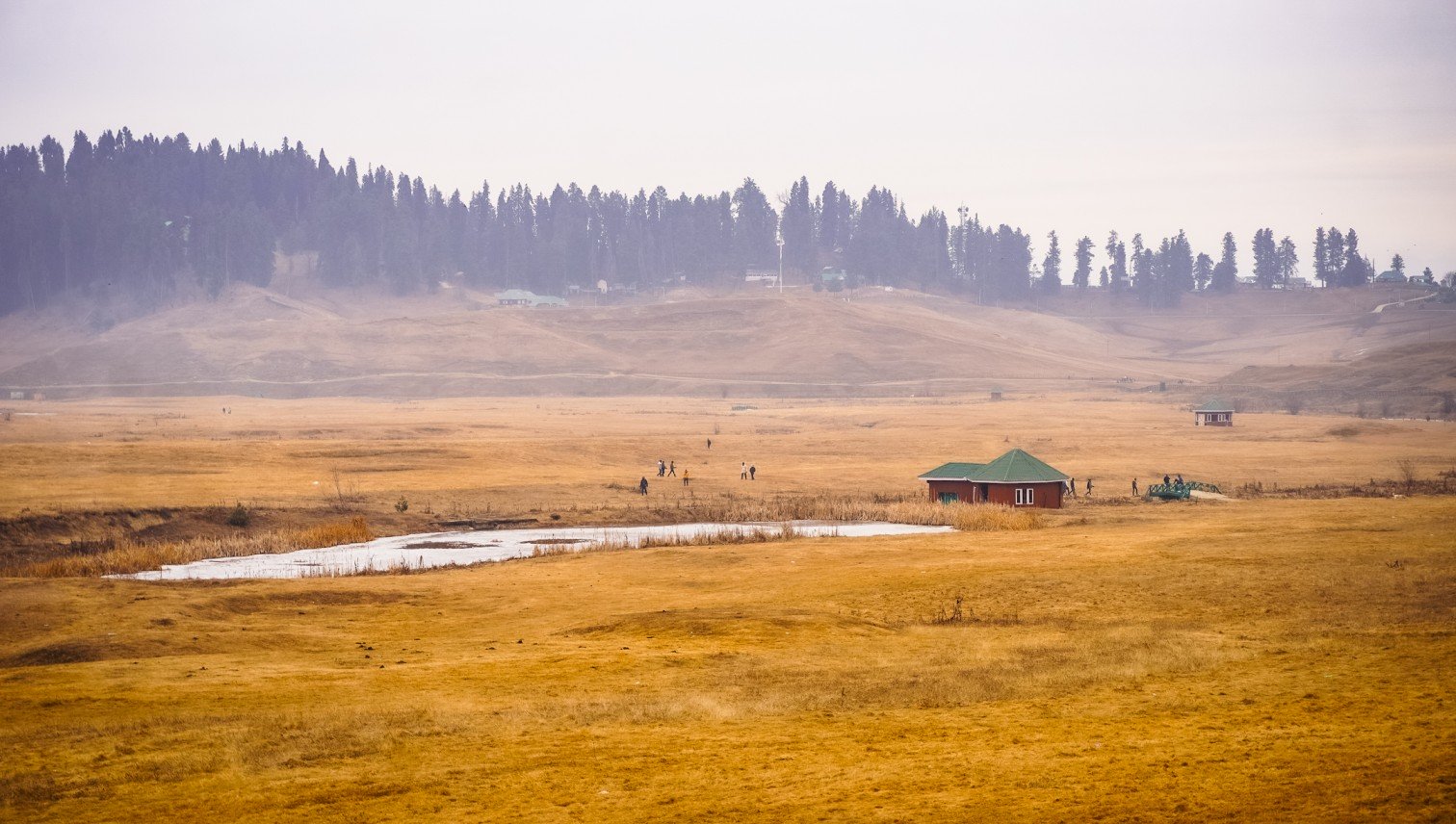
Kashmir’s Driest Winter in Years: 85% Rainfall Deficit Raises Alarms Over Water, Agriculture, and Climate Stability
By: Javid Amin | 18 January 2026
A Winter Without Water: Kashmir’s Alarming Dry Spell
Kashmir is grappling with one of its driest winters in recent decades, as an unprecedented rainfall deficit of nearly 85 per cent has been recorded during what is traditionally the region’s most important precipitation season. From November 1, 2025, to January 17, 2026, the Valley received just 20.6 millimetres of precipitation, far below the normal average of 139 millimetres.
The implications of this deficit extend far beyond a rainless winter. In a region where snowfall and winter rain form the backbone of water security, the current dry spell threatens agriculture, horticulture, hydropower generation, drinking water supplies, and ecological stability.
Environmental experts warn that this is not an isolated anomaly, but part of a deeper and accelerating shift in Kashmir’s climate regime.
Rainfall Data Paint a Stark Picture
Meteorological data from across the Valley underline the severity of the situation.
Rainfall Snapshot (Nov 1, 2025 – Jan 17, 2026)
| District | Rainfall Recorded | Normal Average | Deficit |
|---|---|---|---|
| Srinagar | 22.4 mm | 115.4 mm | 81% |
| Budgam | 16.4 mm | ~82 mm | 80% |
| Ganderbal | 29.3 mm | 127.9 mm | 77% |
| Overall J&K | 20.6 mm | 139 mm | 85% |
Meteorologists describe the shortfall as exceptional, particularly for a season that typically replenishes glaciers, rivers, aquifers, and soils.
Why Winter Precipitation Matters More Than Monsoon Rain
Unlike rainfall in other parts of India, Kashmir’s winter precipitation is foundational, not supplementary.
The Role of Winter Snow and Rain
-
Builds snowpack in mountains
-
Feeds rivers gradually through spring and summer
-
Recharges groundwater and natural springs
-
Sustains agriculture during dry months
-
Supports hydropower generation
When winter precipitation fails, the effects ripple across the entire year.
Snow Drought: An Invisible Climate Disaster
Climate scientists increasingly describe Kashmir’s current situation as a snow drought — a condition where snowfall is either far below normal or melts prematurely due to warmer temperatures.
Why Snow Droughts Are Dangerous
-
They lack immediate visual drama
-
Damage appears months later
-
Recovery takes multiple seasons
A snow drought may not flood villages, but it can quietly drain rivers, dry springs, and collapse livelihoods.
Agriculture and Horticulture Under Growing Stress
Apple Orchards at Risk
Kashmir’s apple industry, which supports lakhs of livelihoods, depends on:
-
Adequate winter chilling
-
Soil moisture from snowmelt
-
Reliable spring water availability
Reduced winter precipitation threatens:
-
Flowering cycles
-
Fruit size and quality
-
Overall yields
Saffron and Rice Cultivation
Saffron fields in Pampore and rice paddies across the Valley face:
-
Dry soils
-
Higher irrigation costs
-
Increased dependence on groundwater extraction
Farmers warn that one dry winter can undo years of careful cultivation.
Water Security: A Looming Crisis
Rivers and Springs Shrinking
Kashmir’s rivers, including the Jhelum, rely heavily on winter snowmelt. With snowfall scarce:
-
Spring flows weaken
-
Summer discharge declines
-
Drinking water shortages become more frequent
Many rural communities depend entirely on natural springs, several of which have already shown reduced discharge in recent years.
Urban Water Stress
Cities like Srinagar face rising demand amid shrinking supply, increasing the risk of:
-
Water rationing
-
Seasonal shortages
-
Infrastructure stress
Hydropower Generation Under Threat
Hydropower forms a critical component of Kashmir’s energy mix. However:
-
Reduced river flows lower power generation capacity
-
Winter electricity shortages worsen
-
Planning becomes unpredictable
Ironically, warmer winters increase electricity demand for heating while simultaneously reducing water availability for power generation — a climate paradox.
Tourism Feels the Impact
Winter Tourism Losing Reliability
Ski resorts such as Gulmarg depend on consistent snowfall. The dry winter has resulted in:
-
Patchy snow cover
-
Shortened ski seasons
-
Booking cancellations
Tour operators say uncertainty is becoming the norm, making it harder to sustain winter-based tourism models.
Ecological Stress in the Himalayas
Shrinking Snowlines
Reduced snowfall pushes snowlines higher, affecting:
-
Alpine vegetation
-
Wildlife habitats
-
Soil moisture balance
Biodiversity at Risk
Species adapted to cold, snow-rich ecosystems face:
-
Habitat loss
-
Altered migration patterns
-
Increased vulnerability to extreme events
Climate Change Signal, Not a One-Off Event
Experts emphasize that the current dry winter fits into a broader pattern:
-
Rising average temperatures
-
More precipitation falling as rain instead of snow
-
Increasing variability and unpredictability
Climate models suggest that Himalayan regions like Kashmir are warming faster than the global average, amplifying risks.
Socio-Economic Risks Ahead
Livelihood Insecurity
Farmers, orchardists, tourism workers, and hydropower-dependent communities face:
-
Income uncertainty
-
Rising costs
-
Long-term planning challenges
Food and Energy Security
Lower crop yields and reduced electricity generation raise concerns about:
-
Food availability
-
Power shortages
-
Inflationary pressures
Expert Recommendations: What Needs to Change
1. Water Conservation
-
Rainwater harvesting
-
Protection and revival of natural springs
-
Efficient irrigation systems
2. Climate-Resilient Agriculture
-
Diversification towards drought-resistant crops
-
Improved soil moisture retention techniques
-
Climate advisories for farmers
3. Energy Planning
-
Reduced over-reliance on hydropower
-
Investment in solar and wind energy
-
Energy-efficient housing for winters
4. Policy and Governance
-
Long-term climate adaptation plans
-
Farmer support mechanisms
-
Integrated water-resource management
5. Scientific Monitoring
-
Continuous tracking of snowfall and rainfall
-
Satellite-based snowpack assessment
-
Local climate research capacity building
A Wake-Up Call for Kashmir
The 85 per cent rainfall deficit recorded this winter is more than a statistic — it is a warning signal. Kashmir’s climate is shifting, and the systems built around predictable winters are struggling to keep pace.
Without urgent adaptation, the Valley risks cascading crises across water, food, energy, and livelihoods. The challenge now is not merely to respond to one dry winter, but to prepare for a future where such winters may become increasingly common.
Kashmir’s resilience will depend on how quickly policy, planning, and community action align with this new climate reality.