Eight Soldiers Injured in Encounter With Militants in J&K’s Kishtwar
By: Javid Amin | 18 January 2026
Drones, sniffer dogs deployed as security forces intensify anti-terror operation in Chenab Valley
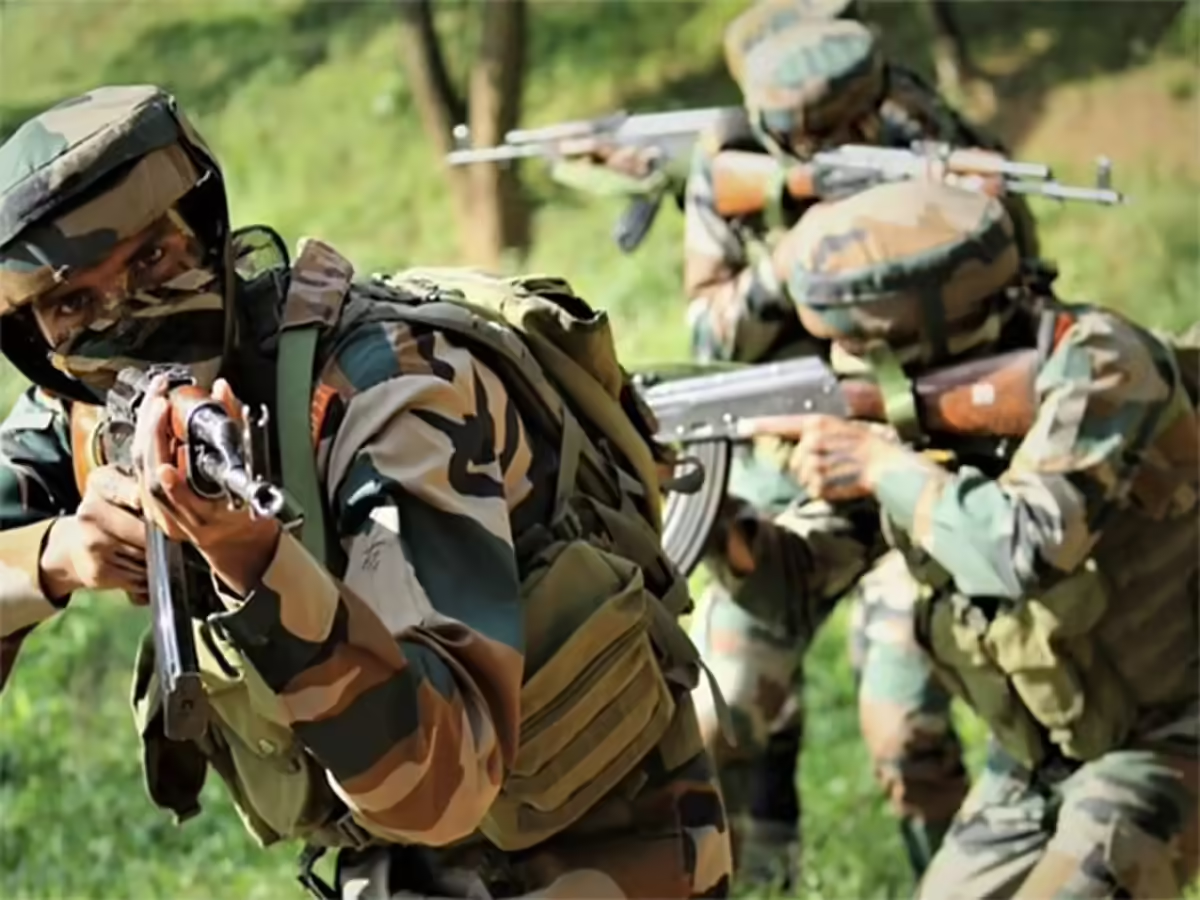
At least eight soldiers were injured in an ongoing encounter with terrorists in Jammu and Kashmir’s Kishtwar district on Friday, as security forces launched a major counter-terror operation in the forested terrain of the Chenab Valley region, officials said.
The encounter broke out during a cordon and search operation (CASO) after security forces received specific intelligence inputs about the presence of armed militants in the area.
What Happened
According to officials:
-
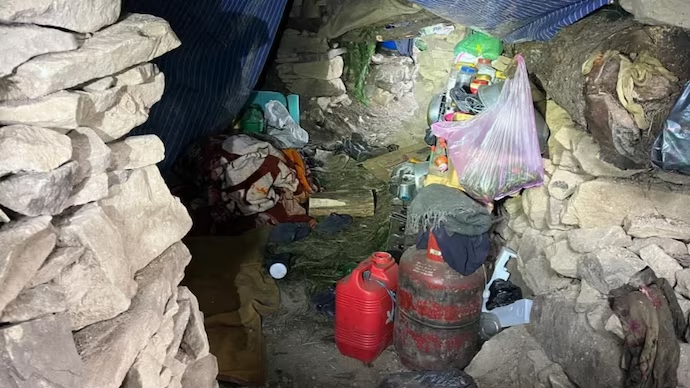
Security forces came under fire while tightening the cordon in a suspected militant hideout area.
-
An exchange of gunfire followed, during which eight Army personnel sustained injuries.
-
All injured soldiers were evacuated and provided medical treatment. Their condition is reported to be stable.
The operation remains ongoing, with forces maintaining a tight cordon to prevent militants from escaping.
Operation Intensified With Advanced Surveillance
To speed up the operation and minimise further casualties, security forces have deployed:
-
Drones for real-time aerial surveillance of dense forests and mountain slopes
-
Sniffer dogs to track movement, locate hideouts, and detect explosives
-
Additional ground reinforcements, including specialised counter-insurgency units
Officials said the use of technology is crucial given the difficult terrain and thick vegetation, which militants often exploit to evade security forces.
Why Kishtwar Matters
The encounter highlights the persistent security challenge in the Chenab Valley, which includes districts such as:
-
Kishtwar
-
Doda
-
Ramban
In recent years, militants have attempted to:
-
Re-activate older infiltration and support routes
-
Use remote forested areas as temporary hideouts
-
Target security patrols to establish presence
Security agencies view Kishtwar as a strategically sensitive district due to its terrain and proximity to traditional militant corridors.
Civilian Safety Measures
Authorities are expected to:
-
Restrict civilian movement in nearby areas
-
Advise residents to stay indoors
-
Enhance surveillance to prevent collateral damage
Officials stressed that civilian safety remains a priority while the operation continues.
Technology and Counter-Terror Strategy
The Kishtwar operation reflects a broader shift in counter-terror tactics in Jammu and Kashmir:
-
Drones are increasingly used for reconnaissance and tracking movement in inaccessible areas
-
Sniffer dogs complement electronic surveillance by detecting explosives and hidden routes
-
Ground forces continue traditional search and cordon methods
Security officials say this hybrid approach improves operational efficiency while reducing risks to personnel.
Security Implications
| Aspect | Significance |
|---|---|
| Soldier injuries | Highlights operational risks in active encounter zones |
| Use of drones | Shows evolution of counter-terror capabilities |
| Chenab Valley focus | Indicates continued militant interest in the region |
| Ongoing operation | Signals heightened alert and sustained security presence |
Official Stand
While no official statement has yet been issued on the number of militants involved, senior officers said the operation will continue until the area is fully sanitised.
More details are expected once the encounter concludes.
Takeaway
The encounter in Kishtwar underscores:
-
The continued threat posed by militancy in parts of Jammu and Kashmir
-
The risks faced daily by security personnel operating in hostile terrain
-
The growing role of technology-driven surveillance in counter-terror operations
As the operation remains active, security forces are maintaining pressure to neutralise the militants and restore full normalcy in the area.