AR Rahman Responds to Backlash: Patriotism, Music, and the Meaning of Misunderstanding in Modern India
By: Javid Amin | 17 January 2025
After facing social media backlash over remarks made in an interview, A.R. Rahman releases a heartfelt video message reaffirming his love for India, his intent as an artist, and the deeper responsibility of cultural voices in a polarized era.
When a Cultural Icon Speaks—and Is Misheard
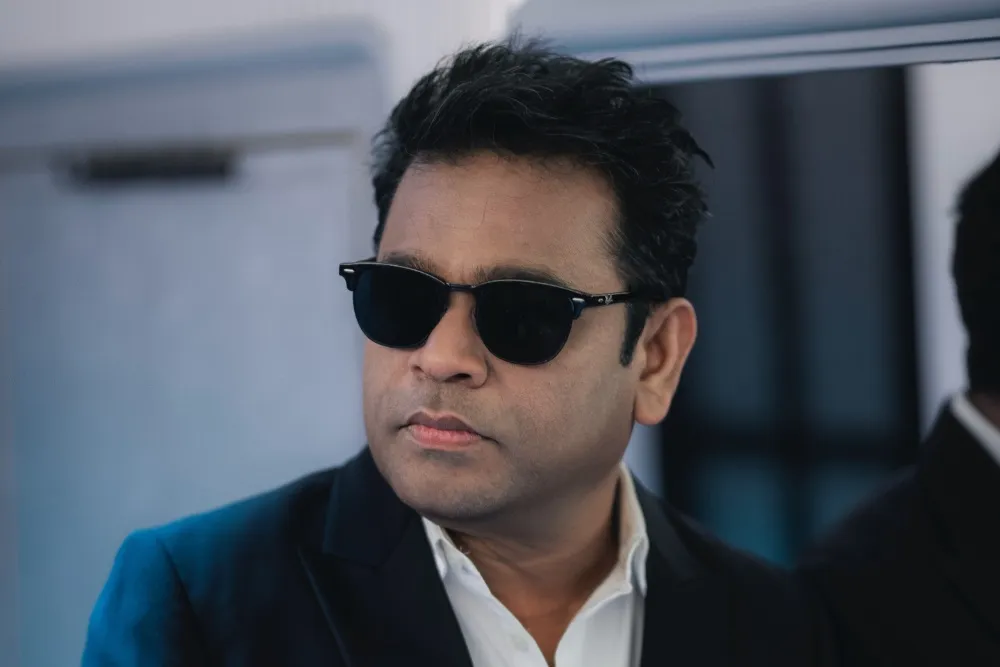
Few artists in India command the emotional, cultural, and global respect that Allah Rakha Rahman does. For over three decades, A.R. Rahman has not merely composed music; he has shaped the emotional memory of a nation in transition. From patriotic anthems echoing in stadiums to soulful melodies capturing personal longing, Rahman’s work has often existed at the intersection of art and identity.
Yet even icons are not immune to controversy. In recent days, Rahman found himself at the center of a heated public debate after comments made in an interview were interpreted by sections of the audience as insensitive. What followed was a familiar modern cycle: clipped quotes, viral outrage, polarized commentary, and an online trial that questioned not just his words, but his intent and even his loyalty.
In response, Rahman chose not confrontation, but clarification. Through a carefully worded and emotionally grounded video message, he addressed the backlash directly, stating with humility that his words were misunderstood and emphasizing that he has “never wished to cause pain.”
This article examines what Rahman said, why the backlash emerged, how he responded, and why this moment matters far beyond one controversy—touching on deeper questions of art, nationalism, public discourse, and the shrinking space for nuance.
The Statement—A Message Rooted in Emotion, Not Defence
In his video statement, A.R. Rahman did not adopt the language of rebuttal or accusation. Instead, his tone was reflective, calm, and unmistakably personal. He began by reaffirming his bond with India, describing the country not merely as a place of birth, but as his “inspiration, teacher, and home.”
For an artist whose career has been built on translating complex emotions into sound, the message was clear: intention matters. Rahman explained that his purpose through music—and through public engagement—has always been to uplift, to honour, and to serve. Hurt, he stressed, has never been his goal.
Importantly, Rahman acknowledged the possibility of misunderstanding. Rather than dismissing critics outright, he recognized that words, once released into the public domain, can travel in unintended directions. However, he urged audiences to feel the sincerity behind his decades-long body of work, not isolate a fragment detached from context.
The visual language of the video reinforced the message. Clips of thousands of voices singing “Maa Tujhe Salaam / Vande Mataram” at a cricket stadium served as a powerful reminder of Rahman’s enduring contribution to India’s cultural nationalism—one rooted in unity, emotion, and collective pride rather than slogans.
Understanding the Backlash—How Context Was Lost
The controversy originated from remarks Rahman made during a recent interview. While the full conversation carried nuance and broader thematic intent, specific lines were extracted and circulated widely on social media. In isolation, these excerpts were interpreted by some as dismissive or insensitive, triggering emotional responses.
Social media platforms, by design, reward speed over depth and outrage over reflection. As the clips spread, interpretation hardened into accusation. Within hours, hashtags trended, opinions crystallized, and Rahman’s decades-long legacy was subjected to binary judgment—patriotic or not, loyal or suspect.
What was notably absent in much of the discourse was a holistic reading of Rahman’s career or the broader context of his remarks. Instead, the debate mirrored a recurring pattern in contemporary public life: complex conversations reduced to moral verdicts, where clarification arrives only after reputational damage has already occurred.
Ground-level media analysis and cultural commentators later pointed out that Rahman’s comments were consistent with positions he has articulated before—emphasizing humanity, artistic freedom, and social harmony. However, by then, the narrative had already escalated.
Patriotism Beyond Performative Nationalism
One of the central tensions exposed by the controversy is the evolving definition of patriotism in public life. For Rahman, patriotism has historically been expressed through art—through compositions that celebrate the land, its people, and its pluralism.
Songs like “Maa Tujhe Salaam” did not just become popular; they became emotional landmarks. Played at national events, sports victories, and moments of collective pride, they helped shape how modern India sounds to itself and to the world.
Rahman’s clarification reasserted this philosophy. Love for the nation, he implied, is not diminished by introspection or critique. Rather, it is strengthened by sincerity and service. His India is not an abstract idea, but a lived experience—one that has taught him, shaped him, and given his work meaning.
This distinction matters at a time when public figures are often expected to perform loyalty in narrow, predefined ways. Rahman’s response subtly challenged that expectation, advocating for a more expansive and emotionally grounded understanding of national commitment.
The Burden of Being a Cultural Conscience
Artists of Rahman’s stature occupy a unique space. They are not elected representatives, yet their words carry political weight. They are not activists by profession, yet silence is often read as complicity and speech as provocation.
Rahman’s career illustrates this paradox. He has consistently avoided overt political positioning, choosing instead to let music speak. Yet in an era where every public utterance is scrutinized, even restraint can be controversial.
His video statement reflects an acute awareness of this burden. By addressing the backlash directly, Rahman acknowledged his responsibility—not just as a musician, but as a cultural figure whose voice resonates across generations and borders.
At the same time, the episode raises difficult questions: How much explanation should an artist owe? At what point does accountability become coercion? And can creative voices survive in an environment where intention is routinely overshadowed by outrage?
Public Trust, Repair, and the Language of Reconciliation
Rahman’s response can be read as an exercise in trust repair. Rather than delegating the task to public relations statements or legal clarifications, he spoke directly to the audience, using simple language and emotional transparency.
This approach resonated with many supporters, who viewed the video as a reminder of Rahman’s authenticity. Messages of solidarity followed, emphasizing that his legacy cannot be reduced to a misinterpreted remark.
Sociologically, such moments of reconciliation are significant. They demonstrate that public trust, once strained, can be addressed through humility and clarity rather than escalation. Rahman did not seek to win an argument; he sought to restore understanding.
Why This Moment Matters Beyond One Artist
While the immediate controversy centers on A.R. Rahman, its implications extend far wider. It reflects the fragility of public discourse in the digital age, where meaning is often sacrificed at the altar of virality.
For society, the episode is a reminder of the need for patience, context, and empathy—especially when engaging with voices that have historically contributed to cultural cohesion.
For artists and public figures, it underscores the importance of clarity without capitulation, and of speaking from values rather than fear.
For audiences, it offers an opportunity to reflect on how quickly judgment replaces dialogue, and how easily trust can be questioned when complexity is ignored.
Conclusion: Music as Memory, Not Momentary Noise
A.R. Rahman’s clarification does not erase disagreement, nor does it demand unanimity. What it does offer is perspective—a reminder that legacies are built over lifetimes, not viral cycles.
By reaffirming his love for India and his commitment to using music as a force for upliftment, Rahman positioned himself not as a figure under siege, but as an artist grounded in purpose.
In a time of heightened sensitivities and shrinking nuance, his message stands as both personal testimony and cultural commentary: that art, at its best, seeks to heal rather than hurt, to unite rather than divide.
As the echoes of “Maa Tujhe Salaam” continue to resonate across stadiums and memories, they carry with them a truth that outlasts controversy—that music, like the nation it celebrates, is bigger than any single misunderstanding.