‘What Is Your Threshold?’ Aga Ruhullah Questions J&K Government Over Reservation Rationalisation Delay
As Power Tariffs Rise and Social Fault Lines Deepen, the Srinagar MP’s Sharp Intervention Brings Equity, Governance, and Intra-Party Tensions to the Fore
By: Javid Amin | 14 January 2026
A Question That Cuts to the Core of Governance
In Jammu and Kashmir’s increasingly charged political climate, a single question can reveal far more than a long policy statement.
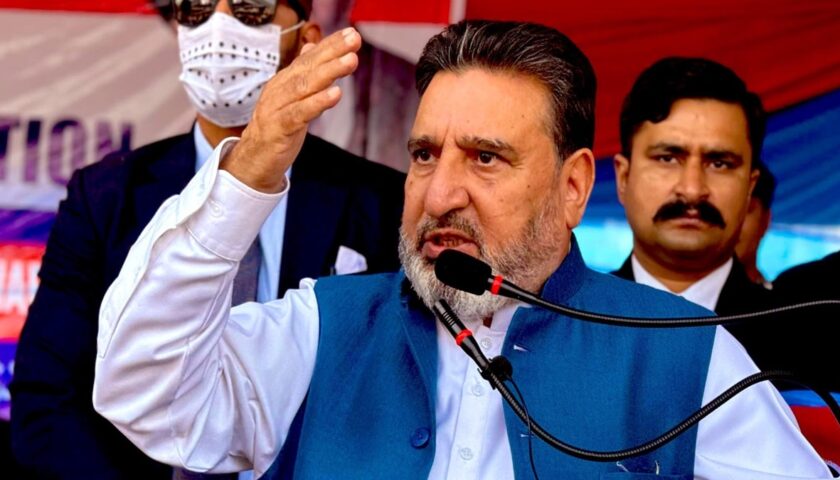
When Srinagar Member of Parliament Aga Syed Ruhullah Mehdi asked the Omar Abdullah–led government, “What is your threshold?”, he was not merely questioning bureaucratic delay. He was challenging the moral, political, and administrative criteria by which decisions affecting millions are being postponed.
Speaking at a public gathering in Kangan on January 12, 2026, Ruhullah trained his focus on the government’s failure to rationalise the reservation policy, even as it proceeds with power tariff hikes that disproportionately affect the poor. His remarks cut across governance, social justice, and political accountability — while also exposing deepening fault lines within the National Conference (NC) itself.
What Ruhullah Said — And Why It Resonated
“What Is Your Threshold?”
Ruhullah’s central question was deceptively simple:
“What is your threshold? What are you waiting for?”
By invoking “threshold,” he demanded clarity on:
-
What criteria must be met before action is taken
-
Whether delay is administrative, political, or ideological
-
How long marginalized communities are expected to wait
For many listeners, the question reflected long-simmering frustration with a reform process that has been repeatedly promised but never delivered.
Beyond Reservations: A Broader Critique
Ruhullah’s remarks were not limited to reservation policy. He linked multiple strands of governance into a single critique:
-
Economic burden on the poor through power tariff hikes
-
Policy paralysis on equity-based reforms
-
Communal polarisation in Jammu, allegedly driven by fringe elements
-
Government silence or ambiguity, which he said fuels mistrust
This framing transformed a policy debate into a larger indictment of priorities.
Understanding Reservation Rationalisation in J&K
Why Rationalisation Matters
Reservation rationalisation refers to:
-
Reviewing existing quota categories
-
Assessing whether benefits are equitably distributed
-
Addressing internal imbalances within reserved groups
In Jammu and Kashmir, the issue gained urgency after post-2019 changes, which altered reservation percentages and expanded beneficiary categories.
Key Concerns Raised by Critics
Civil society groups and political leaders argue that:
-
Some communities corner disproportionate benefits
-
Others remain underrepresented despite formal inclusion
-
Lack of sub-categorisation defeats the purpose of social justice
Ruhullah’s intervention echoed these concerns, emphasizing that equity, not just expansion, must guide reservation policy.
Why the Delay Is Politically Sensitive
A Question of Credibility
The NC-led government had committed to reviewing reservation rules. Months later:
-
No concrete framework has been presented
-
Committees and sub-committees have yielded no visible outcome
-
Public communication has remained vague
For critics, this undermines the government’s credibility as a champion of social justice.
Jammu–Kashmir Fault Line
Reservation debates in J&K are rarely neutral. They are often filtered through:
-
Regional anxieties
-
Communal narratives
-
Historical grievances
Ruhullah explicitly warned that delays and ambiguity create space for polarisation, particularly in Jammu, where reservation discourse is increasingly framed in regional and communal terms.
Tariff Hikes and the Poor: Linking Economics to Equity
Why Ruhullah Raised Power Tariffs
By highlighting power tariff hikes, Ruhullah connected:
-
Economic hardship
-
Policy insensitivity
-
Social injustice
His argument was straightforward:
If the government can swiftly raise tariffs, why does it hesitate on reforms meant to protect the marginalized?
Impact on Ordinary Households
In both rural Kashmir and parts of Jammu:
-
Rising electricity costs strain low-income families
-
Inflation compounds economic stress
-
Social welfare measures appear stagnant
This contrast — swift economic extraction versus delayed social correction — became a powerful rhetorical device in Ruhullah’s critique.
Communalisation in Jammu: A Warning Signal
Ruhullah’s Caution
Ruhullah accused fringe elements of:
-
Exploiting reservation debates
-
Injecting communal narratives into policy discussions
-
Polarising public opinion in Jammu
He urged the government to act decisively to prevent administrative delay from morphing into social unrest.
Why This Matters
In J&K’s fragile socio-political environment:
-
Policy vacuum often breeds political extremism
-
Identity politics thrives on ambiguity
-
Silence is frequently interpreted as complicity
Ruhullah’s warning reflects an awareness that governance failures rarely remain technocratic — they become social flashpoints.
Intra-Party Dissent: A Growing Pattern
Not an Isolated Outburst
This is not the first time Aga Ruhullah has publicly criticised his own party’s government. Over the past year, he has:
-
Questioned delays on reservation reform
-
Criticised compromises on statehood
-
Accused the leadership of political inertia
His dissent marks him as a rare internal critic within the NC — one willing to speak publicly rather than confine disagreements to closed-door meetings.
What It Signals for the NC
Ruhullah’s stance suggests:
-
Unease within the party over governance direction
-
Pressure from grassroots constituencies
-
A fear of losing moral high ground on social justice
While the NC leadership has issued assurances, repeated public dissent indicates structural discomfort, not personal disagreement.
Government’s Position: Why the Delay?
The Official Argument
The Omar Abdullah–led government maintains that:
-
Reservation rationalisation involves legal complexities
-
Changes must withstand judicial scrutiny
-
All categories and stakeholders must be consulted
From the government’s perspective, haste risks litigation and social backlash.
The Credibility Gap
Critics counter that:
-
Lack of timelines breeds suspicion
-
Silence allows misinformation to spread
-
Consultation without outcome becomes performative
Ruhullah’s “threshold” question directly targets this credibility gap.
Civil Society Voices: Demand for Transparency
Beyond party politics, civil society groups have echoed similar demands:
-
Clear criteria for rationalisation
-
Public disclosure of review mechanisms
-
Defined timelines
Many argue that transparency itself could defuse tension, even if reforms take time.
Political Implications: Pressure Mounts on the Government
Opposition Leverage
Ruhullah’s remarks:
-
Arm opposition parties with fresh ammunition
-
Complicate the NC’s narrative as a defender of equity
-
Risk portraying the government as indecisive
Electoral Undercurrents
Reservation policy affects:
-
Voting behaviour
-
Community alignment
-
Regional loyalties
Prolonged delay could carry electoral costs, particularly among marginalized groups expecting tangible reform.
The Larger Question: Governance in a Transition Phase
Jammu and Kashmir remains in a transitionary political phase, marked by:
-
Institutional reconfiguration
-
Heightened public expectations
-
Limited tolerance for ambiguity
In such an environment, policy delays are rarely forgiven.
Ruhullah’s intervention underscores a central dilemma:
Can a government afford caution when citizens perceive injustice?
What Happens Next?
Possible Scenarios
The government could:
-
Announce a clear roadmap and timeline
-
Release interim findings of the review
-
Engage publicly with stakeholders
Alternatively, continued delay risks:
-
Deepening internal party rifts
-
Escalating social discontent
-
Strengthening polarising narratives
Conclusion: A Question That Demands an Answer
Aga Ruhullah’s question — “What is your threshold?” — lingers because it goes beyond reservation policy.
It asks:
-
How much inequality is tolerable before action?
-
How long can the poor be asked to wait while bearing new burdens?
-
At what point does caution become abdication?
In Jammu and Kashmir, where governance is inseparable from trust, delay itself becomes a political act.
Whether the government responds with clarity or continues to defer will determine if this moment becomes a course correction — or another missed opportunity in the region’s long struggle for equitable governance.