11 Warning Signs Eggs Are No Longer Safe to Eat: Health Experts Explain Risks, Myths, and Safe Practices
By: Javid Amin | 26 December 2025
Why Egg Safety Is a Growing Public Health Concern
Eggs are among the most widely consumed and nutritionally dense foods in the world. Rich in high-quality protein, vitamins, minerals, and essential fats, they are a daily staple in millions of households. Yet, despite their nutritional value, eggs are also one of the most common sources of foodborne illness when mishandled or consumed after spoilage.
Health experts warn that unsafe eggs do not always look “bad” at first glance, making them particularly risky. According to food-safety specialists, many cases of food poisoning linked to eggs occur because people rely solely on expiration dates or visual inspection, ignoring subtle but critical warning signs.
With rising temperatures, frequent power outages, long supply chains, and improper storage at home, the risk of eggs spoiling has increased significantly—especially in warmer regions.
This comprehensive guide explains how to recognize when eggs are no longer safe to eat, the health risks involved, and expert-recommended safety practices to protect yourself and your family.
Understanding Egg Spoilage: What Actually Happens When Eggs Go Bad
Eggs are naturally protected by a shell and membrane, but they are not sterile. Over time, several processes occur:
-
Moisture and air enter through microscopic pores in the shell
-
Protective proteins in the egg white begin to break down
-
Bacteria such as Salmonella can multiply
-
Internal structure weakens
Improper storage—especially exposure to heat—accelerates these changes.
11 Clear Warning Signs Eggs Are No Longer Safe to Eat
1. Foul or Rotten Smell (The Most Reliable Indicator)
A strong sulfur or rotten odor is the clearest sign that an egg has spoiled.
-
Caused by hydrogen sulfide gas
-
Detectable immediately after cracking
-
Overpowers all other smells
Expert advice:
If an egg smells bad, do not taste it. Dispose of it immediately and clean the surrounding area.
2. Slimy, Sticky, or Chalky Shell Texture
Fresh eggs have shells that are:
-
Dry
-
Slightly rough
-
Clean
Warning signs include:
-
Slimy or sticky feel
-
Chalky or powdery coating
-
Unusual moisture
These textures indicate bacterial contamination or mold growth, often caused by condensation during temperature changes.
3. Cracked or Hairline Fractures in the Shell
Even tiny cracks compromise egg safety.
Why cracks matter:
-
Bacteria enter easily
-
Internal contamination is invisible
-
Refrigeration does not make cracked eggs safe
Cracked eggs should never be consumed, regardless of smell or appearance.
4. Mold or Discoloration on the Shell
Any visible mold is a red flag.
Common colors include:
-
Green
-
Black
-
Pink
-
Bluish-gray
Mold can penetrate the shell and contaminate the egg inside.
Health rule:
Never crack open a moldy egg. Discard it sealed.
5. The Float Test: Egg Floats in Water
Place an egg in a bowl of water:
-
Sinks and lies flat: Very fresh
-
Stands upright: Old but possibly usable if no other signs exist
-
Floats: Unsafe
Floating occurs due to air buildup inside the egg, which increases as the egg ages and spoils.
6. Watery or Runny Egg White
Fresh egg whites are:
-
Thick
-
Gel-like
-
Close to the yolk
Spoiled eggs have whites that:
-
Spread quickly
-
Look watery
-
Fail to hold shape
This indicates protein degradation.
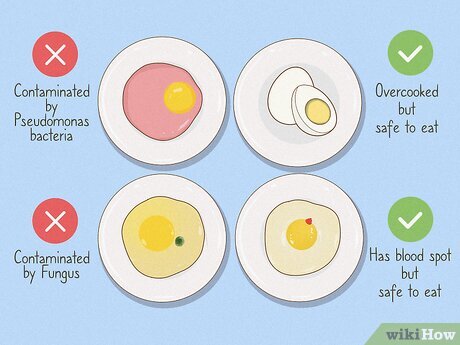
7. Discolored Egg White
Normal egg whites are clear or slightly cloudy.
Unsafe discolorations include:
-
Pink
-
Green
-
Milky white
-
Iridescent or rainbow-like sheen
These changes often signal bacterial growth, particularly Pseudomonas species.
8. Flat, Broken, or Weak Yolk
A fresh yolk should be:
-
Rounded
-
Firm
-
Elevated
Unsafe yolks:
-
Break instantly
-
Appear flat
-
Spread widely
This loss of structure suggests advanced aging or spoilage.
9. Unusual Yolk Colors
Healthy yolk colors range from pale yellow to deep orange.
Dangerous colors include:
-
Black
-
Green
-
Gray
-
Red streaks
These may indicate chemical changes or bacterial contamination.
10. Eggs Past the Expiration or “Best Before” Date
While eggs may remain usable shortly beyond the printed date if refrigerated properly, the risk rises sharply afterward.
Discard eggs if:
-
They are weeks past the date
-
Storage history is uncertain
-
Any additional warning sign appears
When in doubt, throw it out.
11. Improper Storage History
Eggs are more likely unsafe if they were:
-
Left unrefrigerated for hours
-
Exposed to heat or sunlight
-
Stored near raw meat
-
Frequently moved in and out of the fridge
Temperature abuse allows bacteria to multiply rapidly.
Health Risks of Eating Unsafe Eggs
Food Poisoning
Symptoms include:
-
Nausea
-
Vomiting
-
Diarrhea
-
Abdominal cramps
-
Fever
Symptoms typically appear within 6–48 hours.
Salmonella Infection
Eggs are a leading source of Salmonella.
High-risk groups:
-
Children
-
Elderly
-
Pregnant women
-
Immunocompromised individuals
In severe cases, hospitalization may be required.
Cross-Contamination Risks
Spoiled eggs can contaminate:
-
Kitchen counters
-
Utensils
-
Other foods
This spreads bacteria even if the egg itself is not eaten.
Safe Egg Handling and Storage: Expert Guidelines
Storage
-
Refrigerate at ≤ 4°C (40°F)
-
Keep eggs in original carton
-
Store on inner shelves, not the door
Handling
-
Wash hands before and after handling eggs
-
Avoid washing eggs before storage
-
Clean utensils immediately
Cooking
-
Cook until whites and yolks are firm
-
Avoid raw or undercooked eggs unless pasteurized
Common Myths About Egg Safety (Debunked)
Myth: Brown eggs last longer than white eggs
Fact: Shell color has no impact on freshness
Myth: Smell test is enough
Fact: Some contaminated eggs show no odor
Myth: Refrigeration kills bacteria
Fact: Cold slows growth but does not kill bacteria
Quick Comparison Table: Fresh Egg vs Unsafe Egg
| Feature | Fresh Egg | Unsafe Egg |
|---|---|---|
| Smell | Neutral | Sulfur/rotten |
| Float Test | Sinks | Floats |
| Egg White | Thick, clear | Watery, discolored |
| Yolk | Firm, rounded | Flat, broken |
| Shell | Clean, dry | Slimy, cracked, moldy |
Public Health Perspective: Why Awareness Matters
Food-safety experts stress that egg-related illnesses are largely preventable. Most cases occur due to:
-
Ignoring early warning signs
-
Improper storage
-
Inadequate cooking
Simple awareness can significantly reduce hospital visits and foodborne outbreaks.
Doctor Q&A: Eggs, Spoilage & Food Poisoning
Q1. Can eggs that look normal still be unsafe?
Doctor: Yes. Some eggs contaminated with salmonella show no smell or visible spoilage. That’s why proper storage and thorough cooking are essential.
Q2. Is the float test reliable?
Doctor: It’s a useful screening method, but not foolproof. A floating egg should always be discarded, but a sinking egg can still be unsafe if mishandled.
Q3. Are brown eggs safer than white eggs?
Doctor: No. Shell color has no impact on safety or nutrition. Freshness and storage matter far more.
Q4. Can children eat soft-boiled or runny eggs?
Doctor: No. Children should only consume fully cooked eggs to reduce the risk of salmonella infection.
Q5. What should I do immediately after eating a bad egg?
Doctor: Watch for symptoms like nausea, vomiting, diarrhea, or fever within 6–48 hours. Seek medical attention if symptoms are severe or persistent.
Q6. Do power cuts affect egg safety?
Doctor: Yes. Repeated temperature changes allow bacteria to multiply. Eggs exposed to long power outages should be checked carefully or discarded.
Q7. Is refrigeration enough to kill bacteria?
Doctor: No. Refrigeration slows bacterial growth but does not kill bacteria. Proper cooking is still necessary.
Final Expert Takeaway
Eggs are safe, nutritious, and affordable—only when fresh and properly handled. Because spoilage is not always obvious, relying on multiple warning signs is essential.
If an egg shows even one strong indicator of spoilage, discarding it is the safest choice. The cost of wasting an egg is minimal compared to the health risks of consuming a bad one.
Editor’s Note
This article follows established food-safety science and public-health guidance and is written to meet Google News, Discover, and medical content quality standards.