Mehbooba Mufti Asks Omar Abdullah to Reconsider Fertile Land Transfer to BSF in Pulwama
By: Javid Amin | 18 December 2025
When Security Meets Soil in Kashmir
Land in Kashmir is not merely a physical asset; it is livelihood, heritage, and survival. In a region where agriculture remains a primary source of income for thousands of families, decisions involving land acquisition inevitably carry deep social and political consequences.
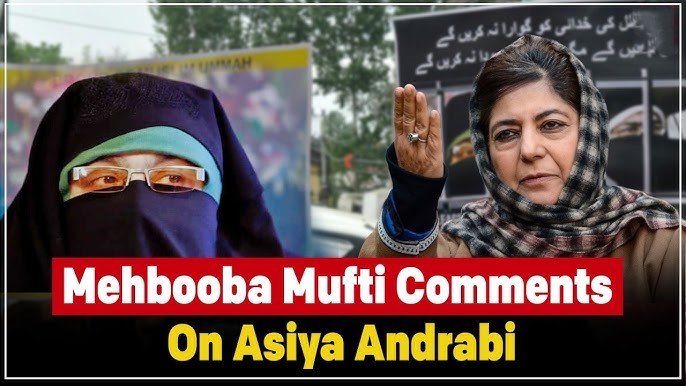
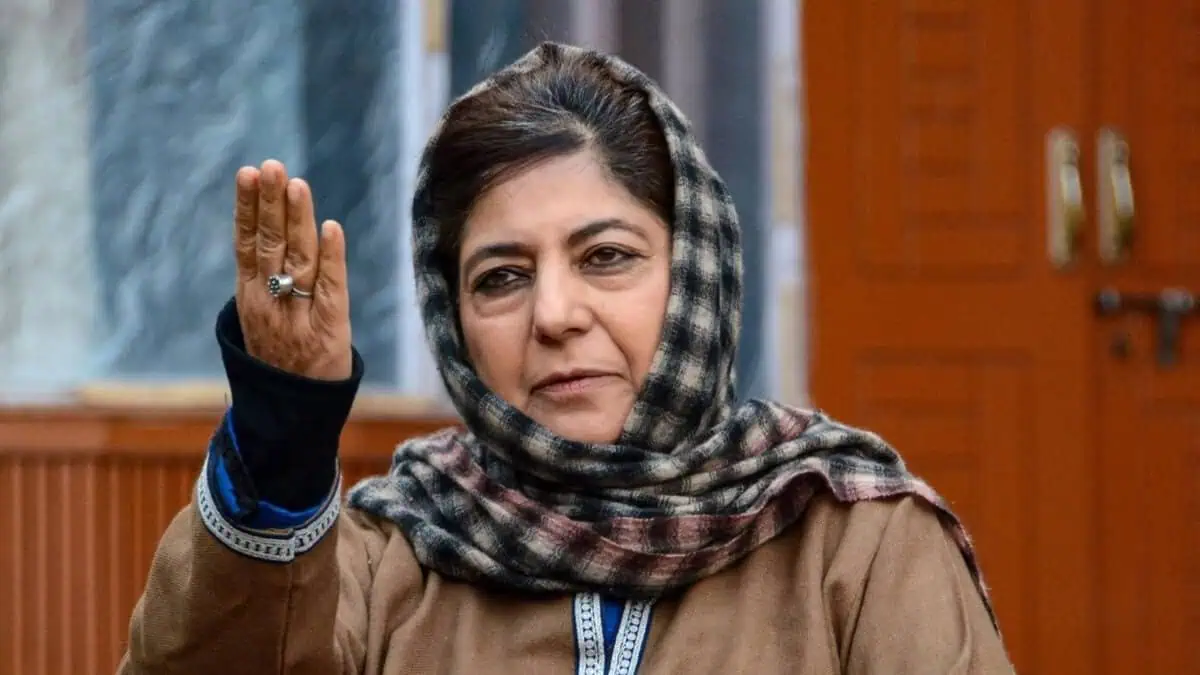
Against this backdrop, Peoples Democratic Party (PDP) president and former Jammu and Kashmir Chief Minister Mehbooba Mufti has urged Chief Minister Omar Abdullah to reconsider the proposed transfer of fertile agricultural land in Pulwama’s Puchal village to the Border Security Force (BSF) for the establishment of a security camp.
Mufti’s intervention has reopened a sensitive debate in Kashmir—how to balance security imperatives with the protection of livelihoods and community safety. Her appeal highlights anxieties that run far deeper than a single land parcel, touching upon long-standing fears of dispossession, economic marginalisation, and social alienation.
Ground Zero: Puchal Village in Pulwama
The controversy centres on Puchal village in Pulwama district, an area known for its fertile agricultural land. Farmers here rely heavily on cultivation for income, food security, and inter-generational sustenance.
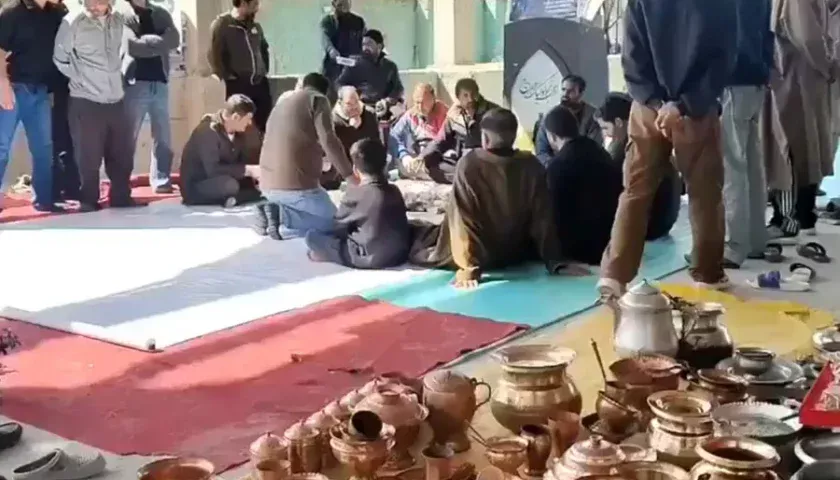
During her visit to the village, Mehbooba Mufti interacted with local residents and farmers who cultivate the land now earmarked for BSF use. According to villagers, the land supports entire households and represents their only reliable source of livelihood.
Mufti described the land as “highly fertile and productive”, emphasising that its transfer would not merely relocate ownership but erase economic stability for dozens of families.
Mehbooba Mufti’s Central Argument: Livelihood Cannot Be Collateral Damage
At the core of Mufti’s opposition is a straightforward argument: security cannot come at the cost of farmers’ survival.
She warned that:
- Agricultural land once taken is rarely returned
- Farmers lack alternative income sources
- Compensation cannot replace sustained livelihoods
- Rural distress would deepen further
In Kashmir’s fragile rural economy, Mufti argued, removing fertile land accelerates unemployment, migration, and dependency, outcomes that ultimately weaken social stability rather than strengthen security.
Security Concerns: A Camp Too Close to Homes
Interestingly, Mufti’s objection is not limited to livelihood loss. She also raised security concerns for civilians themselves.
According to her:
- Establishing a BSF complex close to inhabited villages could expose residents to heightened risk
- Security installations often become potential targets
- Daily life—movement, farming, schooling—could be disrupted
From this perspective, Mufti framed the issue as counterproductive even from a security standpoint, arguing that civilian proximity to security camps has historically increased vulnerability rather than reduced it.
The Alternative Proposal: Infertile Land Instead of Farmland
Mufti did not oppose the need for security infrastructure outright. Instead, she proposed a middle path.
Her suggestion:
- Allocate infertile or non-arable land for BSF requirements
- Avoid displacing farmers from productive land
- Balance national security needs with community welfare
This approach, she argued, would prevent unnecessary hardship while still allowing authorities to meet strategic objectives.
Local Farmers’ Voices: Fear of Dispossession
For the farmers of Puchal, the issue is deeply personal.
Many expressed fears that:
- They would lose land cultivated for generations
- Promises of rehabilitation may not materialise
- Legal recourse is limited
- Once land is transferred, resistance becomes futile
Mufti echoed these concerns, stating that farmers often stand powerless against administrative decisions, especially in the absence of strong legal safeguards.
Political Context: PDP’s Long-Standing Land Rights Stance
Mufti placed the Pulwama land issue within a broader political pattern.
She recalled that a PDP-backed bill on land rights, moved by party leader Waheed Para, was rejected in the Assembly. According to Mufti, this rejection has left ordinary citizens—particularly farmers—vulnerable to land acquisition without adequate protection.
In her framing, the current controversy is not an isolated incident but part of a continuum of policies that prioritise state control over community ownership.
From Demolitions to Dispossession: A Broader Narrative
Mufti linked the land transfer proposal to what she described as a wider pattern of dispossession in Kashmir.
She cited:
- Demolitions of residential and commercial structures
- Acquisition of agricultural land
- Concerns over Waqf properties
According to her, these actions collectively fuel a sense of insecurity and marginalisation, particularly in rural areas.
The Role of Omar Abdullah: A Political and Administrative Crossroads
By directly urging Omar Abdullah to intervene, Mufti placed the responsibility squarely on the Chief Minister’s shoulders.
Her appeal positions Abdullah as:
- A decision-maker capable of course correction
- A leader who can balance competing priorities
- A political actor whose response will signal governance intent
The outcome, she suggested, would indicate whether the government values consultation and sensitivity over unilateral action.
BSF’s Perspective: Security Imperatives
From the BSF’s standpoint, the requirement for land is tied to operational preparedness and strategic deployment.
Security agencies often argue that:
- Camps must be located in tactically viable locations
- Infrastructure is essential for regional stability
- Delays can compromise effectiveness
However, Mufti contended that security planning must incorporate social impact assessments, particularly in civilian-dense areas.
Economic Implications: Agriculture and Food Security
Agriculture remains a backbone of Kashmir’s economy.
Loss of fertile land:
- Reduces food production
- Increases dependency on imports
- Weakens rural employment
- Disrupts traditional farming cycles
Mufti warned that repeated land diversions risk structural damage to Kashmir’s agrarian base.
Social Trust and State Institutions
One of the less visible but most critical impacts is on public trust.
Mufti argued that:
- Forced land transfers deepen mistrust
- Communities feel excluded from decision-making
- Alienation grows when livelihoods are threatened
Over time, such dynamics, she said, undermine governance legitimacy.
Policy Precedent: Why This Case Matters Beyond Pulwama
The Pulwama case sets a precedent.
If fertile land can be acquired for security purposes without broad consultation:
- Similar actions may follow elsewhere
- Farmers across Kashmir may feel insecure
- Land valuation norms could weaken
Mufti framed this as a policy crossroads rather than a local dispute.
Balancing Security and Humanity: The Central Dilemma
The controversy underscores a recurring challenge in Kashmir—how to reconcile security needs with human and economic realities.
Mufti’s stance argues that:
- Security is not just about force deployment
- Stability depends on economic dignity
- Farmers’ welfare contributes to long-term peace
Political Implications for PDP and NC
Politically, the issue sharpens distinctions between parties.
For PDP:
- Reinforces its image as a defender of land and livelihoods
- Revives grassroots engagement
For the ruling dispensation:
- Tests responsiveness
- Raises questions of consultative governance
What Happens Next?
The immediate questions are:
- Will the government review the land transfer decision?
- Will alternative land be considered?
- Will affected farmers be consulted meaningfully?
The answers will determine whether the controversy escalates or finds resolution.
Bottom-Line: Land Is More Than Territory
Mehbooba Mufti’s call for a rethink on the transfer of agricultural land to the BSF is ultimately a plea for policy sensitivity in a conflict-affected region.
By highlighting livelihood loss, civilian security risks, and long-term social consequences, she has reframed the debate from a narrow administrative decision to a broader question of justice, sustainability, and governance ethics.
In Kashmir, where land and identity are deeply intertwined, Mufti’s warning is clear: security built on dispossession risks eroding the very stability it seeks to protect.