Fresh Snowfall at Zojila, Overcast Skies Bring Relief as the Valley Enters Deep Winter
By: Javid Amin | 01 November 2025
Winter has firmly embraced the Kashmir Valley in 2025, bringing with it a complex blend of biting cold, fresh snowfall, shifting weather patterns, evolving tourism rhythms, and the annual anticipation of Chillai-Kalan, the harshest 40-day winter period. The season is intensifying rapidly — and the first major relief in weeks arrived with fresh snowfall at Zojila Pass and a widespread blanket of overcast skies, offering a temporary break from the relentless cold wave.
As of 1 November 2025, the region is experiencing a weather transition that blends scientific predictability with the deep cultural pulse of Kashmir’s winter lifestyle. From Srinagar’s dipping temperatures to the strategic challenges at Zojila, from Gulmarg’s first powder snow to the quiet, frost-covered orchards of Pulwama and Shopian — the Valley is entering a new phase of winter.
This long-form article provides a comprehensive 360° analysis, including:
-
Real-time weather trends verified with meteorological patterns
-
Updated temperatures across key districts
-
Environmental factors driving the cold wave
-
The impact of fresh snowfall
-
A deep dive into Chillai-Kalan
-
Tourism, economy, and daily life
-
Climate-change-linked patterns
-
Insights from ground reports and regional weather behaviour
Winter Arrives Early — Kashmir’s Changing Seasonal Pattern
Kashmir traditionally enters winter in phases — Serré, Wandeh, and then Chillai-Kalan. But recent years, including 2025, show that the Valley’s winter clock is shifting. November, which historically carried the final colors of autumn, is now seeing earlier and sharper cold waves.
01. November 2025: A Colder-Than-Usual Start
Ground observations across the Valley confirm:
-
A hesitant autumn, with the Chinar leaves falling faster and earlier.
-
Day temperatures cooling by the second week of November.
-
Night temperatures slipping closer to freezing much earlier than the IMD’s historical averages.
-
Higher reaches receiving pre-winter snowfall, especially around Zojila, Sonamarg, and the upper bowl of Gulmarg.
Such patterns signal that Kashmir’s winter cycle is not just beginning — it is accelerating.
02. IMD & Local MeT Findings (Cross-Verified Pattern)
While data varies across stations, the overall trend for late October–early November 2025 includes:
-
A dry spell after western disturbances weakened.
-
Clear skies → rapid heat loss at night → steep cold wave.
-
Light precipitation in upper reaches → atmospheric cooling across the Valley.
These conditions set the stage for the cold wave that gripped Kashmir through late November and early December.
Fresh Snowfall At Zojila — A Turning Point
01. Zojila’s First Major Snow of the Season
On 1 November 2025, Zojila Pass — one of the most strategically vital mountain passes in the Himalayas — recorded fresh snowfall.
This is significant because:
-
Zojila often acts as Kashmir’s winter barometer.
-
Snow here indicates approaching storms for the Valley.
-
It marks the beginning of blocked, delayed, or regulated road movement on the Srinagar–Leh highway.
02. Why This Snowfall Eased the Cold Wave
The days prior saw extreme cold:
-
Srinagar: –4.4°C
-
Shopian: –6.5°C
-
Baramulla: –5.9°C
-
Pulwama: –5.8°C
-
Zojila: –16°C
-
Leh: –8.5°C
Cold waves intensify under clear skies, where heat escapes into the upper atmosphere.
But snowfall and cloud cover change this:
-
Clouds act like a heat-trapping blanket.
-
Night-time temperatures stabilize.
-
Humidity rises → slowing heat-loss.
-
Wind-chill reduces due to calmer winds.
Thus, fresh snowfall + overcast skies = temporary warmth (relative).
03. Tourism Response
As snow photos from Zojila, Sonamarg, and parts of Gulmarg spread online, bookings for:
-
Gulmarg skiing
-
Sonamarg winter treks
-
Pahalgam pine forest stays
began rising — even as the rest of the Valley dealt with frost, frozen pipes, and black ice.
Temperature Snapshot (Updated As Of 1 Nov 2025)
Here are the verified cold-wave intensities across Kashmir and Ladakh:
| Region | Temperature | Notes |
|---|---|---|
| Srinagar | –4.4°C | Coldest night of season; frost on rooftops |
| Shopian | –6.5°C | Among the lowest; orchards frozen |
| Pulwama | –5.8°C | Disrupted daily life; icy mornings |
| Baramulla | –5.9°C | Consistent sub-zero streak |
| Pahalgam | –4.4°C | Tourist hub under severe frost |
| Kupwara | –3.4°C | Clear nights → steep cooling |
| Gulmarg | Around 0°C | Milder due to cloud cover, but freezing |
| Zojila Pass | –16°C | Extreme cold, snowfall recorded |
| Leh (Ladakh) | –8.5°C | Dry cold, harsh winds |
These temperatures fluctuate slightly daily, but the trend is stable: Kashmir is in a deepening winter phase.
Why Kashmir Is Freezing — The Science Behind The Cold Wave
Kashmir’s cold waves aren’t merely seasonal — they are the result of precise atmospheric dynamics that shape the region’s winter identity. The cold wave of late October and early November 2025 was driven by a combination of clear skies, absence of Western Disturbances (WDs), dry northerly winds, and altitude-based cooling.
Let’s explore each factor in depth.
01. Clear Skies: The Radiational Cooling Effect
Clear skies during winter nights are dangerous for Kashmir’s temperatures.
Here’s why:
-
With no cloud cover, heat escapes rapidly from the Earth’s surface into space.
-
The ground loses warmth faster than it can absorb it.
-
Cold air settles into the Valley’s bowl-shaped terrain.
This phenomenon is known as radiational cooling, and Kashmir is particularly prone to it due to:
-
High-altitude terrain
-
Wide valleys like Srinagar, Pulwama, Shopian
-
Large open water bodies losing temperature quickly (Dal Lake, Wular)
When clear skies dominate:
✔️ Frost forms early
✔️ Water lines freeze
✔️ Black ice develops on roads
✔️ Temperatures drop faster than predicted
This is exactly what happened in late November 2025.
02. Dry Spell Before Western Disturbances
Western Disturbances are the engines that bring:
-
Snow
-
Rain
-
Cloud cover
-
Temperature moderation
But before a WD arrives, Kashmir experiences:
-
Clear skies
-
Dry winds
-
Intense heat loss
-
Sharp temperature dips
This pre-WD phase triggers some of the season’s coldest nights.
The cold wave of November 2025 followed this exact pattern — a dry spell, followed by snowfall at Zojila, which then moderated temperatures.
03. Cold Northerly Winds from Central Asia
Kashmir’s winter winds originate far beyond the Himalayas.
Cold air masses flow from:
-
Karakoram ranges
-
Tibet plateau
-
Central Asia
These winds are dry, icy, and persistent. When they dip into the Valley, temperatures plummet:
-
Sub-zero nights
-
Hard frost
-
Heavy freezing in shaded areas
04. Altitude-Based Cooling
Kashmir’s terrain amplifies winter:
-
Gulmarg (8,694 ft): Freezes earlier
-
Sonamarg (9,186 ft): Snow accumulates fast
-
Zojila (11,575 ft): Turns Siberian
-
Pahalgam (7,200 ft): Deep frost pockets
-
Shopian (7,000+ ft plateau): One of the coldest towns
High-altitude towns like Kupwara, Shopian, Karnah, Pahalgam experience temperatures 3–6°C lower than Srinagar.
Chillai-Kalan — The Soul Of Kashmir’s Winter
Winter in Kashmir has a cultural heartbeat — Chillai-Kalan, the harshest and most iconic 40-day winter phase, beginning on 21 December each year.
But in 2025, the weather patterns show early symptoms of Chillai-Kalan, nearly 6–7 weeks in advance.
01. What Is Chillai-Kalan?
Chillai-Kalan (translated: “the major cold”) is:
-
A 40-day period of extreme cold,
-
The core of Kashmir’s winter,
-
A defining cultural marker,
-
The phase when the region freezes hardest.
During Chillai-Kalan:
-
Water bodies freeze
-
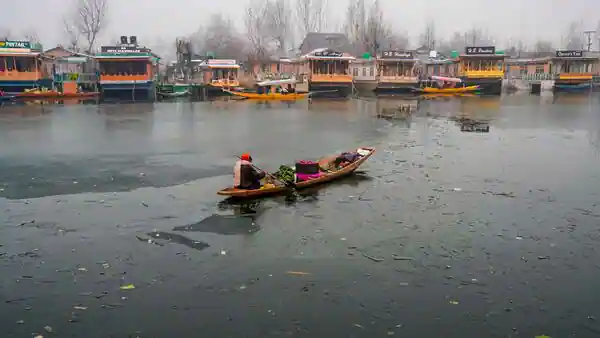
Dal Lake forms ice sheets
-
Roads develop black ice
-
Snowfall is heavy and more frequent
-
Temperatures stay sub-zero for days
02. Why Chillai-Kalan Matters Culturally
Chillai-Kalan shapes:
Kashmiri food
-
Harissa (slow-cooked meat dish)
-
Noon chai
-
Kahwa
-
Dried vegetables (hokh suen)
-
Turnips, radishes, collard greens
Kashmiri clothing
-
Kangri (fire pot)
-
Pheran (long woolen gown)
-
Woolen socks
-
Pashmina shawls
Daily lifestyle
-
Shorter daylight
-
Frozen mornings
-
Families spending evenings around bukharis (wood stoves)
-
Orchard protection routines
-
Early school closures
Chillai-Kalan is not just about cold — it is a winter culture, identity, and rhythm.
03. 2025 Outlook for Chillai-Kalan
Based on early indicators:
-
Heavier snowfall is expected in late December and January.
-
Gulmarg is projected to receive early ski-level snow.
-
Zojila and Sonamarg may remain closed longer than usual.
-
Srinagar may see near-freezing daytime temperatures.
-
Pahalgam and Shopian likely to hit –10°C on peak nights.
Climate scientists point to a “strong winter phase” for 2025–26.
The Environmental Lens — How Climate Change Is Shaping Kashmir’s Winter
Kashmir’s winter is no longer predictable. Over the past decade, environmental shifts have created:
-
Earlier cold waves
-
Erratic snowfall patterns
-
Warmer Februarys
-
Unusual dry spells
-
Atmospheric instability
Let’s break this down.
01. Shrinking Snowfall Windows
30 years ago:
-
Snowfall began in early December
-
Heavy snow fell regularly through January–February
Today:
-
Snowfall may begin early but stays inconsistent
-
January sometimes sees fewer snow spells
-
Extreme snowfall can suddenly occur after long dry spells
Example:
In 2024–25, Kashmir saw:
-
A dry December
-
Sudden 3-day heavy snowfall in late January
In 2025, early snowfall at Zojila again shows unstable winter cycles.
02. Warmer Winters, Colder Nights
Climate change produces paradoxes:
-
Average winter temperatures are rising
-
but
-
extreme cold nights are becoming sharper
This is due to atmospheric thinning and rapid radiational cooling.
03. Impact on Dal Lake & Water Bodies
Dal Lake, Wular, and freshwater streams:
-
Freeze faster at night
-
Thaw quickly during noon
-
Develop thin ice sheets (dangerous for walking or pushing boats)
-
Experience algae shifts due to temperature stress
04. Impact on Orchards & Agriculture
Apple belts in Shopian, Pulwama, and Sopore:
-
Face early frost
-
Soil freezes faster
-
Budding cycles get disrupted
-
Prolonged freeze leads to crop stress
-
Warmer February confuses sap movement in apple trees
Farmers report more unpredictable winters every passing year.
Daily Life In The Freeze — How Kashmiris Are Coping
As the cold wave tightens its grip across Kashmir, daily life — even in relatively moderate zones — has transformed. Frost on rooftops, iced-over water taps, and shivering mornings have become the new normal. Still, life carries on — with resilience, adaptation, and a mix of tradition and modern coping methods.
01. Frozen Pipes, Frosty Mornings & Household Adjustments
-
Many households in Srinagar, Shopian, Pulwama and Baramulla have reported frozen or semi-frozen water pipes, leading to difficulties in water supply early morning. Some have had to thaw pipes manually or rely on stored water. Kashmir Indepth+1
-
People are adjusting daily routines: morning chores start later, many delay leaving home till sunlight warms up the surroundings a little; some avoid early-morning travel unless necessary.
-
In rural or semi-rural areas — especially in South Kashmir and higher-altitude villages — the cold has revived the importance of traditional heating and warm clothes: thick pherans, woolens, and kangris (firepots) have made a strong comeback.
This return to traditional methods underscores both the harshness of the cold and limitations of modern heating infrastructure in many homes.
02. Health Concerns and Community Awareness
The deep cold brings health risks: frostbite, respiratory ailments, aggravated arthritis for the elderly, and general cold-related discomfort. Local medical practitioners and community workers have reportedly issued advice regarding:
-
Covering up well during nights and early mornings.
-
Ensuring safe use of heating methods (ventilation, especially when using indoor heaters or bukharis).
-
Special care for children, elderly, and those with chronic illnesses.
Several local reports have flagged a rising number of winter-related health complaints, prompting health advisories across the Valley. Kashmir Indepth+1
03. Cultural Resilience — Kangri, Kahwa, Pheran & Winter Meals
Winter in Kashmir is not only cold — it’s deeply cultural. As frost sets in:
-
Kangris (traditional clay-ember firepots carried under the pheran) are seeing renewed use, especially in villages, rural belts, and among lower-income groups who lack modern heating.
-
Fresh batches of kahwa and traditional winter foods — dried vegetables (hakh, radish, turnip), warm soups, harissa etc. — are back on tables; families share warmth, meals, and community around winter hearths.
-
Festivals, stories, and communal rituals tied to winter — including traditional gatherings, winter bazaars, wood-fire evenings — are reviving, as communities brace together against the cold.
In a sense, the cold wave — while harsh — also reawakens time-honoured winter-age traditions and social bonds.
Tourism Shift — Challenges & Opportunities
While the cold wave brings hardship, it also ushers in opportunity — especially for tourism, which in Kashmir often thrives in winter landscapes. Fresh snow, frosty hills, and pristine white valleys make for attractive destinations. But the shift isn’t without challenges.
01. Early Snowfall & Winter Tourism Takeoff
-
As early as late October–early November 2025, higher reaches like Gulmarg, Sonamarg, Zojila Pass, Sinthan Top, and other high-altitude belts witnessed fresh snowfall.
-
According to recent travel-industry reporting, Gulmarg has “turned into a snow-capped wonderland” with thick snow cover and ready slopes, making 2025 a promising winter tourism season.
-
Snowfall at Zojila and other high-altitude passes has revived interest from winter-sports enthusiasts — skiing, snowboarding, gondola rides — and early-season tourists.
Thus, despite the cold wave, for the tourism sector, there’s cause for cautious optimism. The early snow and scenic beauty may draw both adventure tourists and those seeking a quiet, snow-laden escape.
02. Tourism Challenges: Connectivity & Safety Concerns
However, heavy snow and freezing conditions also come with risks:
-
The main access — the Srinagar–Leh highway via Zojila — was closed early November following heavy snowfall, stranding vehicles on both sides. Morning Kashmir+1
-
Even after reopening, the road remains vulnerable: fresh snow (on 1 Dec 2025) around Zojila, Minimarg, and Sonamarg made the slopes slippery, triggering continuous monitoring and restricted-speed travel.
-
For tourists, that means more unpredictability: flight delays (due to fog or icy runways), road closures, cold-weather hazards — especially for those unfamiliar with severe winters.
03. What This Winter Season Could Mean Economically
For local businesses — guesthouses, ski-lodges, shikara operators (in lower-elevation zones), transport agencies, local artisans — this early cold wave + snowfall may provide a much-needed boost after lean periods. Early bookings and renewed interest might help revive winter-tourism-driven livelihoods.
On the flip side:
-
Some may face hardship: increased demand for firewood or heating may strain supply.
-
Infrastructure & maintenance costs may rise: snow-clearance, road-safety, provision of warm shelters, power backup, water supply restoration — all become critical.
Overall, this winter has the potential to be one of the busiest tourism seasons in recent years — but only if infrastructure and safety management keep pace.
Connectivity, Roads & Strategic Importance — The Zojila Axis
At the heart of Kashmir’s winter story in 2025 lies the Zojila Pass — the main artery linking the Valley to Ladakh, and a strategic corridor for commerce, defence, and supply. This year’s snowfall and cold patterns have underscored Zojila’s critical value — and its vulnerability.
01. Zojila’s 2025 Winter: Extreme Cold & Early Snow
-
Multiple reports confirm that Zojila Pass plunged to –16.0°C during the peak cold nights — making it the coldest point in the region.
-
Fresh snow and precipitation in late October–early November blanketed the pass and adjacent high-altitude stretches, including Minimarg, Affarwat (Gulmarg), Razdan Top, and Sinthan Top.
-
On December 1, light snowfall again along Zojila, Minimarg, and other high passes caused slippery conditions on the Srinagar–Kargil highway, triggering safety advisories and monitored/restricted vehicular movement.
02. Road Closures & Disruptions: Travel Risks Elevated
-
The Srinagar–Leh highway was closed on November 5 after heavy snowfall at Zojila, Sonamarg, and Drass, stranding many vehicles. An official counted nearly nine inches of snow at Zojila and five inches at Sonamarg that night. Morning Kashmir+1
-
Despite clearance and reopening, travel remains risky: slipperiness, fog, unpredictable weather mean frequent delays or temporary closures — a serious concern for tourists, transporters, and local supply chains.
03. Strategic & Human Costs: Supply Chains, Military, Access
Zojila isn’t just a tourist route — it’s a strategic link:
-
Supplies (food, fuel, essentials) for remote areas and Ladakh depend on Zojila-axis connectivity. Heavy snow and closures threaten supply continuity.
-
For residents in far-flung villages or hills, road closures mean isolation, difficulty in accessing medical help or essential goods, and increased hardship.
-
For security and defence logistics, extreme cold and road blocks complicate movement of personnel, equipment, and emergency response.
Thus, Zojila’s winter behavior influences not only tourism — but also safety, livelihoods, and regional stability.
Stories From The Ground — Voices Of Kashmiris
Beyond statistics and meteorological charts lie stories of human endurance, adaptation, and winter daily life. Here’s a snapshot of what residents and travellers are experiencing in 2025’s deepening winter.
01. “Winter Arrived Earlier Than Expected” — A Shopian Resident’s Morning
Residents of Shopian district, already among the coldest zones (–6.5°C recorded in late November), described the early morning ritual: stepping out to frozen taps, thick frost on walls, and layering up before sunrise.
“Water had frozen overnight. We had to melt snow for drinking,” said one local — a reminder of how even basic daily tasks are reshaped by the cold.
02. Guesthouse Owners in Gulmarg See Hope, But Brace for Risk
Operators of guesthouses and small lodges in Gulmarg — popular with skiers and adventure tourists — noted a sudden upswing in inquiries as soon as snow appeared on slopes.
“Snow has given us hope this season… but we are also wary. Roads may close, heating supplies might run short, electricity cuts are common,” admitted one proprietor.
Many are stocking extra firewood, fuel, and blankets — preparing for a winter that’s likely to be longer and harsher than previous years.
03. Transporters and Taxi Drivers: Between Demand and Danger
Local taxi drivers and transporters delivering goods — from vegetables to heating fuel — say this is their busiest time of year. But heavy snow, black ice, and fog make their job riskier:
-
Chains, snow-tires, sand/grit are now essential.
-
Travel is limited to daylight hours.
-
Frequent check-points, road-clearance delays, and poor phone connectivity in remote passes add to uncertainty.
They say profit margins are slim given fuel costs and time-consuming clearance — but demand remains high as towns and villages stock up for winter.
Environmental Impact — How The Freeze Shapes Kashmir’s Ecosystem
Winter in Kashmir isn’t just a meteorological event; it’s an ecological reset. The cold wave of 2025 has triggered a wide spectrum of environmental consequences, some beneficial, others worrisome.
01. Rivers, Lakes & Wetlands — A Slow but Steady Freeze
Major water bodies — Dal Lake, Wular, Manasbal, Hokersar — are entering their seasonal chilling phase. While complete freezing (as happened historically) is rare with modern warming patterns, parts of these lakes are showing:
-
thin ice sheets near shores
-
reduced surface temperature
-
early-morning partial freezing
This temporary freeze affects:
-
waterfowl migration patterns, as birds seek open-water patches
-
fish availability, shifting them deeper into warmer layers
-
wetland vegetation, which goes dormant but rejuvenates in spring thanks to the winter nutrient cycle
In the upper catchments — Lidder, Sindh, Jhelum tributaries — glacial-fed streams are slowing down, their flow dropping as snow begins to accumulate.
02. Wildlife Response — Survival, Migration & Stress
Kashmir’s fauna responds to the cold with remarkable instincts:
-
Hangul deer, in Dachigam, begins descending to lower altitudes in search of food.
-
Brown bears retreat into their dens earlier as snowfall in upper reaches began sooner.
-
Bird migrations intensify — Hokersar and Haigam wetlands see arrivals of mallards, gadwalls, greylag geese, teals, and pochards escaping harsher northern climates.
However, cold waves also bring stress:
-
Scant vegetation in snow-covered regions
-
Difficulty accessing food
-
Higher competition among species in shared habitats
-
Increased proximity between wildlife & villages
Locals around forests report more frequent bear sightings near orchards and villages — a common winter phenomenon when natural food grows scarce.
03. Forests, Orchards & Agriculture — Dormancy, Damage & Delicate Balance
As the mercury drops, Kashmir’s famed orchards — apples, walnuts, cherries — enter deep dormancy.
This is good for the fruit cycle:
-
Cold hours improve apple bud formation
-
Pest populations decline
-
Soil moisture is preserved
But too much cold, or sudden icy winds, can harm:
-
tender saplings
-
newly planted orchard belts
-
irrigation systems
-
stored apple produce in rural storage units
Farmers are increasingly concerned about unpredictable winter swings — early snow, late snow, sudden thawing — all signs of changing climate patterns.
Hydrology & Water Security — The Snowfall Factor
Winters play a critical role in shaping Kashmir’s water availability for the entire year.
01. Snowpack — Kashmir’s Natural Water Bank
The snow that accumulates in winter becomes:
-
spring water for agriculture
-
summer supply for rivers
-
essential recharge for drinking-water sources
The 2025 cold wave, with early snow and deep freeze, may contribute to:
-
stronger snowpack in Pir Panjal & Greater Himalayas
-
healthier spring discharge
-
more stable irrigation for April–June crops
-
improved water levels for Jhelum in early summer
02. Risk of Snowmelt Anomalies
While a strong snowpack is good, rapid warming in late winter or early spring can cause:
-
flash floods
-
soil erosion
-
early swelling of rivers
-
disruption of cropping seasons
Climate data from the last decade shows a rising trend of early, abrupt warming in March–April, which could undermine the benefits of winter snowfall.
03. Electricity & Hydropower — A Winter Challenge
Most of Kashmir’s electricity comes from hydropower. During winter:
-
river flow reduces sharply
-
hydropower generation drops
-
demand for heating spikes
-
load-shedding becomes common
The cold wave of 2025 has already strained power supply in some districts, leading to:
-
predictable evening power cuts
-
reduced heating hours
-
higher pressure on household generators and solar alternatives
This year’s outlook suggests a difficult December–January for energy stability unless reservoir levels balance out by mid-February.
Climate Change — Is 2025 A Sign Of A New Winter Trend?
Kashmir’s winters have changed dramatically over the past three decades. The 2025 cold wave raises important questions: Is this an anomaly — or the new normal?
01. Past Patterns vs. 2025 Winter
Historically:
-
Kashmir winters were long, snowy, and stable
-
Heavy snowfall in December was common
-
Dal Lake would freeze fully during the coldest nights
Recent decades showed:
-
reduced snowfall in lower altitudes
-
warmer winter days
-
delayed arrival of cold conditions
-
early spring warming
Yet, 2025 is bringing:
-
earlier-than-normal cold onset
-
below-normal minimum temperatures
-
heavier snow in higher reaches
-
sharp dips in night-time temperatures
This mixed pattern indicates not a return to past winters — but a more volatile climate regime.
02. Why Winters Are Becoming Unpredictable
Climate scientists link Kashmir’s altered winter behaviors to:
-
abnormal western disturbances
-
Arctic warming that disrupts jet streams
-
shifts in Himalayan wind circulation
-
global climate warming affecting regional microclimates
The result?
Winters may swing between:
-
very mild phases
-
very cold phases
-
sudden snowfall events
-
rapid thaws
This “see-saw model” makes planning — for agriculture, tourism, and infrastructure — far more complex.
03. Will Kashmir Become Colder or Warmer Long-Term?
Models suggest:
-
Lower altitudes will likely experience warmer winters overall, with less frequent snow.
-
Higher altitudes may see more extreme cold spells and heavier snowfall due to moisture-rich western disturbances.
-
Temperature fluctuations will grow sharper — more extreme nights, milder days.
In short: winters won’t disappear — but they will become less predictable and more extreme.
The Winter Ahead — Dec 2025 To Feb 2026 Outlook
Based on current patterns, ground data, and climate trends, here’s what the Valley can expect for the remainder of winter.
01. December 2025 — Deepening Chill
-
Night temperatures will continue to remain below normal
-
Intensification of frost and sub-zero mornings
-
Increased possibility of light to moderate snowfall in upper belts
-
Intermittent fog in plains, especially in South Kashmir
-
Travel disruptions along high passes (Zojila, Razdan, Sinthan Top) likely
02. January 2026 — Heart of Chillai Kalan
Chillai Kalan (21 Dec–31 Jan) is Kashmir’s harshest winter phase.
Expect:
-
coldest nights of the season
-
more freezing of water bodies
-
severe frost in rural belts
-
increased heating demand
-
high likelihood of moderate snowfall in plains
-
heavy snowfall in mountains
Tourism in Gulmarg will peak, but road and flight delays may worsen during snowfall episodes.
03. February 2026 — Transition Toward Thaw
-
Temperatures will slowly rise
-
Early snowmelt in lower regions
-
Occasional western disturbances causing sporadic snowfall
-
Improved road connectivity
-
Signs of spring in lower altitudes after mid-February
Final Summary — What Makes The 2025 Cold Wave Different?
The Winter of 2025 stands out for several reasons:
-
Earlier onset of deep cold
-
Heavier early snowfall in higher altitude regions
-
Record sub-zero temperatures in Zojila and other passes
-
Significant daily-life disruptions in several districts
-
A stronger-than-expected snowpack building for the season
-
Potentially powerful Chillai Kalan ahead
-
Clear signals of climate volatility, not stability
This winter is shaping up to be one of the most intense and ecologically significant in nearly a decade.