Jammu & Kashmir House Arrests: Opposition Leaders Confined Amid Looming Student Reservation Protests
By: Javid Amin | 28 December 2025
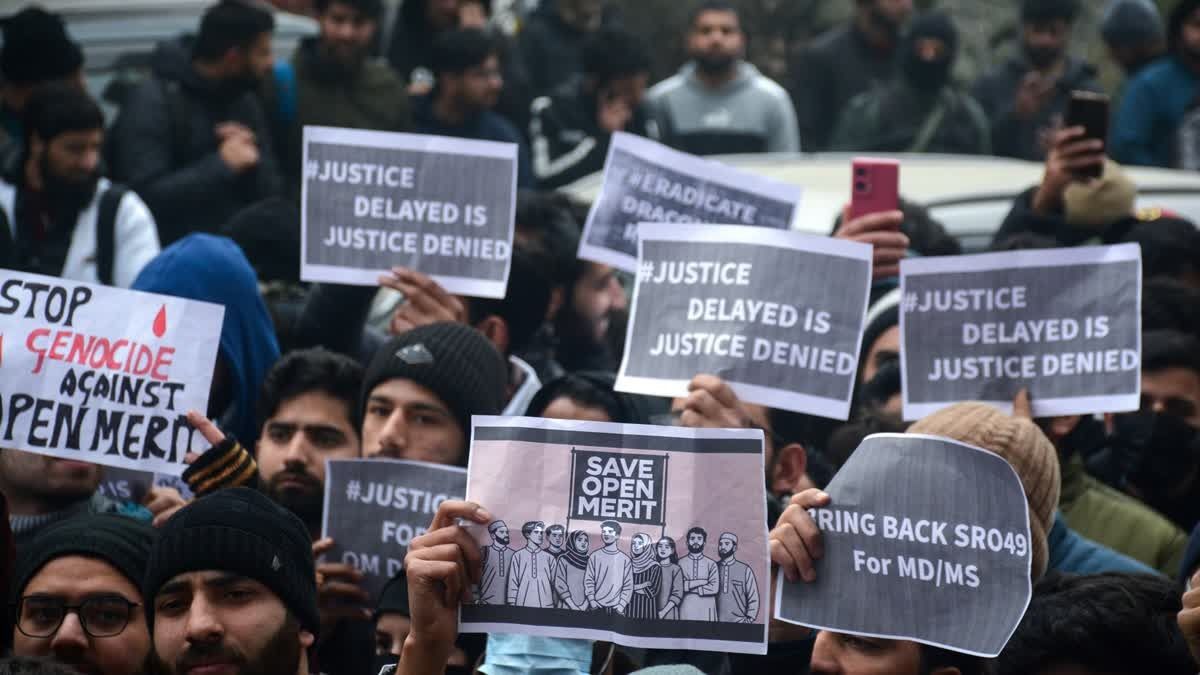
Jammu & Kashmir is witnessing rising political tension as authorities placed several opposition leaders under house arrest on Sunday, effectively stalling their participation in what was planned to be a major student protest over the reservation policy. The targeted detentions—including that of National Conference MP Aga Syed Ruhullah Mehdi, PDP legislator Waheed ur Rehman Para, and former Srinagar mayor Junaid Azim Mattu—reflect deepening fault lines between the government and sections of the youth and political opposition over quota rationalisation and Rule 17 of the reservation framework. Authorities said the preventive action aimed to avoid disruption ahead of a scheduled sit-in protest in Lal Chowk, Srinagar. The student organisers subsequently called off the demonstration, citing impediments to free public participation and suppression of dissent.
A Political Flashpoint: House Arrests on the Eve of Protest
On Sunday morning, security personnel were deployed outside the homes of several senior political figures, restricting their movement and effectively preventing them from joining the proposed student agitation. While authorities termed the detentions “preventive” measures to preserve law and order, political circles and civil society observers have interpreted the action as an effort to pre-empt political mobilisation around a sensitive issue involving the youth and merit-based opportunities.
Among those confined to their residences were:
-
Aga Syed Ruhullah Mehdi – National Conference MP and vocal critic of the current reservation policy.
-
Waheed ur Rehman Para – Peoples Democratic Party (PDP) MLA from Pulwama, prominent critic of the quota framework.
-
Junaid Azim Mattu – Former mayor of Srinagar and active political participant.
-
(According to some reports) Mehbooba Mufti and her daughter Iltija Mufti were also reportedly restricted, broadening the scope of pre-emptive containment.
Public responses ranged from outrage over what many described as suppression of democratic expression to anxiety among students and families about the future of youth engagement in the region.
The Student Demand: Rationalisation of Reservation and Rule 17
At the heart of the conflict are demands by the Open Merit Students Association of Jammu & Kashmir, which has been campaigning for months on issues surrounding the reservation policy, especially the perceived shrinkage of the Open Merit (OM) quota in government jobs and educational admissions.
What Students Are Asking For
The students’ list of demands includes:
-
Rationalisation of the existing reservation system to ensure fairness.
-
Withdrawal or review of Rule 17, a provision seen as controversial for its implications on seat allocation.
-
Transparency in government action and public disclosure of the reservations review process and committee findings.
The movement is rooted in long-standing frustration among open merit aspirants who argue that successive changes in reservation categories have diluted opportunities for merit-based candidates, leaving many feeling sidelined in competitive recruitment and academic admissions.
Reservation Policy in J&K: A Complex Backdrop
Jammu & Kashmir’s reservation policy has been a flashpoint since revisions over recent years expanded the quota landscape, significantly affecting the proportion of Open Merit seats. In the current framework:
-
Open Merit quota for government jobs is reported to have shrunk to around 40%, while reserved categories occupy the majority share.
-
The cabinet of Chief Minister Omar Abdullah formed a Cabinet Sub-Committee over a year ago to examine student grievances and recommend adjustments to the reservation structure. However, the report has not been made fully public, creating suspicion and distrust among protesters.
The reservation system in J&K includes allocations for Scheduled Castes (SC), Scheduled Tribes (ST), Economically Weaker Sections (EWS), Residents of Backward Areas (RBA), Other Backward Classes (OBC), and additional horizontal reservations for categories such as ex-servicemen and Persons with Disabilities (PwDs). Critics argue that while affirmative action is constitutionally justified, its implementation has shifted beyond intended bounds, overshadowing merit-based aspirations.
School, college, and university aspirants, particularly in professional streams such as medical and engineering, have articulated concerns about reduced opportunities amid heightened competition. In some forums, students have said the quota structure, without an appropriate merit buffer, risks not only individual futures but the educational ecosystem at large.
Why House Arrests Matter: Political and Civic Implications
House arrests of political leaders in democratic frameworks tend to spark original debates on civil liberties, democratic space, and governance response. In Jammu & Kashmir, where political sensitivities are deeply entrenched due to historical factors and governance paradigms post-2019, such measures carry amplified significance.
Government Justification
Authorities have repeatedly described the detentions as preventive actions taken to forestall potential law and order breakdowns and to maintain public peace. Officials cited leaders’ expressed intentions to join protests as a driver for precautionary restrictions, arguing that large crowds with political backing could escalate tensions.
Opposition and Civil Society Reaction
In contrast, opposition leaders labelled the measures as suppression of dissent and a discouraging sign of ever-shrinking democratic space. Both Ruhullah Mehdi and Waheed Para publicly questioned the logic of detaining leaders who advocated peaceful protest. Para described the reservation controversy as an “existential issue … striking at the very foundation of the future of our younger generations,” adding that lack of government action had deepened uncertainty and anxiety among youth.
Mehdi, through social media, framed the armed police deployment outside his residence as a pre-emptive crackdown aimed at silencing peaceful, pro-student demonstrations, indicating that the public deserves a clear explanation from authorities.
Critics argue that preventive detentions weaken democratic engagement and could lead to greater political alienation among youth and opposition constituencies if not accompanied by substantive policy dialogue.
Cancellation of the Sit-In and Fallout
Following the house arrests and heightened security deployment around Lal Chowk and Polo View Market, the Open Merit Students Association announced the cancellation of the planned protest. The statement cited the constrained environment and the inability of leaders and participants to assemble freely, emphasising commitment to peaceful democratic expression but acknowledging the practical hurdles posed by current restrictions.
Student leaders reiterated that their agenda is peaceful and democratic, underscoring their call for:
-
No sloganeering,
-
No provocations,
-
Maintaining decorum and unity during any future mobilisation.
The cancellation was seen by many as a symbolic setback, highlighting how procedural quarantine of political figures can affect grassroots movements, leading to strategic pauses even when momentum exists.
Political Repercussions: Government vs Opposition
The current crisis underscores tension between the ruling establishment and opposition voices, especially given that some dissension comes not solely from political rivals but from within the broader political ecosystem.
Aga Syed Ruhullah Mehdi’s involvement in the protests against reservation policy has spotlighted internal strains within the National Conference, as he openly criticised aspects of the government’s handling of the quota issue while his party leads the administration. This reflects a growing narrative that certain policy concerns, particularly those affecting youth and merit concerns, can transcend traditional party alignments and pressure even ruling party figures to take bold positions.
In response, government supporters have sought to frame the rationalisation process as ongoing and in procedural stages, but have not fully engaged with public demands for transparency or timelines. This has widened public frustration as aspirations to fair policy outcomes remain unmet.
Public Sentiment and Youth Engagement on the Ground
Across Srinagar and other parts of the Valley, reactions vary:
-
Open merit aspirants and students express deep disappointment over the lack of visible progress and feel that their futures are being jeopardised by opaque policy mechanisms.
-
Families of aspirants are anxious, citing uncertainty about careers and educational opportunities.
-
Civil society voices advocate for open dialogue, transparency, and respect for peaceful democratic expression.
Local social media posts and community discussions amplified concerns that Kashmir’s youth are increasingly disillusioned by what they view as administrative inertia and political containment tactics that divert focus from substantive policy reform.
Legal and Constitutional Dimensions of House Arrests
Preventive detention or house arrests in India are generally governed by provisions like the Code of Criminal Procedure (CrPC) and other preventive laws. However, such measures have historically been contentious when applied to political figures and peaceful protests, raising questions about balancing law and order with fundamental rights enshrined in the Constitution. Critics argue that preventive confinement without explicit public justification can set problematic precedents.
In Jammu & Kashmir’s unique constitutional history and recent administrative evolution, these tensions gain heightened resonance, particularly around youth mobilisation and political accountability.
Risks, Challenges, and the Path Ahead
The situation presents multiple risks and challenges:
1. Deepening Political Polarisation
House arrests and suspension of planned protests may widen the gulf between the government and opposition, particularly if political dialogue remains stalled.
2. Youth Disillusionment
Student aspirants risk feeling alienated from political processes if their concerns are not addressed openly and constructively.
3. Escalation Potential
While this episode ended with a protest cancellation, similar actions without dialogue could lead to renewed mobilisations that are harder to manage peacefully.
4. Governance Credibility
Delays in transparency about reservation rationalisation and policy reports weaken perceptions of administrative accountability in the eyes of the public.
Conclusion: At the Crossroads of Dissent, Democracy, and Policy Reform
The house arrests of key opposition leaders in Jammu & Kashmir ahead of planned student protests over reservation policy highlight a complex intersection of administrative caution, political dissent, and youth aspirations. What began as a policy debate over quotas has evolved into a critical gauge of democratic space and governance responsiveness in the Union Territory.
As students and political actors await clearer communication and action on reservation reform, the region stands at a delicate threshold—where policy outcomes, civic freedoms, and political engagement could redefine the contours of Kashmir’s public discourse in the months ahead.