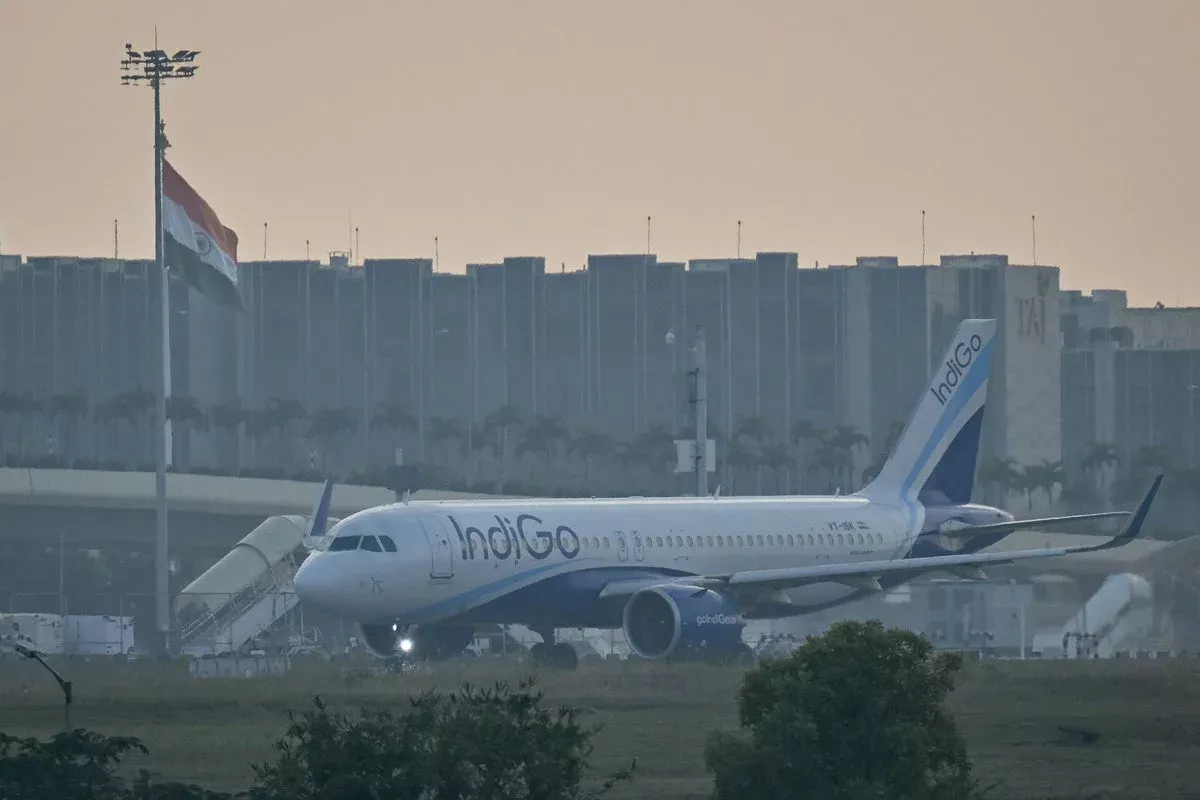
INDIGO’S DECEMBER 2025 MELTDOWN: HOW INDIA’S LARGEST AIRLINE TRIGGERED A NATIONAL AVIATION CRISIS
By: Javid Amin | 14 December 2025
In December 2025, India witnessed one of the most severe disruptions in its civil aviation history. What began as routine winter-season turbulence escalated into a full-blown operational breakdown at IndiGo Airlines, the country’s largest carrier. Over the course of weeks, thousands of flights were cancelled, airports overflowed with stranded passengers, ticket prices surged, and confidence in India’s aviation system took a significant hit.
This was not merely an airline misstep. It was a systemic shock that exposed deep vulnerabilities in India’s air-travel ecosystem—ranging from regulatory transition management to over-reliance on a single dominant carrier.
IndiGo’s crisis underscored a sobering reality: when one airline controls nearly 60 percent of a nation’s domestic market, its failure becomes a national emergency.
THE SCALE OF THE DISRUPTION: A CRISIS BY THE NUMBERS
Between early and late December 2025, aviation data, airport reports, and passenger accounts pointed to an unprecedented breakdown:
-
2,000 to 4,000 flights cancelled nationwide
-
Tens of thousands of passengers stranded at major hubs including Delhi, Mumbai, Bengaluru, Hyderabad, and Kolkata
-
Domino delays affecting connecting international flights
-
Ticket prices doubling or tripling overnight on remaining operational routes
-
Airport infrastructure stretched beyond capacity, particularly during peak holiday travel
What made the crisis especially severe was its duration. Unlike weather-related disruptions or isolated technical failures, this breakdown persisted for weeks, turning inconvenience into chaos.
WHAT WENT WRONG: THE ROOT CAUSE ANALYSIS
At the heart of IndiGo’s December 2025 collapse was a collision between regulatory reform and operational unpreparedness.
1. DGCA’s New FDTL Norms
The Directorate General of Civil Aviation (DGCA) introduced revised Flight Duty Time Limitation (FDTL) norms aimed at improving pilot well-being and flight safety. The rules mandated:
-
Reduced maximum duty hours
-
Mandatory rest periods between flights
-
Tighter controls on night operations
-
More conservative fatigue-management thresholds
From a safety standpoint, the regulations were widely supported. However, their implementation timeline proved disruptive.
2. IndiGo’s Crew Rostering Model
IndiGo’s business success has historically relied on high aircraft utilization, tight turnarounds, and dense crew scheduling. While efficient in stable regulatory environments, this model left little buffer for sudden structural changes.
When the new FDTL norms came into force:
-
Crew rosters became non-compliant overnight
-
Pilots exceeded revised duty limits mid-rotation
-
Entire flight legs had to be cancelled due to crew unavailability
-
Replacement crews were not available at scale
The result was a cascading failure across the network.
CREW SHORTAGES: THE BOTTLENECK THAT BROKE THE SYSTEM
The crisis revealed that IndiGo’s staffing levels were insufficiently resilient to absorb regulatory tightening.
Key issues included:
-
A limited pool of standby pilots
-
Inadequate cross-base crew flexibility
-
Heavy dependence on optimized scheduling rather than surplus staffing
-
Slow onboarding timelines for trained pilots
Unlike smaller airlines that operate with slack capacity, IndiGo’s size amplified the impact of every roster failure.
Once cancellations began, recovery became exponentially harder, as displaced crews and aircraft fell out of sync across the network.
COMMUNICATION BREAKDOWN: WHEN PASSENGERS WERE LEFT IN THE DARK
Operational disruption alone does not define a crisis. What turned frustration into outrage was the collapse of passenger communication.
Passenger complaints highlighted:
-
Last-minute cancellations with no prior alerts
-
Conflicting information from airport staff, call centers, and apps
-
Long wait times for customer support
-
Difficulty obtaining refunds or rebooking options
-
Lack of on-ground assistance during extended delays
For many travelers—families, elderly passengers, business professionals, and holidaymakers—the absence of clear communication worsened an already stressful situation.
Consumer advocacy groups noted that transparency failures eroded trust faster than cancellations themselves.
THE RIPPLE EFFECT: HOW ONE AIRLINE DISRUPTED THE ENTIRE MARKET
IndiGo’s dominance turned its internal problem into a nationwide market distortion.
Fare Inflation and Accusations of Price Gouging
As IndiGo cancelled flights:
-
Demand shifted abruptly to other carriers
-
Available seats shrank overnight
-
Airfares spiked sharply on major routes
Passengers accused rival airlines of price gouging, while carriers defended fares as algorithmic responses to demand-supply imbalances.
Regardless of intent, the outcome was clear: travel became unaffordable for many at the worst possible moment.
SYSTEMIC FRAGILITY: THE DANGERS OF OVER-CONCENTRATION
Perhaps the most consequential lesson of December 2025 was structural.
India’s aviation ecosystem is overly dependent on a single carrier
With IndiGo controlling close to 60 percent of domestic capacity:
-
There was no effective shock absorber
-
Market redundancy was insufficient
-
Smaller airlines could not scale fast enough to fill the gap
-
Airports and regulators lacked contingency playbooks
The crisis exposed a “too big to fail” paradox—where the failure of one airline threatens national mobility.
WHY THIS CRISIS MATTERS BEYOND AVIATION
1. Consumer Trust Took a Hit
Repeated disruptions without accountability weaken public confidence not only in airlines, but in regulators tasked with oversight.
2. Economic Impact Was Widespread
The breakdown affected:
-
Tourism during peak winter season
-
Business travel and conferences
-
Cargo and time-sensitive logistics
-
Hospitality and allied sectors
3. Policy Design Came Under Scrutiny
While safety regulations are non-negotiable, the crisis raised questions about:
-
Phased implementation
-
Airline readiness audits
-
Transition buffers
-
Simulation-based stress testing
LESSONS FOR REGULATORS, AIRLINES, AND PASSENGERS
For Regulators
-
Safety reforms must be paired with operational feasibility checks
-
Dominant carriers require deeper oversight
-
Transition timelines need enforcement milestones
For Airlines
-
Scale must be matched with resilience
-
Crew planning should prioritize buffers, not just efficiency
-
Passenger communication is a core operational function, not a support add-on
For Passengers
-
Awareness of rights is essential
-
Crisis preparedness matters even in mature markets
THE BIG PICTURE: MORE THAN AN INDIGO PROBLEM
IndiGo’s December 2025 meltdown was not an isolated corporate failure. It was a stress test India’s aviation system failed in real time.
It demonstrated how:
-
Regulatory shocks can cascade through fragile systems
-
Market concentration magnifies operational risk
-
Passenger welfare is often the last line of defense
Most importantly, it forced policymakers and industry leaders to confront an uncomfortable truth:
India’s aviation growth has outpaced its systemic resilience.
CONCLUSION: A WAKE-UP CALL FOR INDIA’S AVIATION FUTURE
The December 2025 crisis should be remembered not just for cancelled flights or stranded passengers, but as a defining moment in India’s aviation evolution.
If the lessons are internalized—through smarter regulation, stronger airline preparedness, and improved consumer protection—the disruption may yet serve a constructive purpose.
If ignored, it risks becoming a preview of larger failures ahead.
IndiGo’s collapse was about more than one airline.
It was about how fragile India’s aviation success story remains when stress finally arrives.