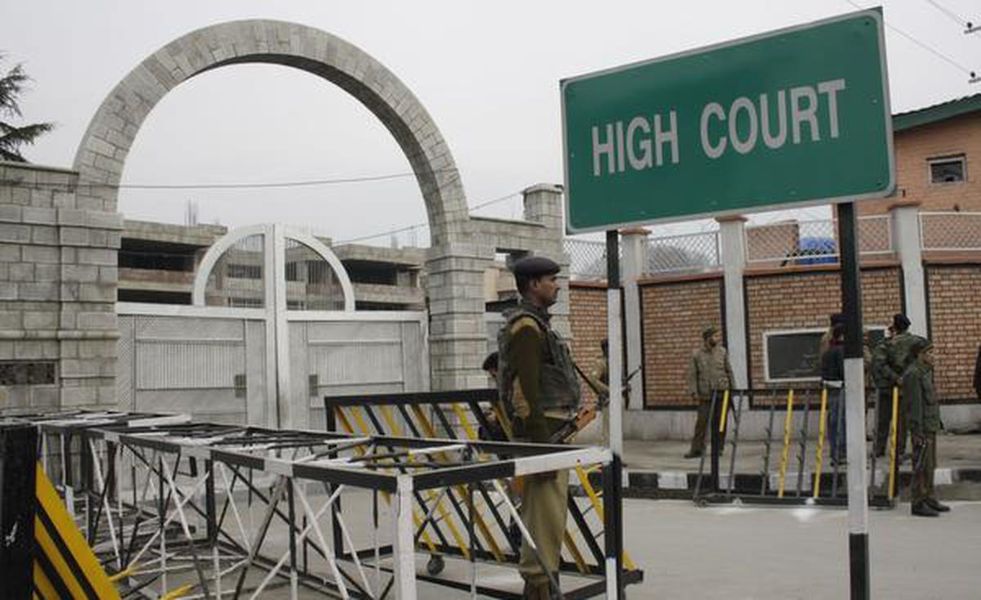
PIL Not a Political Platform: Delhi HC Dismisses Mehbooba Mufti’s Plea
By: Javid Amin | 23 December 2025
A Judgment That Reasserts the Original Soul of PILs
In a sharply worded order that reinforces long-standing constitutional principles, the Delhi High Court dismissed a Public Interest Litigation (PIL) filed by former Jammu & Kashmir Chief Minister Mehbooba Mufti, categorically stating that PILs cannot be converted into political platforms.
The bench did not merely reject the plea on technical grounds. Instead, it delivered a broader institutional message—one that goes to the heart of how Public Interest Litigation is meant to function in Indian democracy. The court observed that the petition appeared to be aimed at projecting the petitioner as a “crusader of justice”, rather than addressing a genuine vacuum in legal remedies or systemic injustice.
In doing so, the High Court reaffirmed a critical judicial boundary: activism cannot substitute established legal processes, and political stature cannot be used to repackage individual or ideological concerns as public interest.
What the PIL Sought—and Why the Court Was Unconvinced
While the plea was framed as a concern for undertrial prisoners, the court found that the issues raised were neither novel nor unattended by law.
Key Judicial Observations
The bench emphasized that:
-
Undertrial prisoners already possess well-established legal remedies
-
Courts are accessible to individuals seeking relief
-
India has a robust legal aid framework under the Legal Services Authorities Act
In the court’s assessment, the PIL did not highlight any systemic failure so grave that it warranted bypassing these existing mechanisms.
Undertrial Prisoners: Legal Remedies Already in Place
One of the most significant aspects of the ruling is its detailed acknowledgment of the legal ecosystem available to undertrial prisoners, an issue often invoked in PILs.
1. Right to Approach Courts Individually
Every undertrial prisoner has the constitutional right to:
-
Seek bail
-
Challenge illegal detention
-
Raise issues of delayed trial
-
Move writ petitions for violation of fundamental rights
These remedies are not theoretical—they are routinely exercised across trial courts, High Courts, and the Supreme Court.
2. Legal Services Authorities Act: A “Robust Legal Aid Framework”
The court underscored the Legal Services Authorities Act, which ensures:
-
Free legal representation to those unable to afford lawyers
-
Legal aid clinics in prisons
-
Access to legal counsel at all stages of trial
By highlighting this framework, the bench effectively countered the argument that undertrials lack access to justice.
Why the Court Flagged ‘Political Projection’
Perhaps the most striking element of the order is the court’s observation that the PIL appeared designed to project Mehbooba Mufti as a “crusader of justice.”
This remark is significant for two reasons:
-
Judicial Candour
Courts generally exercise restraint in attributing motive. That the bench chose to do so reflects the clarity with which it viewed the petition’s intent. -
PIL Jurisprudence Evolution
Over the years, courts have become increasingly vigilant against:-
Publicity-oriented PILs
-
Politically motivated petitions
-
PILs filed for ideological positioning rather than legal necessity
-
This judgment falls squarely within that evolving jurisprudence.
PILs in India: From Social Justice Tool to Judicially Guarded Instrument
The Original Purpose of PILs
Public Interest Litigation emerged in India as a transformative tool to:
-
Give voice to the marginalized
-
Address systemic governance failures
-
Enable judicial intervention where access to justice was absent
Landmark PILs reshaped:
-
Environmental regulation
-
Prison reforms
-
Bonded labour abolition
-
Gender and child rights protections
The Risk of Dilution
Over time, however, courts have repeatedly warned against:
-
PILs as media instruments
-
PILs as political messaging tools
-
PILs filed by those with personal or partisan interests
The Delhi High Court’s dismissal of Mufti’s plea reflects this institutional concern.
Judicial Clarity: Activism vs Adjudication
A recurring theme in recent judicial pronouncements is the need to maintain a clear distinction between:
-
Legal adjudication, which resolves rights and obligations
-
Political activism, which seeks visibility, influence, or narrative control
By dismissing the PIL, the court reiterated that:
-
Courts are not arenas for political signalling
-
PILs cannot be substitutes for legislative or political engagement
-
Judicial time must be reserved for genuine public interest issues
Political Context: Why This Ruling Resonates Beyond the Court
Impact on Political Narratives
For political leaders—particularly those operating in highly polarized environments like Jammu & Kashmir—the ruling sends a clear signal:
-
Judicial forums cannot be used to indirectly advance political positioning
-
Legal language cannot cloak political messaging indefinitely
Separatist and Opposition Messaging
The dismissal also subtly counters a broader narrative often advanced in political discourse—that the legal system is inaccessible to certain groups. By emphasizing available remedies and legal aid, the court reaffirmed institutional accessibility.
A Pattern in Judicial Approach
This ruling aligns with a broader trend in Indian courts:
-
Increased scrutiny of PIL maintainability
-
Emphasis on locus standi and genuine public interest
-
Willingness to impose costs or dismiss petitions that misuse judicial process
Courts have repeatedly held that good intentions alone do not justify a PIL—there must be demonstrable necessity.
Legal Explainer: PIL vs Individual Legal Remedies
What Is a PIL?
A Public Interest Litigation:
-
Addresses collective or systemic issues
-
Is meant for those unable to approach courts themselves
-
Focuses on constitutional or statutory violations affecting large groups
What PIL Is Not
-
A substitute for individual legal remedies
-
A platform for political visibility
-
A mechanism to bypass procedural safeguards
The High Court’s order reinforces these distinctions with clarity.
Why Individual Remedies Matter More in This Context
The court’s reasoning rests on a fundamental legal principle: when individual remedies are effective and accessible, PILs lose their justification.
Undertrial prisoners can:
-
Seek bail
-
File writ petitions
-
Access legal aid
-
Appeal adverse orders
A PIL, therefore, becomes redundant unless a systemic failure is clearly demonstrated.
Institutional Integrity of the Judiciary
Beyond the immediate parties, the judgment serves an institutional purpose:
-
Protecting judicial time
-
Preserving the credibility of PIL jurisprudence
-
Ensuring courts are not drawn into political narratives
This is especially important in high-voltage political contexts, where judicial neutrality must be visibly maintained.
Conclusion: Preserving the Sanctity of Public Interest Litigation
The Delhi High Court’s dismissal of Mehbooba Mufti’s PIL is not an indictment of dissent or concern for prisoners’ rights. Rather, it is a reaffirmation of how justice must be pursued.
By drawing a firm line between:
-
Genuine public interest and political projection
-
Collective justice and individual remedies
-
Judicial forums and political platforms
…the court has preserved the constitutional integrity of Public Interest Litigation.
In an era where legal activism and political messaging often intersect, this judgment stands as a reminder: courts exist to adjudicate rights, not to amplify political personas.
Frequently Asked Questions (FAQs)
1. Why did the Delhi High Court dismiss Mehbooba Mufti’s PIL?
The court held that the plea lacked genuine public interest and appeared aimed at political projection, noting that undertrials already have effective legal remedies.
2. What did the court say about undertrial prisoners?
It emphasized that undertrials can individually approach courts and have access to legal aid under the Legal Services Authorities Act.
3. Can PILs be filed by political leaders?
Yes, but only if they meet strict criteria of genuine public interest and do not serve political or personal objectives.
4. What is the broader significance of this ruling?
It reinforces judicial boundaries, prevents misuse of PILs, and preserves the sanctity of public interest litigation.
5. Does this judgment weaken PILs as a tool?
No. It strengthens PILs by ensuring they are used only for legitimate, systemic issues.